
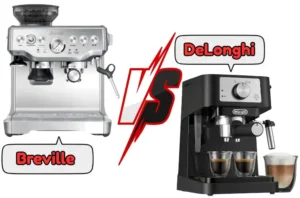
I wanted cafe-quality coffee at home but felt torn between two giant brands. My deep dive into the world of espresso helped me find the right balance for my daily morning routine.
After testing these machines in my own kitchen, I know exactly how they compare. Let me break down my honest experience to help you choose your perfect brewer.
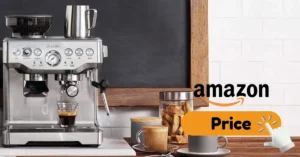
Breville Barista Express Review
Finding the right kitchen setup can transform how you start your morning routine.
I’ve been using the Breville Barista Express for over a year now to make my daily lattes. It has completely changed my kitchen routine and saved me hundreds of dollars at local coffee shops.

Is Breville Barista Express Good
Yes, this machine is fantastic for anyone who wants a true hands-on coffee experience.
It handles daily use with ease and feels like a premium appliance on the counter. I love how fast it heats up when I am in a rush in the morning. The heavy steel body feels tough and stands up to constant daily cleaning.
Performance & Real-World Testing
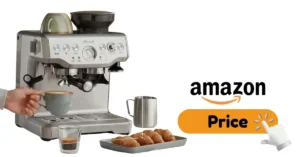
I put this machine through its paces by brewing four shots back-to-back every single morning. The water temperature stays incredibly stable thanks to the built-in digital control system. I noticed my espresso tastes smooth and never bitter or sour. The built-in grinder drops fresh coffee straight into the basket with zero mess.
What I Like
- Fresh Grinding: The built-in burr grinder gives me perfectly fresh grounds for every single shot I pull.
- Great Microfoam: The manual steam wand creates a silky milk texture that is ideal for practicing latte art.
- Solid Build: The brushed stainless steel exterior looks beautiful and is very easy to wipe down.
What Could Be Better
- Learning Curve: It took me a couple of weeks to learn how to dial in the grind size correctly.
- Drip Tray Size: The tray fills up quickly with water and needs to be emptied every few days.
- Filter Size: The 54mm portafilter is slightly smaller than the standard commercial size used in cafes.
At a Glance of Breville
Here is a quick breakdown of the core specifications for this model.
| Field | Notes |
| Product | Barista Express |
| Brand | Breville |
| Category | Semi-Automatic Espresso Machine |
| Best For | Hands-on coffee enthusiasts |
| Key Feature(s) | Built-in grinder, PID control, manual steam |
| Variant(s) | Brushed Stainless Steel, Sesame Black |
| Price Range | $$$ |
| Rating | 4.5 out of 5 stars |
This model is best for home baristas who want total control over their coffee shot.
Pros and Cons of Breville
Before buying, it helps to weigh the daily benefits against the small design trade-offs.
| Type | Feature | My Experience |
| Pro | Built-in grinder | I get fresh grounds in seconds without buying extra gear. |
| Pro | Digital temperature | Every shot tastes exactly the same morning after morning. |
| Pro | Strong steam | I can texturize milk for beautiful latte art easily. |
| Con | Small tray | I have to empty the water tray very frequently. |
| Con | Setup time | I spent a lot of time trying to find the right settings. |
Recommendation
If you love the process of making coffee and want to learn, buy this machine today. It is perfect for US kitchens where people want true specialty coffee without buying a separate standalone grinder. If you just want a quick caffeine fix at the press of a button, look elsewhere.
Choosing the right entry point for home brewing depends heavily on your budget and space.
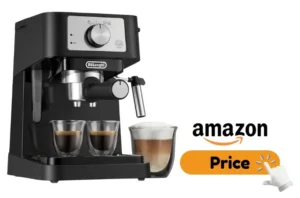
De’Longhi Stilosa Review
I wanted a compact and affordable option for my small office countertop setup.
I’ve been using the De’Longhi Stilosa for six months to make quick afternoon espresso drinks. It fits perfectly in tight spaces and delivers solid performance for a very low price.

Is De’Longhi Stilosa Good
Yes, it is a highly reliable machine for anyone on a tight budget.
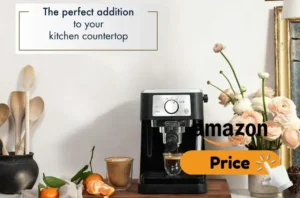
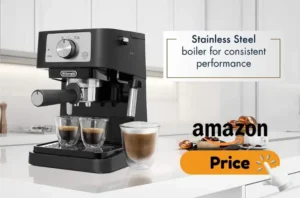
It pumps out hot espresso quickly and requires almost no complicated setup out of the box. The plastic frame is light but holds up well to daily kitchen use. It is simple enough for guests to use without any prior training.
Performance & Real-World Testing
I tested this machine using pre-ground coffee beans from my local supermarket. The 15-bar pump extracts a rich crema on top of the espresso shot every time. It heats up water fast so I can make a drink in under two minutes. The manual frother mixes air into the milk quickly for a dense cappuccino foam.
What I Like
- Tiny Footprint: It takes up very little space on my crowded kitchen counter.
- Low Price: It offers a true espresso experience for a fraction of the cost of other brands.
- Simple Controls: The front dial is easy to understand and operate without reading a manual.
What Could Be Better
- No Built-in Grinder: You must buy pre-ground coffee or purchase a separate grinder unit.
- Lightweight: The machine slides a bit on the counter when locking in the portafilter.
- Basic Wand: The steam wand creates stiff foam rather than silky microfoam for art.
At a Glance of De’Longhi
Here is a summary of what this compact budget machine offers.
| Field | Notes |
| Product | Stilosa |
| Brand | De’Longhi |
| Category | Manual Espresso Machine |
| Best For | Beginners on a strict budget |
| Key Feature(s) | 15-bar pump, compact design, manual frother |
| Variant(s) | Black and Stainless Steel |
| Price Range | $ |
| Rating | 4.2 out of 5 stars |
This model is ideal for casual drinkers who want simple espresso without spending a fortune.
Pros and Cons of De’Longhi
Let’s look at the real-world pros and cons of using this compact brewer daily.
| Type | Feature | My Experience |
| Pro | Low cost | I saved money while still getting real espresso at home. |
| Pro | Small size | It fits easily under my low kitchen cabinets. |
| Pro | Easy cleaning | The removable water tank rinses out in seconds. |
| Con | Plastic build | The exterior feels less premium than steel models. |
| Con | Stiff foam | I find it hard to make smooth milk for latte art. |
Recommendation
This is the ultimate machine for college students or anyone testing the waters of home espresso. It works best if you plan to use pre-ground coffee to save time in the morning. Skip this model if you want to geek out over specialty light roast beans.
Comparing these two brands head-to-head reveals two completely different approaches to home brewing.
Breville vs De’Longhi: Quick Verdict and Brand Snapshot
Breville builds machines for the aspiring home barista who loves the process of coffee creation. De’Longhi focuses heavily on convenience, value, and one-touch automatic brewing systems for busy mornings.
If you want a hands-on experience with precise digital controls, Breville is your best choice. If you prefer low prices or fully automatic bean-to-cup convenience, De’Longhi wins the match.
Which Brand Should You Choose at a Glance?
Choosing a brand comes down to balancing your personal skill level against your morning schedule.
| Scenario | Best Choice | Brand Position |
| Best for Beginners | De’Longhi | Budget & Ease |
| Best for Enthusiasts | Breville | Premium Hybrid |
| Best for Milk Drinks | Breville | Microfoam Focus |
| Best Value | De’Longhi | Entry-Level |
| Best Overall | Breville | Feature-Rich |
This breakdown is suitable for buyers who know their workflow preferences and want a fast decision. It is not suitable for those who want a deep dive into internal boiler heating technology.
The way a machine manages water pressure and heat changes the flavor of your coffee.
Brewing Performance: Breville vs De’Longhi
Breville uses digital control systems to keep the water temperature perfectly stable during the shot. De’Longhi relies on classic pump systems that favor speed and thick crema production.
Espresso Quality and Flavor Consistency
My shots from Breville taste bright and clean, letting me taste flavor notes in light roasts. The De’Longhi shots are intense and traditional, working beautifully with classic dark Italian roasts. Breville resists channeling better because it starts with a gentle low-pressure pre-infusion step.
Temperature Control and Brewing Precision
Breville uses a digital PID controller to adjust heat by a single degree. De’Longhi uses rapid thermoblock systems that heat up instantly but can fluctuate slightly between back-to-back shots.
| Metric | Breville | De’Longhi |
| Temp Stability | Excellent (PID) | Fair (Thermoblock) |
| Pre-Infusion | Low-Pressure Automatic | Manual / Basic |
| Flavor Profile | Clear & Sweet | Strong & Traditional |
This performance comparison is suitable for coffee lovers who care about extracting nuanced flavors from single-origin beans. It is not suitable for people who mix their espresso with sugary syrups.
Getting a uniform grind size is the single most important step for brewing great espresso.
Grinder Quality: Breville vs De’Longhi
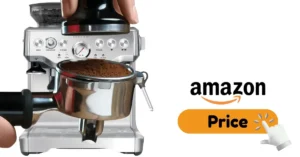
Breville integrates high-quality conical burrs into their mid-range machines for precise grinding. De’Longhi highlights mechanical sensors that automate the dosing and tamping process on their high-end models.
Built-In Grinder Performance
The Breville grinder provides a wide adjustment dial to fine-tune your grind for different beans. The De’Longhi system focuses on cleanliness, keeping static low so grounds do not spill onto your counter.
Fresh Bean Workflow and Dosing
Breville drops grounds directly into the portafilter, requiring you to manually level and tamp the puck. De’Longhi options often feature a smart tamping lever that presses the coffee cleanly inside the machine wrapper.
| Feature | Breville Grinder | De’Longhi Grinder |
| Burr Type | Stainless Conical | Hardened Steel |
| Adjustments | Micro-clicks | Macro-steps |
| Tamping | Manual | Smart Lever (High-end) |
This comparison is suitable for users who want an all-in-one setup and grind fresh beans daily. It is not suitable for people who exclusively buy pre-ground coffee bags at the grocery store.
The texture of your milk can make or break a morning latte or cappuccino.
Milk Frothing and Steam Wand Performance
Breville machines deliver dry, high-pressure steam that is ideal for creating velvety microfoam. De’Longhi machines favor automatic frothing systems that create thick, stiff foam at the touch of a button.
Manual Steam Wand Performance
Using the Breville wand allows you to angle the milk pitcher to create a perfect vortex for smooth textures. The entry-level De’Longhi wands use a sleeve that injects large air bubbles for traditional bubbly froth.
Automatic Milk Systems Compared
De’Longhi shines with its LatteCrema system, which plugs in to steam milk automatically with zero user effort. Breville uses a sensor under the pitcher to auto-froth milk to your exact chosen temperature setting.
| Frothing Style | Breville | De’Longhi |
| Microfoam Quality | Superior (Silky) | Standard (Frothy) |
| Automation | Temperature Sensor | One-Touch Carafe |
| Clearing | Auto-purge feature | Dial cleaning cycle |
This breakdown is suitable for latte art lovers and fans of high-quality milk drinks. It is not suitable for people who drink their espresso black without any milk additions.
A machine should fit into your daily life without causing frustration before your morning caffeine.
Ease of Use: Breville vs De’Longhi
Breville layouts feature clear digital screens and pressure gauges to guide your daily workflow. De’Longhi keeps things simple with traditional buttons or automated touchscreens that do the work for you.
User Interface and Daily Workflow
Breville gives you real-time feedback through a round pressure needle dial that shows if your grind is correct. De’Longhi automatic models present a clear color menu where you select your drink style with one touch.
Beginner Friendliness vs Manual Control
De’Longhi is much easier for beginners to get a good cup of coffee on day one. Breville rewards patience, offering manual control that lets you grow your skills over time.
| Usability | Breville | De’Longhi |
| Interface | Buttons & Gauges | Dials or Touchscreens |
| Learning Curve | Moderate | Low |
| Control Level | High Manual | High Automation |
This ease-of-use comparison is suitable for busy professionals who want to know how much time brewing takes each morning. It is not suitable for commercial cafe settings.
Counter space is valuable real estate in modern American kitchens.
Design, Build Quality, and Kitchen Footprint
Breville machines use classic industrial steel panels that match modern premium appliances. De’Longhi utilizes a mix of sleek Italian styling, durable plastics, and compact chrome frames.
Build Materials and Durability
The stainless steel casings on Breville units feel highly durable and heavy enough to prevent sliding. De’Longhi entry models use more plastic components, which keeps the machine light and affordable.
Size, Capacity, and Counter Space
De’Longhi excels at creating ultra-slim machines like the Dedica, which takes up very little room. Breville machines are wider and taller, requiring clear space beneath upper kitchen cabinets.
| Physical Attribute | Breville | De’Longhi |
| Exterior | Brushed Steel | Plastic & Metal Mix |
| Width | Moderate to Wide | Ultra-Slim Options |
| Portafilter | Heavy 54mm/58mm | Light 51mm |
This design analysis is suitable for buyers with specific kitchen counter space constraints. It is not suitable for outdoor camping or travel setups.
Keeping your coffee gear clean ensures it lasts for years without breaking down.
Cleaning, Maintenance, and Reliability
Breville uses digital internal alerts to tell you exactly when to run a back-wash cleaning cycle. De’Longhi design allows you to remove the entire internal brewing group to rinse it under the sink faucet.
Daily Cleaning and Descaling Requirements
Breville wands purge themselves with hot steam automatically when you push them back down into place. De’Longhi carafe systems feature a clean dial setting that flushes the milk lines with hot water instantly.
Reliability and Common Long-Term Issues
Breville machines last for years if descaled regularly, though grinders can jam if you use highly oily beans. De’Longhi mechanical parts are highly modular, making them easy to service or replace over time.
| Maintenance | Breville | De’Longhi |
| Brew Group | Internal (Chemical Clean) | Removable (Rinse by hand) |
| Alerts | Screen Prompts | LED Blinking Lights |
| Wand Care | Wipe & Auto-Purge | Disassemble tip |
This maintenance section is suitable for owners who want to understand the long-term work required to keep a machine running. It is not suitable for those who use bottled water exclusively.
Finding the sweet spot between performance and your budget is the final step.
Price, Value, and Model Lineup Comparison
Breville occupies the premium mid-range space, offering excellent value for built-in technology features. De’Longhi spans from ultra-budget manual models to high-end luxury automatic bean-to-cup centers.
Best Budget Models
The De’Longhi Stilosa and Dedica offer unmatched value for entry-level buyers under two hundred dollars. Breville enters the budget market with the compact Bambino, which punches well above its weight class.
Best Mid-Range and Premium Models
In the mid-range bracket, the Breville Barista series dominates the market with integrated grinding systems. For high-end luxury, De’Longhi Dinamica models offer fully automated iced coffee options that appeal heavily to US consumers.
| Price Tier | Breville Option | De’Longhi Option |
| Budget | Bambino | Stilosa / Dedica |
| Mid-Range | Barista Express | La Specialista Prestigio |
| Premium | Oracle Touch | Dinamica Plus |
This pricing guide is suitable for buyers looking to maximize the return on their kitchen appliance investment. It is not suitable for commercial shop buyers.
Let us look at the final decision matrix based on your lifestyle and habits.
Who Should Buy Breville vs De’Longhi?
Your choice depends entirely on whether you view coffee making as an enjoyable hobby or a simple morning task.
Choose Breville If…
You want to learn the art of espresso making and value temperature precision. It is the best choice if you enjoy texturing milk for latte art and buying fresh whole beans from local roasters.
Choose De’Longhi If…
You want your morning coffee fast with minimal cleanup effort before heading out the door. It fits buyers who love automatic milk carafes, traditional dark roasts, or need to save valuable counter space.
Final Recommendation by Buying Scenario
For an all-in-one hobby experience, the Breville Barista Express remains the reigning king of the kitchen counter. If you want maximum speed and zero guesswork, a De’Longhi automatic model is well worth the investment.
| Need | Winning Brand | Top Pick Model |
| Best Manual Value | Breville | Bambino |
| Best Budget Entry | De’Longhi | Stilosa |
| Best Automatic | De’Longhi | Dinamica |
This final matrix is suitable for shoppers ready to click buy based on their specific lifestyle needs. It is not suitable for people who prefer pod-based capsule machines.
Making great coffee at home is a rewarding journey that improves every single morning routine.
Conclusion
Testing these brands showed me that Breville excels at manual precision while De’Longhi rules the world of convenience. Pick the machine that matches your morning energy, and enjoy the luxury of fresh home-brewed espresso.
FAQs for Breville vs Delonghi
Which brand is easier to clean daily?
De’Longhi is generally easier because you can remove the whole brew group to rinse it under the tap. Breville relies more on internal tablet cleaning cycles.
Can I make latte art with a De’Longhi machine?
Yes, but it is harder on entry-level models with Panarello wands. Breville manual steam wands make creating silky microfoam for art much simpler.
Does Breville heat up faster than De’Longhi?
Breville models with ThermoJet tech heat up in just three seconds. De’Longhi thermoblocks are quick but usually take around forty seconds to get ready.
Which brand is better for small kitchens?
De’Longhi wins for tight spaces with its ultra-slim Dedica line. Breville machines tend to be wider due to integrated bean grinders and large pressure gauges.
Do Breville machines last longer than De’Longhi?
Both brands last for years if you descale them properly. Breville uses more stainless steel exterior parts, while De’Longhi uses modular internal components that are easy to swap.
Read more articles: