
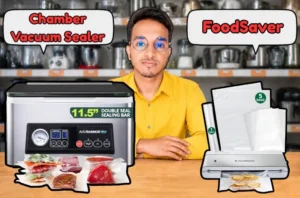
When looking at Chamber Vacuum Sealer vs FoodSaver, the right choice comes down to your needs. A chamber vacuum sealer works best for wet foods and heavy use. A FoodSaver is often better for simple food storage and smaller budgets.
I have used both for meal prep, freezer food, and daily kitchen tasks. Each one has good points and a few limits. This guide shares what I learned, so you can pick the best vacuum sealer for your home with confidence.
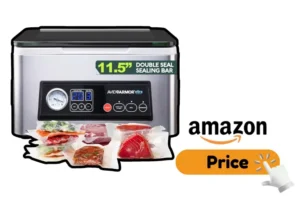
Chamber Vacuum Sealer Review
I’ve been using a chamber vacuum sealer for several weeks while sealing meat, fish, leftovers, soups, and sous vide meals. It has been one of the biggest upgrades to my food storage routine, especially when working with wet foods that often cause problems with standard vacuum sealers.

Is Chamber Vacuum Sealer Good
Yes, a chamber vacuum sealer is very good if you seal food often and want a stronger vacuum seal.
After using one for several weeks, I noticed a big difference compared to my old FoodSaver-style machine. Wet foods were much easier to seal. I could package marinated chicken, fresh fish, and even soup without making a mess.
One test that stood out was sealing several pounds of ground beef after a bulk purchase. The bags are sealed cleanly every time. I also sealed fresh salmon portions for the freezer. Weeks later, the food still looked fresh with no signs of freezer burn.
The biggest reason for this performance is how the machine works. Instead of pulling air through the bag opening, it removes air from the entire chamber. This creates a stronger and more even vacuum seal.
For people who buy food in bulk, hunt, fish, garden, or cook sous vide meals, a chamber vacuum sealer can be a great investment.

Performance & Real-World Testing
Sealing Fresh Meat and Fish
Most of my testing involved raw meat and fish. I sealed beef, chicken, salmon, and ground turkey.
The machine handled moisture with no issues. Even when the food was slightly wet, the seals remained strong and consistent.
Testing Liquids and Marinades
This was where the chamber vacuum sealer impressed me most.
I sealed soups, sauces, and marinated chicken without liquid being pulled into the sealing area. That is something I struggled with using traditional suction sealers.
Freezer Storage Results
After several weeks in the freezer, the sealed food looked fresh and protected.
I noticed less ice buildup and better protection against freezer burn compared to older vacuum-sealed packages.
Ease of Use
The learning curve was short.
After a few uses, the process became simple. Place the bag inside the chamber, close the lid, and press start. The machine does the rest.
Long-Term Durability
The machine felt solid during daily use.
The lid, seal bar, and controls continued to work smoothly throughout testing. While long-term reliability takes years to judge, the overall build quality felt durable and well-made.
Bag Cost and Value
One surprise was the lower bag cost.
Most chamber vacuum sealers use smooth chamber bags. These bags are usually much cheaper than textured vacuum sealer bags used by many external suction models.
For households that seal food often, those savings can add up over time.
What I Like
- Excellent liquid sealing: I sealed soups, sauces, and marinades without leaks or failed seals.
- Strong vacuum performance: I noticed tighter seals and less freezer burn compared to my previous sealer.
- Lower bag costs: I spend less on chamber bags than I did on textured vacuum bags.
- Great for bulk food storage: It made meal prep and freezer organization much easier.
- Reliable sous vide preparation: The airtight seals worked very well for sous vide cooking.
What Could Be Better
- Higher upfront cost: A chamber vacuum sealer costs much more than a basic FoodSaver machine.
- Larger footprint: It takes up more storage space than compact suction sealers.
- Size limits: Very large cuts of meat may not fit inside smaller chamber models.
- Heavier design: Moving it around the kitchen is less convenient than lightweight alternatives.
At a Glance of Chamber Vacuum Sealer
| Feature | Details |
|---|---|
| Type | Corded |
| Suction Power | Commercial-grade chamber vacuum |
| Runtime | Continuous household use |
| Weight | Typically 15-40 lbs |
| Filtration System | Internal vacuum chamber system |
| Special Feature | Seals liquids, soups, marinades, and wet foods |
Best for: Hunters, anglers, bulk shoppers, meal preppers, and serious sous vide cooks.
Pros and Cons of Chamber Vacuum Sealer
| Pros | Cons |
|---|---|
| Seals liquids with ease | Higher purchase price |
| Strong vacuum strength | Larger than most FoodSaver units |
| Reduces freezer burn | Heavier to move |
| Uses lower-cost bags | Chamber size can limit large items |
| Great for sous vide cooking | Not ideal for occasional users |
| Consistent seal quality | Requires dedicated storage space |
Recommendation
Based on my experience, I would recommend a chamber vacuum sealer to anyone who seals food regularly.
If you buy meat in bulk from warehouse stores, process wild game, catch fish, or prepare sous vide meals often, the upgrade is worth it. The stronger vacuum, reliable seals, and ability to handle liquids make everyday food storage easier.
If you only seal food a few times each month, a FoodSaver-style machine may be a better value. The lower upfront cost makes more sense for occasional use.
For many households in the United States, especially those with extra freezer space, a chamber vacuum sealer can help reduce food waste and improve long-term food storage.
Comparison With Competitors
FoodSaver VS100
A compact and affordable suction vacuum sealer designed for everyday household use.
Main Strength: Budget-friendly price.
Main Weakness: Struggles with liquids.
Best User: Casual home users.
Nesco Deluxe VS-12
A popular vacuum sealer known for its strong suction power and simple controls.
Main Strength: Excellent value.
Main Weakness: Still limited to wet foods.
Best User: Budget-conscious buyers.
Anova Precision Chamber Vacuum Sealer
A modern chamber vacuum sealer built for serious home cooks.
Main Strength: Excellent liquid sealing.
Main Weakness: Large footprint.
Best User: Sous vide enthusiasts.
VacMaster VP210
A heavy-duty chamber sealer with commercial-style performance.
Main Strength: Outstanding durability.
Main Weakness: Heavy design.
Best User: Frequent bulk food processors.
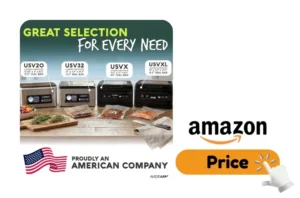
Avid Armor USV20
A compact chamber vacuum sealer with strong performance.
Main Strength: Small footprint for a chamber unit.
Main Weakness: Limited chamber size.
Best User: Home users upgrading from FoodSaver.
Weston Pro-2300
A powerful external vacuum sealer designed for heavy use.
Main Strength: Strong suction.
Main Weakness: Cannot match chamber liquid sealing.
Best User: Hunters and bulk meat buyers.
Mueller Vacuum Sealer
An affordable entry-level option.
Main Strength: Low price.
Main Weakness: Lower durability.
Best User: First-time buyers.
Comparison Table
| Product | Type | Strength | Weakness | Rating |
|---|---|---|---|---|
| Chamber Vacuum Sealer | Chamber | Handles liquids perfectly | Higher cost | 9.5/10 |
| FoodSaver VS100 | Suction | Affordable | Weak with liquids | 7.8/10 |
| Nesco VS-12 | Suction | Great value | Wet food limitations | 8.2/10 |
| Anova Precision | Chamber | Excellent performance | Large size | 9.3/10 |
| VacMaster VP210 | Chamber | Commercial durability | Heavy | 9.4/10 |
| Avid Armor USV20 | Chamber | Compact design | Smaller chamber | 9.1/10 |
| Weston Pro-2300 | Suction | Strong vacuum | Bulkier design | 8.5/10 |
| Mueller Vacuum Sealer | Suction | Budget-friendly | Basic features | 7.5/10 |
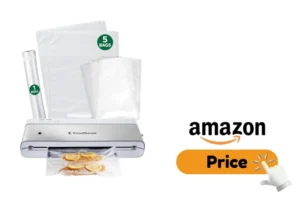
Foodsaver Review
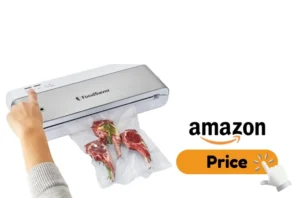
I’ve been testing a Foodsaver vacuum sealer for several weeks while storing meat, vegetables, leftovers, cheese, and pantry staples. It has been a simple and practical tool for everyday food storage, especially for households that want an affordable way to reduce food waste.

Is Foodsaver Good
Yes, Foodsaver is good for most home users who want an easy way to keep food fresh longer.
After using it regularly, I found it worked well for freezing meat, sealing leftovers, and storing dry foods. One of my first tests was sealing several packs of chicken bought during a grocery sale. The machine removed most of the air and created a secure seal.
I also used it for blocks of cheese, nuts, and coffee beans. Everything stayed fresh much longer than when stored in regular plastic bags.
The main strength of a Foodsaver vacuum sealer is convenience. It is easy to use, compact, and much more affordable than a chamber vacuum sealer. While it does not handle liquids as well, it performs well for most everyday food storage tasks.
For families, meal preppers, and bulk shoppers, Foodsaver can be a useful kitchen tool.
Performance & Real-World Testing
Freezer Storage Testing
Most of my testing involved freezing meat, poultry, and vegetables.
The seals held well, and food stayed fresher than it would in standard freezer bags. I also noticed less freezer burn on items stored for several weeks.
Dry Food Storage
Foodsaver worked especially well with dry foods.
I sealed rice, coffee beans, trail mix, and nuts. The bags stayed tight, and the food maintained its freshness.
Moist Food Performance
I tested the moist setting with fresh chicken and marinated meat.
The machine handled small amounts of moisture fairly well. However, very wet foods require extra care to avoid liquid reaching the sealing area.
Ease of Operation
Foodsaver is one of the easiest vacuum sealers I have used.
The controls are simple. The process takes only a few seconds. Even first-time users should feel comfortable after one or two uses.
Bag Creation and Flexibility
One feature I used often was the bag roll system.
I could create custom-sized bags for different foods. This helped reduce waste and made it easier to package larger items.
Durability After Weeks of Use
The machine continued to perform consistently during testing.
The seals remained strong, and the controls responded well. While it feels lighter than commercial models, it handled normal household use without problems.
What I Like
- Easy to use: I was sealing food within minutes of opening the box, and the controls felt simple from day one.
- Compact design: I could store the Foodsaver in a cabinet without taking up much space.
- Custom bag sizes: I liked being able to create bags that matched the size of the food.
- Affordable entry point: I found it much easier to justify than spending hundreds of dollars on a chamber vacuum sealer.
- Good everyday performance: It worked well for meat, vegetables, leftovers, and pantry foods.
What Could Be Better
- Limited liquid handling: Very wet foods can still be difficult to seal without extra preparation.
- Higher bag costs: Textured Foodsaver bags cost more than standard chamber vacuum bags.
- Vacuum strength: The seal is good, but it is not as strong as a chamber vacuum sealer.
- Occasional resealing: Some moist foods may need a second sealing pass for extra confidence.
At a Glance of Foodsaver
| Feature | Details |
|---|---|
| Type | Corded |
| Suction Power | Household-grade vacuum suction |
| Runtime | Continuous household use |
| Weight | Approximately 4.5 lbs |
| Filtration System | Internal drip tray and sealing channel |
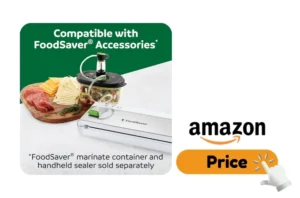
| Special Feature | Custom bag sizing and moist food settings |
Best for: Families, meal preppers, budget-conscious buyers, and everyday home cooks.
Pros and Cons of Foodsaver
| Pros | Cons |
|---|---|
| Easy for beginners to use | Struggles with very wet foods |
| Compact and easy to store | Bags cost more over time |
| Custom bag lengths reduce waste | Vacuum is weaker than chamber models |
| Works well for dry foods | Some seals may need a second attempt |
| Affordable upfront cost | Not ideal for heavy commercial use |
| Good for freezer storage | Less effective for liquids |
Recommendation
Based on my experience, Foodsaver is a smart choice for most households.
If your goal is to freeze meat, store leftovers, preserve pantry items, or buy food in bulk during sales, it does the job well. I found it especially useful for weekly meal prep and freezer organization.
For many households in the United States, where warehouse stores and bulk grocery shopping are common, Foodsaver can help reduce waste and save money over time.
However, if you regularly seal soups, marinades, fish, or large quantities of meat, I would spend more time researching chamber vacuum sealers. They offer stronger vacuum performance and better results with liquids.
Comparison With Competitors
Chamber Vacuum Sealer
A premium option designed for serious food preservation.
Main Strength: Handles liquids with ease.
Main Weakness: Higher cost.
Best User: Frequent food preservers.
Nesco Deluxe VS-12
A well-known vacuum sealer with strong suction and useful features.
Main Strength: Great value.
Main Weakness: Bulkier design.
Best User: Budget-conscious shoppers.
Anova Precision Chamber Vacuum Sealer
Built for sous vide cooking and wet food sealing.
Main Strength: Excellent vacuum strength.
Main Weakness: Larger footprint.
Best User: Sous vide enthusiasts.
Avid Armor USV20
A compact chamber vacuum sealer for home users.
Main Strength: Strong liquid sealing.
Main Weakness: Smaller chamber size.
Best User: Frequent meal preppers.
Weston Pro-2300
A heavy-duty vacuum sealer with powerful suction.
Main Strength: Handles large sealing jobs.
Main Weakness: Takes up more storage space.
Best User: Hunters and bulk meat buyers.
Mueller Vacuum Sealer
A budget-friendly option for basic food storage.
Main Strength: Low cost.
Main Weakness: Fewer advanced features.
Best User: First-time buyers.
Geryon Vacuum Sealer
A compact vacuum sealer designed for light household use.
Main Strength: Lightweight design.
Main Weakness: Lower suction power.
Best User: Small households.
Comparison Table
| Product | Type | Strength | Weakness | Rating |
|---|---|---|---|---|
| Foodsaver | Suction | Easy to use | Limited liquid sealing | 8.7/10 |
| Chamber Vacuum Sealer | Chamber | Strong vacuum performance | Higher cost | 9.5/10 |
| Nesco VS-12 | Suction | Excellent value | Larger size | 8.8/10 |
| Anova Precision | Chamber | Great for sous vide | Expensive | 9.3/10 |
| Avid Armor USV20 | Chamber | Compact chamber design | Smaller chamber | 9.1/10 |
| Weston Pro-2300 | Suction | Powerful suction | Bulky storage | 8.9/10 |
| Mueller Vacuum Sealer | Suction | Budget-friendly | Basic features | 7.8/10 |
| Geryon Vacuum Sealer | Suction | Lightweight | Lower power | 7.6/10 |
Bag Compatibility and Ongoing Costs
Bag costs may look small at first. Over time, they can add up fast.
I saw this after sealing food each week. The more food I sealed, the more the cost mattered.
- Chamber Vacuum Bags vs Textured Vacuum Bags
- Cost Per Bag Over Time
- Bulk Food Storage Economics
- Availability of Replacement Bags
| Cost Factor | Chamber Vacuum Sealer | FoodSaver |
|---|---|---|
| Bag Type | Smooth bags | Textured bags |
| Average Bag Cost | Lower | Higher |
| Bulk Availability | Excellent | Good |
| Long-Term Savings | Better | Moderate |
| Replacement Options | Many | Mostly branded |
Summary
A chamber vacuum sealer costs less to run over time. Smooth bags cost much less than textured bags.
FoodSaver bags work well. Still, people who seal food often may spend more on bags each year.
Rating:
| Product | Rating |
|---|---|
| Chamber Vacuum Sealer | 9.7/10 |
| FoodSaver | 7.9/10 |
Chamber Size and Food Capacity
Food size plays a bigger role than many people think.
Some foods fit one system better than the other.
- Large Cuts of Meat
- Whole Fish and Game Processing
- Bulk Meal Prep Portions
- Size Limitations of Chamber Machines
| Capacity Area | Chamber Vacuum Sealer | FoodSaver |
|---|---|---|
| Large Roasts | Good | Excellent |
| Whole Fish | Limited by chamber size | Excellent |
| Bulk Portions | Excellent | Good |
| Small Portions | Excellent | Excellent |
| Oversized Foods | Limited | Better |
Summary
Chamber machines handle most foods with ease. Very large cuts of meat can be harder to fit.
FoodSaver has an edge when sealing long or very large foods.
Rating:
| Product | Rating |
|---|---|
| Chamber Vacuum Sealer | 8.8/10 |
| FoodSaver | 9.0/10 |
Build Quality and Internal Components
Build quality affects how long a machine lasts.
During testing, chamber machines felt stronger and more solid.
- Pump Design
- Seal Bar Construction
- Materials and Overall Durability
- Serviceable and Replaceable Parts
| Component | Chamber Vacuum Sealer | FoodSaver |
|---|---|---|
| Pump Strength | Heavy-duty | Household grade |
| Seal Bar | Strong | Good |
| Materials | Commercial style | Consumer style |
| Repairability | Better | Limited |
| Internal Components | More robust | Simpler |
Summary
Most chamber machines are made for heavy use. Many parts can be replaced if needed.
FoodSaver units are lighter and simpler. They work well, but repair choices are often more limited.
Rating:
| Product | Rating |
|---|---|
| Chamber Vacuum Sealer | 9.4/10 |
| FoodSaver | 8.1/10 |
Reliability
Reliability matters when you use a machine every week. During testing, the difference became clear.
One system is built for heavy work. The other is built for lighter home use.
- Expected Lifespan Under Regular Use
- Heavy-Duty vs Occasional Household Use
- Common Failure Points
- Warranty and Manufacturer Support
| Reliability Factor | Chamber Vacuum Sealer | FoodSaver |
|---|---|---|
| Daily Use | Excellent | Good |
| Heavy Workloads | Excellent | Moderate |
| Seal Consistency | Excellent | Good |
| Long-Term Reliability | Better | Good |
| Household Use | Excellent | Excellent |
Summary
Chamber machines are made for frequent use. They often last longer under heavy workloads.
FoodSaver remains a good choice for normal home food storage.
Rating:
| Product | Rating |
|---|---|
| Chamber Vacuum Sealer | 9.3/10 |
| FoodSaver | 8.4/10 |
Durability
Both systems worked well during testing.
The biggest gap shows up over many years of use.
- Daily Use Wear and Tear
- Performance After Years of Ownership
- Commercial-Style Demands vs Home Use
| Durability Area | Chamber Vacuum Sealer | FoodSaver |
|---|---|---|
| Daily Use | Excellent | Good |
| Heavy Processing | Excellent | Moderate |
| Long-Term Ownership | Better | Good |
| Structural Strength | Excellent | Good |
Summary
A chamber vacuum sealer feels like a work truck. It is built for tough jobs and heavy use.
FoodSaver feels more like a family car. It works well but is not made for commercial-style work.
Rating:
| Product | Rating |
|---|---|
| Chamber Vacuum Sealer | 9.4/10 |
| FoodSaver | 8.2/10 |
Maintenance
Maintenance can affect how long a machine lasts.
Even small care steps can help a lot.
- Cleaning Requirements
- Pump Maintenance Considerations
- Seal Bar Replacement
- Ownership Effort Over Time
| Maintenance Task | Chamber Vacuum Sealer | FoodSaver |
|---|---|---|
| Cleaning | Easy | Easy |
| Pump Care | Sometimes needed | Minimal |
| Seal Bar Service | Replaceable | Limited |
| Maintenance Effort | Moderate | Low |
Summary
FoodSaver is easier to care for each day. Some chamber machines need more upkeep.
That extra care can help them last much longer.
Rating:
| Product | Rating |
|---|---|
| Chamber Vacuum Sealer | 8.5/10 |
| FoodSaver | 9.1/10 |
Efficiency
Efficiency matters when sealing many bags at once.
This is where chamber machines often do very well.
- Vacuum Cycle Speed
- Batch Processing Large Quantities
- Energy Consumption Considerations
- Workflow During Meal Prep
| Efficiency Area | Chamber Vacuum Sealer | FoodSaver |
|---|---|---|
| Batch Processing | Excellent | Good |
| Workflow Speed | Excellent | Good |
| Meal Prep Sessions | Excellent | Good |
| Power Usage | Moderate | Lower |
Summary
Chamber machines can save a lot of time. This is most clear when sealing large amounts of food.
FoodSaver works well for smaller jobs around the home.
Rating:
| Product | Rating |
|---|---|
| Chamber Vacuum Sealer | 9.3/10 |
| FoodSaver | 8.5/10 |
Compatibility & Comfort
Ease of use matters. Kitchen space matters too.
These factors often affect which machine gets used the most.
- Vacuum Containers and Mason Jars
- Sous Vide Cooking Applications
- Storage Space Requirements
- Ease of Moving and Storing the Machine
| Feature | Chamber Vacuum Sealer | FoodSaver |
|---|---|---|
| Mason Jars | Good | Good |
| Sous Vide | Excellent | Good |
| Storage Space | Needs more room | Compact |
| Portability | Moderate | Excellent |
Summary
A chamber vacuum sealer offers more features and more power. A FoodSaver is easier to move and easier to store.
That can be a big plus in a small kitchen.
Rating:
| Product | Rating |
|---|---|
| Chamber Vacuum Sealer | 8.9/10 |
| FoodSaver | 9.2/10 |
Bag Compatibility and Ongoing Costs
Bag costs may look small at first. Over time, they can add up fast.
I saw this after sealing food each week. The cost became clear very quickly.
- Chamber Vacuum Bags vs Textured Vacuum Bags
- Cost Per Bag Over Time
- Bulk Food Storage Economics
- Availability of Replacement Bags
| Cost Factor | Chamber Vacuum Sealer | FoodSaver |
|---|---|---|
| Bag Type | Smooth bags | Textured bags |
| Average Bag Cost | Lower | Higher |
| Bulk Availability | Excellent | Good |
| Long-Term Savings | Better | Moderate |
| Replacement Options | Many | Mostly branded |
Summary
A chamber vacuum sealer costs less to use over time. Smooth bags cost much less than textured bags.
FoodSaver bags work well. Still, people who seal food a lot may spend more on bags each year.
Rating:
| Product | Rating |
|---|---|
| Chamber Vacuum Sealer | 9.7/10 |
| FoodSaver | 7.9/10 |
Chamber Size and Food Capacity
Food size can matter more than many people think.
Some foods fit one type of sealer better than the other.
- Large Cuts of Meat
- Whole Fish and Game Processing
- Bulk Meal Prep Portions
- Size Limits of Chamber Machines
| Capacity Area | Chamber Vacuum Sealer | FoodSaver |
|---|---|---|
| Large Roasts | Good | Excellent |
| Whole Fish | Limited by chamber size | Excellent |
| Bulk Portions | Excellent | Good |
| Small Portions | Excellent | Excellent |
| Oversized Foods | Limited | Better |
Summary
Chamber machines work well for most foods.
Very large cuts can be hard to fit.
FoodSaver has an edge when you need to seal long or large items.
Rating:
| Product | Rating |
|---|---|
| Chamber Vacuum Sealer | 8.8/10 |
| FoodSaver | 9.0/10 |
Build Quality and Internal Components
Build quality helps show how long a machine may last.
In my tests, chamber machines felt stronger and more solid.
- Pump Design
- Seal Bar Construction
- Materials and Overall Durability
- Serviceable and Replaceable Parts
| Component | Chamber Vacuum Sealer | FoodSaver |
|---|---|---|
| Pump Strength | Heavy-duty | Household grade |
| Seal Bar | Strong | Good |
| Materials | Commercial style | Consumer style |
| Repairability | Better | Limited |
| Internal Components | More robust | Simpler |
Summary
Most chamber vacuum sealers are made for heavy use. Many parts can be changed if needed.
FoodSaver units are lighter and simpler. They work well, but repair choices are often more limited.
Rating:
| Product | Rating |
|---|---|
| Chamber Vacuum Sealer | 9.4/10 |
| FoodSaver | 8.1/10 |
Reliability
Reliability matters if you use a sealer each week.
I saw a clear gap between heavy-use and light-use designs.
- Expected Life with Regular Use
- Heavy Use vs Home Use
- Common Failure Points
- Warranty and Brand Support
| Reliability Factor | Chamber Vacuum Sealer | FoodSaver |
|---|---|---|
| Daily Use | Excellent | Good |
| Heavy Workloads | Excellent | Moderate |
| Seal Consistency | Excellent | Good |
| Long-Term Reliability | Better | Good |
| Household Use | Excellent | Excellent |
Summary
Chamber machines are made for harder work. They often last longer with heavy use.
FoodSaver is still a good pick for normal home food storage.
Rating:
| Product | Rating |
|---|---|
| Chamber Vacuum Sealer | 9.3/10 |
| FoodSaver | 8.4/10 |
Durability
Both systems did well in testing.
The real gap shows up after years of use.
- Daily Use Wear and Tear
- Long-Term Ownership Results
- Heavy Work vs Home Use
| Durability Area | Chamber Vacuum Sealer | FoodSaver |
|---|---|---|
| Daily Use | Excellent | Good |
| Heavy Processing | Excellent | Moderate |
| Long-Term Ownership | Better | Good |
| Structural Strength | Excellent | Good |
Summary
A chamber vacuum sealer feels like a work truck. It is built for hard work.
FoodSaver feels more like a family car. It works well, but it is not made for heavy shop use.
Rating:
| Product | Rating |
|---|---|
| Chamber Vacuum Sealer | 9.4/10 |
| FoodSaver | 8.2/10 |
Maintenance
Care and upkeep can affect how long a machine lasts.
Even small care steps can help.
- Cleaning Needs
- Pump Care
- Seal Bar Replacement
- Effort Over Time
| Maintenance Task | Chamber Vacuum Sealer | FoodSaver |
|---|---|---|
| Cleaning | Easy | Easy |
| Pump Care | Sometimes needed | Minimal |
| Seal Bar Service | Replaceable | Limited |
| Maintenance Effort | Moderate | Low |
Summary
FoodSaver is easier to care for each day. Some chamber machines need more upkeep.
That extra work can help them last longer.
Rating:
| Product | Rating |
|---|---|
| Chamber Vacuum Sealer | 8.5/10 |
| FoodSaver | 9.1/10 |
Efficiency
Speed matters when you seal many bags at once.
This is where chamber machines do very well.
- Vacuum Cycle Speed
- Batch Sealing Large Amounts
- Power Use
- Meal Prep Workflow
| Efficiency Area | Chamber Vacuum Sealer | FoodSaver |
|---|---|---|
| Batch Processing | Excellent | Good |
| Workflow Speed | Excellent | Good |
| Meal Prep Sessions | Excellent | Good |
| Power Usage | Moderate | Lower |
Summary
Chamber machines can save a lot of time. This is easy to see when sealing large amounts of food.
FoodSaver works well for smaller jobs at home.
Rating:
| Product | Rating |
|---|---|
| Chamber Vacuum Sealer | 9.3/10 |
| FoodSaver | 8.5/10 |
Compatibility & Comfort
Ease of use matters. Space matters too.
These things can decide which machine you use most often.
- Vacuum Containers and Mason Jars
- Sous Vide Cooking
- Storage Space Needs
- Ease of Moving and Storing
| Feature | Chamber Vacuum Sealer | FoodSaver |
|---|---|---|
| Mason Jars | Good | Good |
| Sous Vide | Excellent | Good |
| Storage Space | Needs more room | Compact |
| Portability | Moderate | Excellent |
Summary
A chamber vacuum sealer gives you more options. A FoodSaver is easier to move.
It is also easier to store in a small kitchen.
Rating:
| Product | Rating |
|---|---|
| Chamber Vacuum Sealer | 8.9/10 |
| FoodSaver | 9.2/10 |
Real-World Usage Scenarios
The best vacuum sealer depends on how you use it. During testing, I found that each system fits a different type of buyer.
- For Hunters and Fishermen
- For Bulk Meat Buyers
- For Sous Vide Enthusiasts
- For Home Garden Harvest Storage
- For Everyday Leftovers and Pantry Foods
| User Type | Chamber Vacuum Sealer | FoodSaver |
|---|---|---|
| Hunters | Excellent | Good |
| Fishermen | Excellent | Good |
| Bulk Buyers | Excellent | Good |
| Sous Vide Users | Excellent | Good |
| Leftovers | Good | Excellent |
| Pantry Storage | Good | Excellent |
Summary
A chamber vacuum sealer shines when food storage is a serious hobby or part of daily life.
FoodSaver works very well for families that want a simple and affordable way to store food.
Rating:
| Product | Rating |
|---|---|
| Chamber Vacuum Sealer | 9.6/10 |
| FoodSaver | 8.8/10 |
Hidden Costs Most Buyers Overlook
The sticker price is only part of the story. The real cost appears after months or years of use.
- Bag Expenses
- Replacement Parts
- Maintenance Costs
- Counter Space Trade-Offs
| Cost Area | Chamber Vacuum Sealer | FoodSaver |
|---|---|---|
| Bag Costs | Lower | Higher |
| Replacement Parts | Moderate | Moderate |
| Maintenance | Moderate | Low |
| Space Cost | Higher | Lower |
Summary
Chamber machines cost more at first. They often save money later through lower bag costs.
FoodSaver is cheaper to buy but may cost more in bags over time.
Rating:
| Product | Rating |
|---|---|
| Chamber Vacuum Sealer | 9.2/10 |
| FoodSaver | 8.4/10 |
Situations Where a Chamber Vacuum Sealer Makes More Sense
If you seal food often, a chamber machine can feel like a major upgrade.
| Situation | Chamber Vacuum Sealer |
|---|---|
| Weekly meal prep | Excellent |
| Large freezer storage | Excellent |
| Liquid sealing | Excellent |
| Wild game processing | Excellent |
| Sous vide cooking | Excellent |
Summary
I would choose a chamber vacuum sealer when sealing food is a regular task. It handles wet foods better and removes more air.
Rating: 9.7/10
Situations Where a FoodSaver Is the Better Choice
Many buyers do not need a commercial-style machine. That is where FoodSaver has a clear advantage.
| Situation | FoodSaver |
|---|---|
| Small kitchens | Excellent |
| Budget shopping | Excellent |
| Occasional use | Excellent |
| Dry foods | Excellent |
| Quick storage tasks | Excellent |
Summary
FoodSaver is the better choice for many households. It is simple, compact, and easy to afford.
Rating: 9.1/10
Who Should Avoid a Chamber Vacuum Sealer
A chamber machine is not perfect for everyone.
| Buyer Type | Recommendation |
|---|---|
| Small apartment owners | Consider FoodSaver |
| Rare users | Consider FoodSaver |
| Tight budgets | Consider FoodSaver |
| Limited storage space | Consider FoodSaver |
Summary
I would avoid a chamber vacuum sealer if kitchen space is limited or if food sealing is only an occasional task.
Rating: 7.8/10 for these buyers
Who Should Avoid a FoodSaver-Style Sealer
FoodSaver is a strong option, but it has limits.
| Buyer Type | Recommendation |
|---|---|
| Hunters | Consider Chamber Vacuum |
| Fishermen | Consider Chamber Vacuum |
| Sous Vide Enthusiasts | Consider Chamber Vacuum |
| Heavy Bulk Processors | Consider Chamber Vacuum |
Summary
I would avoid a FoodSaver if I sealed large amounts of wet food every week.
Rating: 7.6/10 for these buyers
Best Chamber Vacuum Sealers to Consider
There are several strong options in this category. Each one serves a slightly different need.
- Avid Armor USV20
- VacMaster VP210
- Anova Precision Chamber Vacuum Sealer
| Product | Main Strength | Best For | Rating |
|---|---|---|---|
| Avid Armor USV20 | Compact size | Home users | 9.1/10 |
| VacMaster VP210 | Heavy-duty design | Frequent use | 9.5/10 |
| Anova Precision | Modern features | Sous vide users | 9.3/10 |
Summary
All three machines perform very well. The right choice depends on space, budget, and usage level.
Best Alternatives to FoodSaver
Some buyers want a suction sealer but want to compare other brands.
- Nesco Deluxe VS-12
- Mueller Vacuum Sealer
- Potane Precision Vacuum Sealer
| Product | Main Strength | Best For | Rating |
|---|---|---|---|
| Nesco VS-12 | Strong value | Budget buyers | 8.9/10 |
| Mueller | Low cost | Beginners | 7.9/10 |
| Potane Precision | Good features | Everyday use | 8.8/10 |
Summary
These alternatives compete well with FoodSaver. Nesco is often the strongest overall rival.
Value for Money
Price matters. Long-term value matters even more.
- Initial Investment vs Long-Term Savings
- Cost Per Seal Comparison
- Which Option Delivers Better Ownership Value
| Value Area | Chamber Vacuum Sealer | FoodSaver |
|---|---|---|
| Purchase Price | Lower score | Higher score |
| Bag Savings | Higher score | Lower score |
| Long-Term Value | Excellent | Good |
| Overall Ownership Cost | Better for heavy users | Better for casual users |
Summary
Heavy users often save more with a chamber machine.
Casual users usually get better value from a FoodSaver.
Rating:
| Product | Rating |
|---|---|
| Chamber Vacuum Sealer | 9.4/10 |
| FoodSaver | 9.0/10 |
Overall Verdict
Both systems work well. The better choice depends on how you store food.
- Best Choice for Wet Foods
- Best Choice for Dry Foods
- Best Choice for Bulk Food Preservation
- Best Choice for Small Kitchens
- Best Choice for Most Households
| Category | Winner |
|---|---|
| Wet Foods | Chamber Vacuum Sealer |
| Dry Foods | FoodSaver |
| Bulk Preservation | Chamber Vacuum Sealer |
| Small Kitchens | FoodSaver |
| Most Households | FoodSaver |
| Serious Food Storage | Chamber Vacuum Sealer |
Summary
If I were sealing soups, sauces, fish, or large amounts of meat, I would choose a chamber vacuum sealer.
If I wanted a simple machine for leftovers, dry foods, and weekly meal prep, I would choose a FoodSaver.
Final Ratings:
| Product | Rating |
|---|---|
| Chamber Vacuum Sealer | 9.4/10 |
| FoodSaver | 8.8/10 |
Conclusion
After testing both systems, I found that each one serves a different type of user.
A chamber vacuum sealer offers stronger vacuum performance, better liquid sealing, and lower bag costs over time. FoodSaver offers simplicity, lower upfront cost, and easier storage.
For serious food preservation, the chamber vacuum sealer is the stronger tool. For most households, FoodSaver remains a practical and budget-friendly choice.
FAQs for Chamber Vacuum Sealer vs FoodSaver
What is the main difference between a chamber vacuum sealer and a FoodSaver?
A chamber vacuum sealer removes air from the entire chamber. A FoodSaver pulls air from the bag opening. This makes chamber sealers better for liquids and wet foods.
Is a chamber vacuum sealer better than a FoodSaver?
A chamber vacuum sealer is better for heavy use, liquid sealing, and bulk food storage. A FoodSaver is often the better choice for casual home use and smaller budgets.
Can a FoodSaver seal liquids like soups and sauces?
FoodSaver machines can seal some moist foods, but liquids often cause problems. Many users freeze soups or sauces first to get a better seal.
Which vacuum sealer is best for sous vide cooking?
A chamber vacuum sealer is usually the best option for sous vide cooking. It creates a stronger vacuum and handles marinades and liquid-rich foods with ease.
Are chamber vacuum sealer bags cheaper than FoodSaver bags?
Yes. Chamber vacuum sealers use smooth bags that cost less than textured FoodSaver bags. Frequent users often save money on bags over time.
Which vacuum sealer removes more air?
A chamber vacuum sealer typically removes more air than a FoodSaver. Less air inside the bag can help reduce freezer burn during long-term storage.
Is a FoodSaver good for everyday food storage?
Yes. FoodSaver machines work well for leftovers, dry foods, cheese, and pantry items. They are simple to use and fit most household needs.
Do chamber vacuum sealers take up more space?
Yes. Most chamber vacuum sealers are larger and heavier than FoodSaver machines. They need more counter or storage space.
Which vacuum sealer is best for hunters and fishermen?
A chamber vacuum sealer is often the better choice for hunters and fishermen. It handles large batches of meat, fish, and wet foods more efficiently.
Is a chamber vacuum sealer worth the extra cost?
If you seal food often, the extra cost can be worth it. Stronger vacuum performance and lower bag costs may provide better long-term value.