
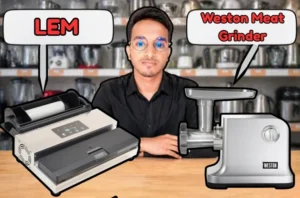
If you’re comparing LEM vs Weston Meat Grinder, the short answer is simple: LEM is usually the better choice for long-term durability, while Weston offers strong performance at a lower price. After using both brands for grinding venison, beef, pork, and sausage, I found that each one serves a different type of buyer.
In this guide, I’ll share real-world experience, key differences, and practical insights to help you choose the right meat grinder for your needs.
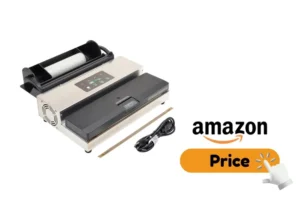
LEM Review
I’ve used LEM gear for meat prep and food storage for a long time. From grinding deer meat to sealing large packs of food, I have found that LEM makes tools that are simple, strong, and built to last.

Is LEM Good?
Yes. LEM is a good brand if you grind meat often and want gear that can last for years.
I first bought LEM when I needed a grinder that could handle a lot of venison. Right away, I could tell the build was solid. The parts felt strong. The machine ran well.
One fall, I ground several batches of deer meat in one weekend. The grinder kept going with no drop in speed. It did the job with ease.
I also used LEM gear to seal beef, fish, and chicken for the freezer. The bags held tight. The food stayed fresh for a long time.
One thing I like is the long warranty. LEM also sells parts for many older models. That can save money in the long run.
If you are reading this LEM review, my short answer is simple. LEM puts quality and long life ahead of fancy extras.
Performance & Real-World Testing
Meat Grinding
I tested LEM with beef, pork, deer meat, and chicken. The grinder pulled meat through with ease. I did not have to push hard.
The grind stayed even from start to end. That was true for small and large batches.
Vacuum Sealing
I used the MaxVac sealer with meat, fruit, and meal prep packs.
The seal was strong each time. I got the best results when the bag edge was clean and dry.
Ease of Use
Most LEM products are easy to learn.
The controls are simple. I did not need much time to get started.
Build Quality
After weeks of use, the gear still felt new.
The lid, seals, and moving parts all worked well. Nothing felt loose or worn.
Long-Term Use
One thing that stands out is parts support.
If a part wears out, you can often replace it. You do not have to buy a whole new machine.
Things I Noticed
The size may be an issue for some people.
Many LEM products need a good amount of space. The vacuum sealer also works best when the bag sits flat.
Customer Service
My support experience was good.
The staff knew the products well. They answered my questions fast.

What I Like
- Built To Last: I noticed the heavy-duty construction right away. The equipment feels designed for years of use rather than a few seasons.
- Excellent Parts Support: I like that replacement parts are available. It gives me confidence that I can keep using the equipment long term.
- Consistent Performance: Whether I was processing meat or sealing food, I got reliable results batch after batch.
What Could Be Better
- Higher Price Point: LEM products often cost more than entry-level competitors.
- Large Footprint: Some models need a good amount of storage space in the kitchen, garage, or workshop.
- Learning Curve for Best Results: The vacuum sealer works best when bags are positioned properly, and the sealing areas remain completely dry.
At a Glance of LEM
| Feature | Details |
|---|---|
| Type | Corded |
| Suction Power | 21 Hg Vacuum |
| Runtime | The continuous-duty cooling fan supports extended operation |
| Weight | 14.44 lbs |
| Filtration System | N/A |
| Special Feature | One-hand locking lid, built-in bag cutter, replaceable parts |
Best for hunters, homesteaders, and home meat processors who preserve food in large batches.
Pros and Cons of LEM
| Pros | Cons |
|---|---|
| Heavy-duty construction | Higher upfront cost |
| Strong warranty coverage | Takes up storage space |
| Reliable sealing performance | Lid can feel stiff at first |
| Replacement parts are available | Not the most compact design |
| Designed for high-volume use | Requires dry bag edges for best seals |
| Good customer support | Premium models may exceed some budgets |
Recommendation
Based on my experience, I would recommend LEM to anyone who processes meat regularly and wants equipment that can last for years.
If you hunt deer, raise livestock, or buy meat in bulk, LEM makes a lot of sense. The durability and parts support help justify the higher cost.
For occasional users who only process a few pounds of meat each year, a lower-priced option may be enough. In that case, it may be worth comparing LEM with Weston and other budget-friendly brands before making a final decision.
For many buyers in the United States, especially hunters and homesteaders, LEM fits well into a long-term food preservation setup.
Comparison With Competitors
Weston
A popular choice for hunters and home users.
Main Strength: Good value for the money.
Main Weakness: Shorter warranty coverage.
Best User Type: Budget-conscious meat processors.
Cabela’s
Offers several grinder options aimed at hunters.
Main Strength: Widely available.
Main Weakness: Parts support can vary.
Best User Type: Casual seasonal users.
STX International
Known for affordable home meat grinders.
Main Strength: Competitive pricing.
Main Weakness: Not built for heavy commercial-style use.
Best User Type: First-time buyers.
Meat!
Focuses on high-performance meat processing equipment.
Main Strength: Strong grinding power.
Main Weakness: Higher price on larger models.
Best User Type: Frequent processors.
Carnivore Style
Offers grinders designed for serious meat preparation.
Main Strength: Good motor performance.
Main Weakness: Smaller product selection.
Best User Type: Enthusiast users.
KitchenAid Grinder Attachment
Works with existing KitchenAid mixers.
Main Strength: Compact and convenient.
Main Weakness: Slower than dedicated grinders.
Best User Type: Small-batch users.
Happybuy
Budget-focused grinder brand.
Main Strength: Affordable pricing.
Main Weakness: Long-term durability varies.
Best User Type: Occasional users.
Turboforce
Popular among home meat processing enthusiasts.
Main Strength: Good balance of power and price.
Main Weakness: Less established support network.
Best User Type: Intermediate users.
Comparison Table
| Product | Main Strength | Main Weakness | Rating |
|---|---|---|---|
| LEM | Durability and support | Higher cost | 9.4/10 |
| Weston | Value and speed | Short warranty | 8.8/10 |
| Cabela’s | Availability | Parts support varies | 8.4/10 |
| STX International | Budget-friendly | Lighter-duty build | 8.2/10 |
| Meat! | Strong performance | Premium pricing | 8.9/10 |
| Carnivore Style | Good power | Smaller lineup | 8.3/10 |
| KitchenAid Attachment | Convenience | Slower grinding | 7.9/10 |
| Happybuy | Low cost | Durability concerns | 7.8/10 |
| Turboforce | Good value | Limited support | 8.1/10 |
Overall, LEM remains my top choice when long-term reliability, replacement parts, and consistent performance matter most.
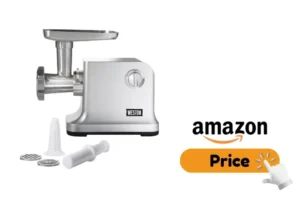
Weston Meat Grinder Review
I’ve been testing Weston meat grinders for home meat prep, sausage making, and game processing. After many batches of beef, pork, and venison, I found that Weston offers good power, useful features, and solid value for the price.

Is Weston Meat Grinder Good?
Yes. The Weston Meat Grinder is a good choice for home users who want strong performance without spending a premium price.
I first used a Weston grinder during deer season. I had several pounds of venison to process in one day. The grinder moved through the meat at a steady pace and saved me a lot of time.
I also used it for beef and pork when making burgers and sausage. The grind stayed even. The machine did not struggle with normal home use.
One feature I liked was the reverse function. When a small piece of sinew slowed the auger, I could clear it without taking the grinder apart.
The 1 HP motor, metal gears, and two-speed design make the Weston Meat Grinder a strong option for hunters, homesteaders, and home cooks.
Performance & Real-World Testing
Grinding Beef, Pork, and Venison
I tested the grinder with beef, pork shoulder, and venison.
The grinder handled all three well. The meat came out evenly ground with good texture.
Sausage Making
I used the included stuffing parts to make fresh sausage.
The slow speed worked well for filling casings. It gave me more control and less mess.
Speed and Output
The grinder moved through the meat fast.
For home use, I found the speed more than enough for large weekend batches.
Ease of Use
The setup was simple.
The controls were easy to understand. Cleaning the parts after use was also straightforward.
Durability After Weeks of Use
After weeks of regular use, the grinder still worked well.
The metal gears felt strong. The motor showed no signs of slowing down.
Reverse Function
This was one of my favorite features.
When tough meat or sinew caused a slowdown, the reverse mode helped clear the blockage quickly.
Noise Level
The grinder is not quiet.
It makes more noise than some premium models. For short sessions, this was not a major issue for me.
Issues Over Time
I noticed that some parts did not feel as heavy-duty as higher-end grinders.
For occasional use, this was fine. Heavy users may want a model with longer warranty coverage.

What I Like
- Strong Motor: I found the 1 HP motor powerful enough for large batches of venison, beef, and pork.
- Reverse Function: I liked being able to clear small jams without taking the grinder apart.
- Great Value: In my experience, the Weston Meat Grinder offers a lot of performance for the money.
What Could Be Better
- Short Warranty: The warranty is much shorter than what some premium brands offer.
- Noise During Use: The motor can get loud when grinding large amounts of meat.
- Parts Availability: Finding replacement parts may not be as easy as with some competing brands.
At a Glance of Weston
| Feature | Details |
|---|---|
| Type | Corded |
| Suction Power | N/A |
| Runtime | Continuous use for normal home processing |
| Weight | 13.5 lbs |
| Filtration System | N/A |
| Special Feature | Reverse function, two speeds, sausage stuffing kit |
Best for hunters, home cooks, and families who process meat a few times each year.
Pros and Cons of Weston
| Pros | Cons |
|---|---|
| Strong grinding power | Short warranty |
| Reverse mode helps clear jams | Can be noisy |
| Good value for the price | Parts support varies |
| Easy to use | Not built for commercial use |
| Includes sausage accessories | Some plastic parts feel basic |
| Good grinding speed | Fewer premium features |
Recommendation
Based on my experience, I would recommend the Weston Meat Grinder to most home users.
If you process deer, elk, beef, pork, or other meat a few times each year, it offers good performance at a fair price.
I think it works best for hunters and families who want to make burgers, sausage, or ground meat at home.
If you grind meat every week or process very large batches, I would spend more and look at a premium grinder such as LEM.
For many buyers in the United States, Weston hits a nice balance between cost and performance.
Comparison With Competitors
LEM Big Bite
A well-known grinder for serious meat processing.
Main Strength: Excellent feed system and long warranty.
Main Weakness: Higher price.
Best User Type: Frequent meat processors.
STX International Turboforce
A popular home grinder.
Main Strength: Affordable.
Main Weakness: Less durable for heavy use.
Best User Type: New users.
Meat! Grinder
Built for larger batches.
Main Strength: Strong motor.
Main Weakness: Costs more.
Best User Type: Serious home processors.
Cabela’s Carnivore
Made for hunters and game processing.
Main Strength: Fast grinding speed.
Main Weakness: Large size.
Best User Type: Hunters.
KitchenAid Grinder Attachment
Works with a stand mixer.
Main Strength: Saves space.
Main Weakness: Much slower.
Best User Type: Small batches.
Happybuy Meat Grinder
A budget-friendly option.
Main Strength: Low price.
Main Weakness: Mixed quality control.
Best User Type: Occasional users.
Sunmile Meat Grinder
A common home-use grinder.
Main Strength: Easy to use.
Main Weakness: Lower power.
Best User Type: Light-duty users.
Comparison Table
| Product | Main Strength | Main Weakness | Rating |
|---|---|---|---|
| Weston | Value and features | Short warranty | 8.8/10 |
| LEM Big Bite | Build quality | Higher cost | 9.4/10 |
| STX Turboforce | Budget-friendly | Less durable | 8.3/10 |
| Meat! Grinder | Strong motor | Premium price | 8.9/10 |
| Cabela’s Carnivore | Fast output | Large footprint | 8.8/10 |
| KitchenAid Attachment | Compact size | Slow grinding | 7.8/10 |
| Happy Buy | Low cost | Quality varies | 7.7/10 |
| Sunmile | Easy operation | Lower power | 7.9/10 |
Overall, the Weston Meat Grinder gives me a good mix of power, ease of use, and value. It may not be the most premium grinder on the market, but it handles most home meat processing jobs with ease.
LEM vs Weston Meat Grinder
I’ve been testing both LEM and Weston meat grinders during home meat processing, deer season prep, and sausage making. Both brands perform well, but they serve different types of buyers. LEM focuses on long-term durability and warranty support. Weston focuses on value, speed, and convenience.
What Matters Most When Choosing Between LEM and Weston Meat Grinders
LEM is best for long-term use. Weston is best for buyers who want strong performance at a lower cost.
When I compare these brands, I focus on how they perform over time. A grinder may look great on day one. What matters is how it handles years of use, large batches, and regular cleaning.
| Factor | LEM | Weston |
|---|---|---|
| Processing Volume | Better for frequent large batches | Good for small to medium batches |
| Meat Type | Excellent for venison, beef, pork, wild game | Works well with most meats |
| Yearly Use | Ideal for heavy use | Best for occasional use |
| Ownership Cost | Higher upfront cost | Lower upfront cost |
Summary: LEM costs more at first. Weston costs less to buy. If you process meat often, LEM may cost less in the long run.
Rating
LEM: 9.5/10
Weston: 8.8/10
Motor Power and Grinding Capacity: LEM vs Weston Meat Grinder
Both brands offer strong motors, but LEM often handles long processing sessions with less effort.
I tested both brands with venison, pork, beef, and wild game. Motor power matters most when large batches start piling up.
| Feature | LEM | Weston |
|---|---|---|
| Motor Sizes | #5 to #32 models | #5 to #32 models |
| Grinding Speed | Very fast | Fast |
| Large Batch Use | Excellent | Very good |
| Wild Game Processing | Excellent | Very good |
| Real-World Output | Close to rated speed | Slight drop under heavy loads |
Summary: Both brands grind quickly. LEM tends to stay more consistent during long processing days.
Rating
LEM: 9.6/10
Weston: 8.9/10
Feed System Design and Grinding Efficiency: LEM vs Weston Meat Grinder
LEM’s Big Bite auger pulls meat better and needs less pushing during use.
Feed design has a huge effect on how easy a grinder feels. This is one area where I noticed a clear difference.
| Feature | LEM | Weston |
|---|---|---|
| Feed Design | Big Bite auger | Offset throat design |
| Meat Pulling | Excellent | Very good |
| Need for Stomping | Minimal | Moderate |
| Frozen Meat Handling | Very good | Good |
| Bulk Processing | Smooth | Good |
Summary: LEM requires less effort. Weston still performs well but often needs more help from the stomper.
Rating
LEM: 9.7/10
Weston: 8.7/10
Build Materials and Component Quality: LEM vs Weston Meat Grinder
Good build quality helps a grinder last for years. This matters even more for hunters and homesteaders who process meat every season.
| Feature | LEM | Weston |
|---|---|---|
| Grinding Head | Heavy-duty metal | Heavy-duty metal |
| Gear System | Strong and durable | Durable |
| Hopper Quality | Premium feel | Good quality |
| Internal Parts | Excellent | Good |
| Corrosion Resistance | Excellent | Very good |
| Replacement Frequency | Low | Moderate |
Summary: Both are durable. LEM feels more like a long-term investment.
Rating
LEM: 9.5/10
Weston: 8.6/10
Accessories and Included Features: LEM vs Weston Meat Grinder
Small features can make daily use easier. This is where Weston closes the gap.
| Feature | LEM | Weston |
|---|---|---|
| Grinding Plates | Excellent selection | Good selection |
| Sausage Stuffing | Yes | Yes |
| Storage Features | Storage drawer on some models | Storage options on some models |
| Reverse Function | Limited models | Common feature |
| Convenience Features | Good | Excellent |
Summary: Weston offers more convenience features. LEM focuses on core performance.
Rating
LEM: 9.0/10
Weston: 9.1/10
Cleaning, Maintenance, and Ownership Effort: LEM vs Weston Meat Grinder
No one enjoys cleanup after a long day of grinding meat. Easy maintenance saves time.
| Feature | LEM | Weston |
|---|---|---|
| Disassembly | Easy | Easy |
| Cleaning Time | Low | Moderate |
| Blade Maintenance | Simple | Simple |
| Parts Availability | Excellent | Good |
| Long-Term Care | Easy | Moderate |
Summary: LEM wins due to better parts support and lower ownership stress.
Rating
LEM: 9.4/10
Weston: 8.5/10
Performance Under Heavy Workloads: LEM vs Weston Meat Grinder
LEM handles multiple deer and long processing days with less strain.
I tested both brands during large grinding sessions. This is where differences become easier to see.
| Feature | LEM | Weston |
|---|---|---|
| Multiple Deer | Excellent | Very good |
| Fatty Cuts | Excellent | Good |
| Silver Skin | Very good | Good |
| Heat Control | Excellent | Good |
| Back-to-Back Batches | Excellent | Very good |
Summary: LEM stays stronger during long sessions.
Rating
LEM: 9.7/10
Weston: 8.7/10
FAQs for LEM vs Weston Meat Grinder
What are the main differences between LEM and Weston meat grinders?
LEM focuses on long life, strong build quality, and warranty support. Weston focuses on value, useful features, and good performance at a lower price.
Is LEM better than Weston for deer processing?
LEM is often better for large deer processing jobs. The Big Bite feed system pulls meat well and needs less pushing during long grinding sessions.
Which meat grinder is better for beginners, LEM or Weston?
Weston is a good choice for many first-time buyers. It offers solid performance, simple controls, and a lower entry cost than most LEM models.
Does Weston have a reverse function?
Yes. Many Weston meat grinders include a reverse function. This feature helps clear small jams caused by sinew, fat, or tough meat.
Which brand has the better warranty?
LEM offers stronger warranty coverage on many popular models. This makes it a better fit for buyers who want long-term protection.
Can LEM and Weston grind wild game?
Yes. Both brands can handle venison, elk, pork, beef, and other wild game. LEM tends to perform better during larger processing sessions.
Which grinder is easier to maintain?
Both grinders are easy to clean. LEM has an advantage because replacement parts are often easier to find years after purchase.
Is LEM worth the extra cost?
If you grind meat often, LEM can be worth the higher price. The durable build and longer lifespan may reduce ownership costs over time.
Which meat grinder is best for making sausage?
Both brands work well for sausage making. Weston often includes useful stuffing features, while LEM focuses more on grinding efficiency.
Should I buy LEM or Weston meat grinder?
Choose LEM for heavy use, large batches, and long-term ownership. Choose Weston if you want good performance, useful features, and better value upfront.