
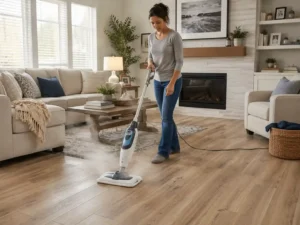
Laminate floors can look tough, but steam can damage them faster than many people expect. If you are asking, “Can You Use a Steam Cleaner on Laminate Floors?” the short answer is usually no, because heat and moisture can seep into seams and cause swelling over time. I learned this after seeing a friend’s once-beautiful living room floor start bubbling near the edges after months of steam-mopping.
As someone who has researched flooring care and cleaning methods for years, I can say that low-moisture cleaning is usually the safest choice for most U.S. homes with laminate flooring, especially in busy kitchens and family spaces.
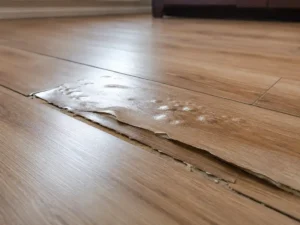
Table of Contents
ToggleCan You Use a Steam Cleaner on Laminate Floors?
Most laminate floors should not be cleaned with steam. Heat and water can damage the floor over time.
A steam mop may look safe. The floor may even shine after cleaning. But steam can slip into small gaps between the boards. When that happens, the floor may swell, lift, or bend.
The Short Answer
In most homes, do not use a steam cleaner on laminate floors.
A damp microfiber mop is much safer.
Why Steam Can Harm Laminate Floors
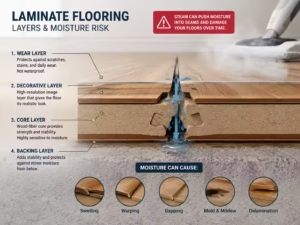
Laminate floors have layers.
The top layer helps stop scratches and stains. Under that layer is a core made from wood fibers.
Wood fibers soak up water fast.
Steam adds two things that laminate does not like:
- Heat
- Moisture
Steam can move into the seams between boards. The moisture can stay trapped under the surface.
Over time, the floor may:
- Swell
- Warp
- Bubble
- Lift at the edges
Why Damage May Take Time
Many people use steam mops for months before they notice a problem.
That does not mean the floor is safe.
Steam damage often grows slowly.
At first, the floor may look clean and shiny. Later, the seams may puff up or the boards may bend.
When Steam Cleaning May Be Allowed
Some newer laminate floors are made to handle small amounts of moisture.
Even then, you must follow the maker’s rules.
Some brands allow steam cleaning only when you:
- Use a low-steam setting
- Keep the mop moving
- Use very little moisture
- Dry the floor right away
Always read the floor warranty first.
If the maker says no steam, do not use steam.
Steam Risk by Floor Type
| Floor Type | Steam Risk | Best Choice |
|---|---|---|
| Standard laminate | High | Avoid steam |
| Water-resistant laminate | Medium | Use care |
| Damaged laminate | Very high | Never use steam |
| Old laminate | High | Use dry or damp mop |
| Waterproof vinyl | Low | Safer than laminate |
Signs Steam May Be Damaging the Floor
Watch for these signs:
- Raised edges
- Soft seams
- Bubbling
- Peeling corners
- Dull spots
- Uneven boards
These problems often start near the seams.
Floors That Should Never Be Steam Cleaned
Do not use steam on:
- Floors with open seams
- Old laminate floors
- Cheap laminate flooring
- Floors with water damage
- Floors near tubs or showers
- Floors that already bubble or warp
Laminate vs Waterproof Flooring
Laminate and waterproof floors are not the same.
Many laminate floors are only water-resistant.
That means they can handle small spills for a short time.
It does not mean they are safe for steam.
Waterproof floors use stronger materials that block water better.
Better Ways to Clean Laminate Floors
The safest way to clean laminate is with low moisture.
Good choices include:
- Dry microfiber mop
- Damp microfiber mop
- Spray mop
- Laminate-safe cleaner
These tools clean well without soaking the floor.
Safe Cleaning Steps
1. Remove Dust First
Use a soft broom, vacuum, or dry microfiber mop.
Dust and dirt can scratch the floor.
2. Use Very Little Water
Lightly dampen the mop.
Never soak it.
The mop should feel almost dry.
3. Clean Gently
Wipe along the boards.
Do not push water into the seams.
4. Dry the floor.
Use a dry towel or cloth.
Make sure no water stays on the surface.
Cleaning Tools to Avoid
Avoid:
- Soaking wet mops
- Steam mops
- Abrasive scrub pads
- Bleach
- Wax products
What to Do if Water Gets Into the Seams
Dry the area fast.
Use towels and moving air.
You can use:
- Fans
- Air conditioning
- Open windows
If the boards swell badly, they may need replacement.
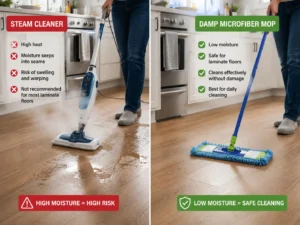
Steam Mop vs Damp Mop
| Feature | Steam Mop | Damp Microfiber Mop |
|---|---|---|
| Heat | High | None |
| Moisture | High | Low |
| Daily safety | Lower | Higher |
| Risk of damage | Higher | Lower |
| Best for laminate | No | Yes |
Common Myths
“Steam Uses Less Water”
Steam still pushes moisture into the seams.
“Waterproof Means Steam-Proof”
A floor may block water but still react badly to heat.
“No Damage Means It Is Safe”
Steam damage often takes time to show.
“All Steam Mops Are Safe for Laminate”
Many steam mops say they work on laminate. That does not mean every laminate floor is safe.
The Long-Term Risk
Steam cleaning can weaken laminate over time.
Heat and moisture stress the seams again and again.
This may shorten the life of the floor.
Replacing damaged laminate costs much more than using a safer mop.
Best Choice for Most Homes
For most homes, skip the steam cleaner.
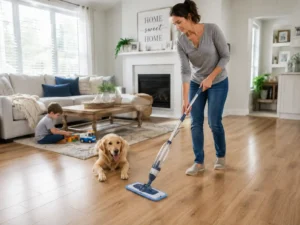
Use a dry or lightly damp microfiber mop instead.
That simple habit helps laminate floors last longer.
Final Answer
Most laminate floors should not be cleaned with steam.
Steam can force heat and moisture into the seams. Over time, that can cause swelling, warping, and bubbling.
A damp microfiber mop is the safer choice for daily cleaning.
If you still want to use steam, check the floor warranty first and follow the maker’s rules exactly.
FAQs for Can You Use a Steam Cleaner on Laminate Floors
Can you use a steam cleaner on laminate floors safely?
Most laminate floors are not safe for steam cleaning. Heat and moisture can enter seams and cause swelling, bubbling, or warping over time.
Why do steam cleaners damage laminate floors?
Steam pushes hot moisture into small gaps between boards. The laminate core can absorb water and slowly expand or weaken from the inside.
Is water-resistant laminate safe for steam mops?
Some water-resistant laminate floors allow low-steam cleaning. Always check the manufacturer’s guide first to avoid damage or warranty issues.
What is the safest way to clean laminate floors?
A dry or lightly damp microfiber mop is the safest choice. It removes dirt well while keeping moisture away from the floor seams.
Can steam cleaning void a laminate floor warranty?
Yes. Many laminate flooring brands do not allow steam mops. Using one may void the warranty if moisture damage appears later.
What happens if water gets into laminate floor seams?
Water inside the seams can cause swelling, soft spots, and raised edges. Fast drying may help reduce damage if caught early.
Are steam mops better than damp mops for laminate?
Steam mops clean fast, but add more heat and moisture. Damp microfiber mops are safer for daily laminate floor care and protection.
Can you steam clean old laminate flooring?
Old laminate flooring is more likely to crack or swell from steam. Dry or low-moisture cleaning methods are usually much safer.
Does “waterproof laminate” mean steam-proof flooring?
No. Waterproof laminate resists spills better, but heat from steam can still damage seams or weaken the protective layers over time.
How often should laminate floors be cleaned without steam?
Dry mop laminate floors several times each week. Use a lightly damp mop only when needed to remove footprints or sticky dirt.
Read more articles:
Kirby Vacuum Carpet Cleaner How to Use