
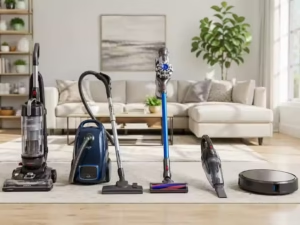
Buying a vacuum can feel confusing at first. How to select vacuum cleaner is simple when you match it to your floor, home size, and cleaning needs. I learned this after picking the wrong one for my carpet and wasting time every week.
As someone who has tested many types in real homes, I suggest you focus on fit, not hype—start with your floors, and you’ll make the right choice.
How to Select Vacuum Cleaner (Simple, Real-World Guide)
Choosing a vacuum cleaner feels like picking shoes—you need the right fit for your home. The short answer: match the vacuum to your floor, space, and daily habits. I learned this the hard way after buying a fancy model that struggled on thick carpet.
Step Context & Preconditions — How to Select Vacuum Cleaner
Upgrade when cleaning feels harder, slower, or less effective than before.
You should replace your vacuum when it loses suction, smells, or leaves dirt behind. A good sign is when cleaning takes twice the time. That’s your cue.
A basic model works if you have a small home and clean once or twice a week. But if you have pets or allergies, advanced features like HEPA filters really help. I noticed less dust in the air after switching.
First, check your home. Look at your floor type, room size, pets, and dust levels. These shape your choice more than brand names.
Do not rush to buy if your needs are unclear. If you are moving soon or only need it short-term, wait. A wrong choice costs more later.
Required Tools & Decision Inputs — How to Select Vacuum Cleaner
Know your floors, space, and cleaning habits before buying.
Start with the basics. Check if your home has carpet, hard floors, or both. This decides the vacuum type right away.
Next, think about your home size and layout. Stairs and tight corners need flexible designs. A big house needs a longer runtime or a cord.
Cleaning habits matter too. Daily cleaning needs ease and speed. Weekly cleaning needs a strong suction.
Optional factors include noise and storage space. Some vacuums are loud or bulky. I once returned a model just because it didn’t fit my closet.
If unsure, choose a multi-purpose vacuum. It may not be perfect, but it covers most needs safely.
Vacuum Types Overview — How to Select Vacuum Cleaner
A quick look helps you narrow your choice fast.
| Vacuum Type | Best For | Limitations | Typical Use Case |
|---|---|---|---|
| Upright | Deep carpet cleaning | Heavy | Large homes |
| Canister | Hard floors + stairs | Bulky storage | Mixed surfaces |
| Stick | Quick cleaning | Less power | Small spaces |
| Handheld | Spot cleaning | Limited reach | Cars, sofas |
| Robot | Automation | Not deep cleaning | Daily maintenance |
Takeaway: Full-size vacuums clean deeper than stick or robot models.
Step-by-Step Selection Process — How to Select Vacuum Cleaner
Step 1 — Match Vacuum Type to Floor & Layout
Match the vacuum type to your floor for best results.
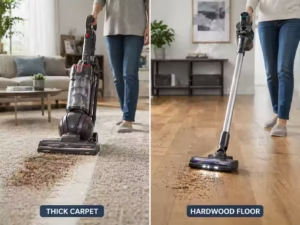
Carpets need strong upright vacuums. Hard floors work better with canister or stick models. Mixed floors need adjustable brush rolls.
A common mistake is choosing a light vacuum for thick carpet. I did that once—it barely picked up hair.
Step 2 — Evaluate Suction & Cleaning, Mechanics
Suction alone is not enough—brush and airflow matter.
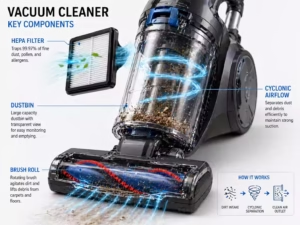
Strong suction helps, but brush rolls do the real work on carpets. Airflow keeps dirt moving inside.
Look for adjustable suction. This helps protect rugs and delicate floors.
Do not focus only on wattage. Real cleaning depends on design, not just power numbers.
Step 3 — Check Filtration & Air Quality
HEPA filters improve air quality and trap fine dust.
If you have allergies, use a HEPA filter. It traps tiny dust and pollen.
A sealed system is even better. It keeps dust from leaking back into the air.
I noticed less sneezing after switching to a sealed HEPA vacuum.
Step 4 — Choose Bagged vs Bagless
Bagged is cleaner; bagless is cheaper long-term.
Bagged vacuums hold dust better. They are great for allergy sufferers.
Bagless models save money over time. But they need more cleaning.
Do not ignore maintenance. Emptying dustbins can get messy.
Step 5 — Consider Usability & Design
Pick a vacuum you can move and store easily.
Check weight and movement. Heavy vacuums are hard on stairs.
Corded models give steady power. Cordless ones offer freedom but limited time.
Attachments help clean corners, sofas, and stairs. They make a big difference in daily use.
Step 6 — Factor in Budget & Long-Term Cost
Think beyond price—consider maintenance and lifespan.
Cheap vacuums cost less upfront but may fail early. Good models last longer.
Check filter costs and battery life. These add to long-term expense.
Many people forget repair and accessory costs. Plan for them.
Key Feature Comparison Table
| Feature | Why It Matters | Best Choice Scenario | Trade-off |
|---|---|---|---|
| Suction Power | Deep cleaning | Thick carpets | Higher energy use |
| Filtration (HEPA) | Air quality | Allergies, pets | Higher cost |
| Weight | Ease of use | Stairs, elderly users | May reduce power |
| Cord vs Cordless | Mobility vs runtime | Large vs small homes | Battery limits |
| Attachments | Versatility | Furniture, corners | Extra complexity |
Takeaway: Filtration and brush design often matter as much as suction.
Verification Checklist
Ensure the vacuum works well in real conditions before buying.
Make sure it removes both dust and visible dirt. A good vacuum leaves floors truly clean.
Check for dust leaks during use. Poor sealing reduces air quality.
Test movement and noise. Comfort matters in daily use.
Also, confirm it fits your storage space.
Common Errors & Fixes
Choosing the wrong type for your floor leads to poor results. Fix this by switching to the right category.
Weak carpet cleaning often means poor brush design. Look for motorized brush rolls.
Dust blowing out signals bad filtration. Upgrade to HEPA or sealed systems.
If it feels hard to push, adjust height or suction settings.
Safety & Risk Considerations
Avoid long use without breaks. Overheating can damage the motor.
Check cord quality or battery health. Faulty power systems are risky.
Clean filters often. Blocked airflow reduces performance and safety.
Use the right attachments. Wrong tools can damage delicate surfaces.
Time, Effort & Skill Level
You can choose a vacuum in about 30–60 minutes. Just follow the steps above.
The process is beginner-friendly. Most features are easy to understand.
Basic models need little learning. Advanced ones take a bit more time.
Maintenance & Aftercare
Clean or replace filters often. This keeps suction strong.
Empty the dustbin or change bags regularly. Do not wait until full.
Remove hair from brush rolls. This improves performance.
Good care helps your vacuum last longer.
Real-World Usage Scenarios
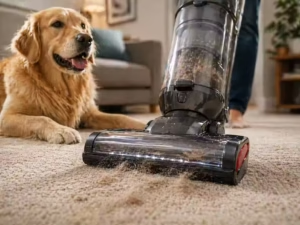
Pet owners need strong suction and anti-tangle brushes. Hair can clog weak vacuums fast.
Small apartments work well with compact stick vacuums. They save space and time.
Large homes need powerful upright or canister models. They handle deep cleaning better.
Allergy-sensitive homes benefit from sealed HEPA systems. They keep the air clean.
Performance Reality Check — How to Select Vacuum Cleaner
Many expect one vacuum to do everything. In reality, two often work better—a main and a quick cleaner.
Price does not always mean better cleaning. The right fit matters more.
I once bought an expensive vacuum that failed on my carpet. Lesson learned: match the tool to the job.
Decision Flow Summary
Start with floor type, then match features and budget.
Start with your floor type. This decides your vacuum category.
Next, check suction and filtration. These affect real performance.
Then look at usability and cost. Make sure it fits your daily life.
Finally, confirm it works for your real needs.
Consultation
Define your goal first. This guide helps you choose the right vacuum type, not just buy one. Think about who you are. Homeowners, renters, and pet owners all have different needs.
Keep the idea simple: focus on selection, not hype. Real factors matter more than trends. Use this structure to stay clear. Start simple, then go deeper step by step.
Always review your choice. Remove confusion and stick to your needs. Track what works. Over time, you’ll know exactly what suits your home best.
FAQs for How to Select Vacuum Cleaner
What is the first step in how to select vacuum cleaner?
Start with your floor type. Carpet, hard floor, or mixed surfaces decide the vacuum type. This step makes the rest of your choice much easier and faster.
How to select vacuum cleaner for carpet vs hard floors?
Use an upright for carpets and a stick or canister vacuum for hard floors. Mixed homes need adjustable brushes. Matching floor type improves cleaning results quickly.
How to select vacuum cleaner with the right suction power?
Look beyond numbers. Good suction plus a strong brush roll gives better cleaning. Focus on real performance, not just watt or power ratings.
How to select vacuum cleaner for allergies and pets?
Choose a vacuum with a HEPA filter and sealed system. It traps fine dust and pet hair. This helps keep your air clean and reduces allergy issues.
How to select vacuum cleaner within a budget?
Set a budget, then compare features like suction and filters. Do not pick the cheapest blindly. A balanced option gives better value over time.
Read more articles:
How to Use a Bissell Vacuum Cleaner