
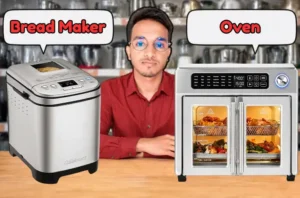
Nothing beats the smell of fresh baked dough filling your house. You might wonder which tool bakes the best loaf for your family. I spent weeks testing these appliances to see which one truly wins. As a home baker, I want to help you pick the right tool. Read on to find your perfect kitchen match.
Let us look closely at the dedicated baking machine first. It promises to do all the hard work for you.
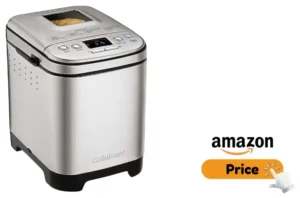
Bread Maker Review
I’ve been making sandwich bread in the Cuisinart CBK-110 for weeks. It is very handy when I am busy.
You might wonder if this small machine can really bake well. Here is what I found out during my tests.

Is Cuisinart Bread Maker Good
Yes, this machine is a lifesaver for busy days. It is great for making a quick loaf when I am focused on my cat’s feeding schedule or working in the yard.
I put ingredients in, press start, and walk away. The digital screen is easy to read, and it fits nicely under my standard US kitchen cabinets. In short, it makes home baking stress-free.
Testing a product shows you how it really works. I put this machine through its paces in my kitchen.
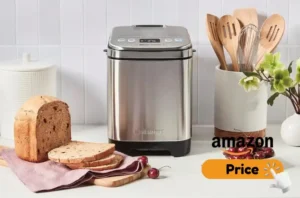
Performance & Real-World Testing
Countertops can get messy when making food. I wanted to see if this unit stays put while mixing.
Kitchen Surfaces Tested
I placed the machine on smooth granite and a wooden butcher block. It did not slide around during the heavy dough mixing cycle. The rubber feet kept it very stable. It is safe for any flat counter.
Baking needs to be reliable every single time. I checked to see if the loaves looked the same each day.
Real-Life Consistency
I baked five loaves of white bread in one week. Every single loaf came out with the exact same height and color. The heating element does a great job. You get very reliable results.
No one likes an appliance that is hard to manage. I wanted to see how easy it is to use the parts.
Ease of Handling
The bread pan lifts out with a simple twist. The paddle sometimes gets stuck in the loaf, which is annoying. However, the menus are very clear. It is quite simple to operate daily.
A good kitchen tool should last a long time. I checked for wear and tear after many uses.
Durability After Weeks of Use
After weeks of daily baking, the machine still looks brand new. The nonstick pan shows no scratches or peeling. The stainless steel body wipes clean easily. It holds up well to heavy use.
Focusing on the best parts helps you see the value. Here are the things that impressed me the most.
What I Like
- Product quality: The stainless steel build feels very solid and looks great in a modern kitchen.
- Unique design: Its vertical shape saves a lot of counter space, which is great for small homes.
- Ease of use: The delay timer lets me wake up to a fresh loaf every morning.
No tool is perfect for every single task. These are a few things that could be better.
What Could Be Better
Shape limits: You only get tall, blocky loaves, which are hard to fit in standard toasters.
Paddle holes: The mixing blade leaves a big hole in the bottom of your bread.
Noise level: The kneading cycle is a loud hum if you are in the same room.
Quick details help you make a fast choice. Here are the basic facts about this machine.
At a Glance of Cuisinart
| Field | Notes |
| Product | CBK-110 Automatic Bread Maker |
| Brand | Cuisinart |
| Category | Bread Maker |
| Best For | Busy people and beginners |
| Key Feature(s) | Compact, 12 menus, delay timer |
| Variant(s) | Silver/Black |
| Price Range | $$ |
| Rating | 4.4 out of 5 stars |
Best for users who want fresh bread with zero manual effort.
Comparing the good and bad parts makes deciding simpler. Let us look at both sides.
Pros and Cons of Cuisinart
| Type | Feature | My Experience |
| Pro | Small footprint | It fits perfectly in the corner of my counter. |
| Pro | Hands-off | I just add flour and water, then walk away. |
| Pro | Delay timer | I love waking up to warm bread. |
| Pro | Easy clean | The nonstick pan washes out in seconds. |
| Con | Odd shape | Slices are too tall for my toaster. |
| Con | Paddle hole | The bottom slice gets ruined by the blade. |
| Con | Kneading noise | It hums loudly during the mixing phase. |
| Con | Single use | It only makes dough and bread. |
Buying advice helps you see if it fits your home. Here is my final thought on this unit.
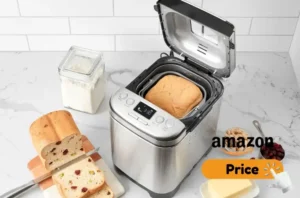
Recommendation
You should buy this if you have a busy life but want fresh food. It is perfect for US families dealing with high grocery prices.
If you want beautiful, round artisan loaves, you should look at other options. This machine is for pure ease.
Now we move on to the multi-cooker option. This tool offers more ways to cook your meals.
Oven Review
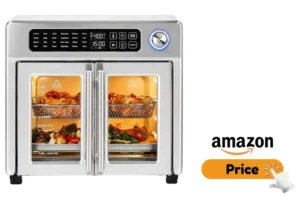
I’ve been using the Emeril Lagasse Extra Large French Door Air Fryer Toaster Oven Combo to bake and roast. It is a true workhorse for daily meals.
You might want to know if this oven handles baking well. Here is my honest take after using it.

Is Emeril Lagasse Oven Good
Yes, this oven is a fantastic tool for any kitchen. I love setting the timer to roast veggies while I fix a lawnmower spark plug outside.
It heats up fast and cooks food very evenly. The French doors make it easy to put large pans inside. Ultimately, it is a very powerful machine.
Testing the oven with real food shows its true worth. I used it for many different meals.
Performance & Real-World Testing
Finding room for a large oven can be hard. I tested how it fits in a normal kitchen setup.
Countertop Space and Surfaces
This oven takes up a lot of room. I placed it on a heat-safe mat because the outside gets warm. It needs open space around it to vent air. It is safe, but it demands space.
Daily cooking requires a machine that handles many jobs. I tried roasting, baking, and air frying.
Daily Cooking Performance
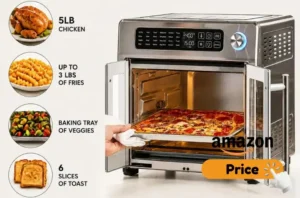
I roasted a whole chicken and baked a pizza. The fan moves hot air well, making crispy crusts. Everything cooked perfectly inside. It handles large meals with ease.
Baking bread needs exact heat to work well. I checked how well it holds a steady temp.
Heat Accuracy
I used an oven thermometer to check the heat. The temperature stays very close to the dial setting. It gets hot very fast. Accurate heat means better baking results.
Kitchen tools take a beating over time. I looked for signs of wear after heavy use.
Durability Over Time
The stainless steel looks great but shows finger marks. The doors still open smoothly after weeks of pulling. The inside trays are easy to wash. It feels built to last a long time.
Focusing on the strengths highlights why people love it. Here is what stands out to me.
What I Like
- Product quality: The French doors feel premium and make opening the oven easy with one hand.
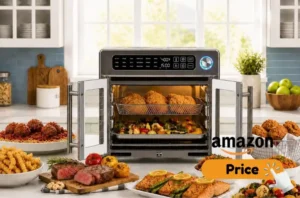
- Versatility: I can air fry fries, roast meat, and bake bread all in one unit.
- Size capacity: It easily holds a whole chicken or large baking pans.
Knowing the weak spots helps you buy wisely. Here are a few things that need work.
What Could Be Better
- Footprint size: It takes up a lot of counter space, which is hard for small kitchens.
- Hot exterior: The outside metal gets warm, so you must be careful not to touch it.
- Door safety: Both doors close at once, so you have to watch your hands.
Quick stats give you a clear view of the product. Here are the facts for this oven.
At a Glance of Emeril Lagasse
| Field | Notes |
| Type (corded/cordless) | Corded (120 Volts for US outlets) |
| Suction power | N/A (Uses a strong convection fan) |
| Runtime (if applicable) | Programmable timer built-in |
| Weight | Heavy (needs a strong counter) |
| Filtration system | N/A (Includes a grease drip tray) |
| Special feature | French doors and 360 air circulation |
Best for cooks who want to replace many small appliances with one unit.
Seeing the good and bad helps you decide. Let us review the pros and cons.
Pros and Cons of Emeril Lagasse
| Type | Feature | My Experience |
| Pro | French doors | They make loading large pans very easy. |
| Pro | Huge capacity | I can cook a whole meal at once. |
| Pro | Fast heating | It warms up much faster than my wall oven. |
| Pro | Many functions | I use it for toast, air frying, and baking. |
| Con | Takes up space | I had to move other tools off my counter. |
| Con | Gets warm | The outside metal heats up during use. |
| Con | Door spring | The doors can swing shut on your hand. |
Good advice matches the tool to the right person. Here is who should buy this oven.
Recommendation
You should buy this if you want one tool to do everything. It is great for US buyers who want to air fry and bake in one spot.
If you only want to make bread with no effort, do more research first. This requires hands-on prep work.
Seeing both tools side by side makes choosing faster. Here is a quick summary.
Bread Maker vs Oven at a Glance: Which One Is Better for Most Home Bakers?
A bread maker wins for pure ease, while an oven wins for quality and shape. I found that busy folks love the machine, but food lovers prefer the oven.
This quick look helps you match your goals to the right tool. Choosing depends on your free time.
Quick Verdict by Baking Goal
Here is a simple breakdown of which tool fits your life best. I tested both to see where they shine. Review this chart to find your match. A quick choice saves you time.
| Goal | Best Choice |
| Best for beginners | Bread Maker |
| Best for busy families | Bread Maker |
| Best for artisan baking | Oven |
| Best overall value | Oven (multi-use) |
It is suitable for buyers who know their main baking goals. It is not suitable for people who want deep technical details.
Understanding how they work shows why they are different. The way they handle dough is not the same.
Core Differences Between a Bread Maker and an Oven
A bread maker does the mixing, kneading, and baking in one small pan. An oven only bakes what you have already mixed and shaped by hand.
The machine automates the hard work. The oven requires your direct skill.
Seeing the whole process helps you plan your day. Let us compare the steps.
How Each Appliance Makes Bread
With the machine, you dump ingredients in and press a button. It mixes, kneads, rests, and bakes all by itself.
With the oven, you must mix dough in a bowl, knead it on a counter, and shape it. Then, you place it in the oven to bake.
Time and effort play a big role in baking. Let us see how much work you must do.
Automation vs Hands-On Baking Experience
The machine needs about five minutes of active time. You just measure the flour, yeast, and water.
The oven method takes hours of watching, folding, and checking the dough. It requires basic baking skills to get right.
This highlights the true cost of your time. Here is how the effort compares.
| Feature | Bread Maker | Oven |
| Active Time | 5 minutes | 30 to 60 minutes |
| Passive Time | 3 to 4 hours | 3 to 24 hours |
| Skill Needed | None | Basic to High |
| Error Tolerance | Low | High |
It is suitable for people deciding how much time they want to spend. It is not suitable for advanced bakers who already know their workflow.
The final loaf is what really matters. Both tools make very different types of bread.
Bread Quality: Bread Maker vs Oven
Ovens produce bread with a crispy crust and chewy center. Bread makers yield softer, denser loaves that look like a block.
The oven gives you bakery quality. The machine gives you basic sandwich slices.
Crust is a big deal for bread lovers. Let us see which tool makes the best outside crunch.
Crust Quality: Bread Maker vs Oven
Ovens create intense heat that forms a thick, crispy, blistered crust. You can add steam to make it even crunchier.
The machine makes a soft, uniform crust that is quite thick. It cannot achieve that artisan shatter.
The inside of the bread tells you how well it rose. We call this the crumb.
Crumb Texture and Rise
Ovens allow the dough to expand freely, creating big, airy holes. This gives you a light and chewy texture.
The machine restricts the dough inside a small pan. This results in a tight, dense crumb with tiny air pockets.
Taste is built during the resting phase. Let us look at how flavor develops.
Flavor Development and Fermentation Potential
Ovens let you ferment dough in the fridge for days to build deep flavor. You can make real sourdough this way.
The machine works on a fast timer, so the flavor is simple and mild. It lacks that deep, rich taste.
Good bread comes down to how it looks and tastes. Here is a clear look at the final loaf.
| Feature | Bread Maker | Oven |
| Crust Texture | Soft and thick | Crispy and blistered |
| Crumb Structure | Dense and tight | Open and airy |
| Shape | Blocky | Any shape |
| Flavor | Mild | Rich and complex |
It is suitable for eaters who care about texture and taste. It is not suitable for those who only want convenience.
Different tools are better for different recipes. You must match the tool to the food you want.
Bread Types Each Method Handles Best
The machine excels at simple white or wheat loaves. The oven is perfect for baguettes, boules, and pizza crusts.
Your favorite food dictates the best tool. Choose based on what you eat most.
Daily lunches need soft, square bread. Let us see which does this better.
Best Choice for Sandwich Bread
The machine is the clear winner for sandwich bread. It makes a loaf that slices easily for school lunches.
The oven can make sandwich bread, but it requires special pans and more work. The machine is just easier.
Fancy bread requires intense heat and steam. Let us look at artisan baking.
Best Choice for Sourdough and Artisan Loaves
The oven is the only way to bake true sourdough. It gives the dough room to spring up and form a hard crust.
The machine cannot reach the high heat needed for artisan bread. It will just make a dense block.
Dough can be used for many fun meals. Let us look at sweet treats and dinner rolls.
Best Choice for Pizza Dough, Rolls, Bagels, and Sweet Dough
You can use the machine to mix the dough, but you must use the oven to bake it. You cannot bake a round pizza in a square machine.
The oven gives you the freedom to bake any shape. It is highly versatile.
Knowing what you bake most helps you pick. Here is the best tool for each food.
| Bread Type | Best Tool |
| Sandwich Loaf | Bread Maker |
| Sourdough | Oven |
| Baguettes | Oven |
| Pizza Crust | Oven |
It is suitable for planners who know their family menu. It is not suitable for people who do not eat carbs.
Measuring how well they work helps you trust the tool. Let us look at hard facts.
Performance Comparison: Bread Maker vs Oven
The machine is highly consistent but low on capacity. The oven has huge capacity but requires your skill to be consistent.
Performance means getting the job done right. Both do well, but in different ways.
Making food for a crowd takes space. Let us see how much they can hold.
Baking Capacity: Bread Maker vs Oven
The machine only bakes one two-pound loaf at a time. You cannot rush the three-hour cycle.
The oven can hold two large cast-iron pots or a massive tray of rolls at once. It feeds a crowd easily.
Heat control changes how food cooks. Let us look at the baking environment.
Temperature Control and Heat Distribution
The oven uses a fan and large heating elements to surround the food with heat. You can set exact temperatures.
The machine uses a small element at the base. It controls its own heat, so you cannot change it.
Getting good results every time is key. Let us look at the success rate.
Baking Consistency Across Recipes
The machine is foolproof if you measure well. It yields the exact same loaf every time.
The oven requires you to watch the clock and adjust for your kitchen’s humidity. Your results will vary until you learn.
Time is your most precious asset. Let us see how long the process takes.
Time Required from Start to Finished Bread
The machine takes three to four hours total, but only five minutes of your time.
The oven takes four to twenty-four hours total, and requires an hour of active work. The machine wins on time.
Seeing the performance facts helps clear your mind. Here is a quick metric guide.
| Feature | Bread Maker | Oven |
| Capacity | 1 Loaf | Multiple Loaves |
| Consistency | Very High | Depends on Skill |
| Heat Control | Automatic | Manual |
| Total Time | 3 to 4 hours | 4 to 24+ hours |
It is suitable for buyers comparing hard data. It is not suitable for buyers solely focused on price.
Living with an appliance means cleaning and storing it. Let us look at daily life.
Ease of Use and Everyday Convenience
The machine is simple to use and clean but takes up counter space. The oven is a permanent fixture that requires deeper cleaning.
Ease of use means less stress. You want a tool that helps, not hurts.
New skills can be hard to learn. Let us see how easy it is to start.
Learning Curve for Beginners
The machine requires zero skill. If you can read a recipe, you can make bread.
The oven requires you to learn how dough feels and when it is ready. It takes practice to master.
Cleaning up is the worst part of cooking. Let us look at the mess.
Cleaning and Maintenance
The machine pan washes out in seconds with soap and water. There is no flour on your counters.
The oven method leaves bowls, spoons, and flour everywhere. It requires much more cleanup time.
Kitchen space is very valuable. Let us see how they fit.
Kitchen Space and Storage Requirements
The machine is bulky and needs a tall cabinet or counter corner to sit.
The oven is already built into your kitchen, or in the case of the air fryer, it replaces your toaster. Both need space.
Daily use facts help you plan your kitchen. Here is how they stack up.
| Feature | Bread Maker | Oven |
| Learning Curve | Zero | Steep |
| Mess Level | Very Low | High |
| Storage Needs | Medium | Built-in/Large |
| Noise | Hums | Quiet |
It is suitable for cooks who hate cleaning up. It is not suitable for people with massive professional kitchens.
Money matters when buying new gear. Let us look at the true costs.
Cost Comparison and Long-Term Value
A bread maker costs between $60 and $300. An oven is already in your house, but buying a countertop one costs around $150.
You must look at upfront costs and daily energy use. This shows the true value.
Buying the tool is the first step. Let us look at the price tags.
Initial Investment
The Cuisinart machine is very affordable at around $120. It pays for itself quickly.
The Emeril oven is about $160, which is great for a multi-tool. Both are solid investments.
Using the tool costs money too. Let us look at power bills.
Operating Costs Over Time
The machine uses very little electricity because it is small and well-insulated.
An oven takes a lot of power to heat up and stay hot. However, making bread at home always beats US grocery store prices.
Finding the best deal depends on your habits. Here is who gets the most value.
Which Delivers Better Value for Different Users?
The casual baker gets better value from the machine. It prevents buying expensive store bread.
The hobby baker gets better value from the oven. It allows for endless creative cooking.
Seeing the money side helps you budget. Here is a quick cost breakdown.
| Cost Factor | Bread Maker | Oven |
| Upfront Cost | $60 – $300 | Free to $200+ |
| Energy Use | Low | High |
| Ingredient Cost | Very Low | Very Low |
| Long-term Value | High | Very High |
It is suitable for budget-conscious home buyers. It is not suitable for commercial bakery owners.
Applying these facts to your life makes it real. Let us look at daily routines.
Real-World Use Cases: Which Option Fits Your Lifestyle?
Your daily schedule dictates your best choice. A busy worker needs automation, while an artist needs control.
Think about your average Tuesday night. Pick the tool that fits that reality.
Working full time leaves little room for chores. Let us look at busy lives.
Best Choice for Busy Professionals
The machine is perfect for busy workers. You can set the timer at night and wake up to fresh food.
It takes zero mental effort. It is the ultimate convenience tool.
Feeding a large group requires planning. Let us look at family meals.
Best Choice for Families and Meal Prep
The machine works great for a family that eats one loaf a day.
However, if you need to bake huge batches of rolls for a party, the oven is better. It handles bulk cooking.
Some people love the art of cooking. Let us look at true hobbyists.
Best Choice for Baking Enthusiasts
The oven is the only choice for a true baking fan. It lets you score the dough, add steam, and watch it rise.
The machine takes away all the fun of baking. The oven is for creators.
Matching the tool to your lifestyle ensures you use it. Here is the cheat sheet.
| User Profile | Best Appliance |
| 9-to-5 Worker | Bread Maker |
| Large Family | Oven |
| Food Hobbyist | Oven |
| Beginner Cook | Bread Maker |
It is suitable for folks trying to visualize their daily routine. It is not suitable for people who never cook at home.
You do not always have to choose just one. You can actually use both tools together.
Can You Use a Bread Maker and an Oven Together?
Many bakers use the machine to knead the dough, then bake it in the oven. This is the perfect hybrid method.
You get the ease of the machine and the quality of the oven. It is the best of both worlds.
Combining them solves the biggest problems. Let us see why this works so well.
Why Many Experienced Bakers Combine Both Methods
Kneading dough by hand is messy and tiring. The machine does this perfectly on the “Dough” cycle.
Once mixed, you take it out, shape it into a pretty boule, and bake it in the oven for a crispy crust. It saves your arms.
This trick is not for everyone. Let us see who should try this.
When the Hybrid Approach Is Worth It
This approach is perfect for making pizza crusts, cinnamon rolls, or shaped artisan breads.
If you own both tools, you should definitely try this method. It elevates your baking game instantly.
Using both gives you amazing results. Here is why the hybrid rules.
| Step | Appliance Used | Benefit |
| Mixing | Bread Maker | No messy counters |
| Kneading | Bread Maker | Saves time and effort |
| Shaping | By Hand | Custom beautiful shapes |
| Baking | Oven | Crispy artisan crust |
It is suitable for owners of both appliances who want better crusts. It is not suitable for people who want a totally hands-off process.
Conclusion
Testing the Cuisinart machine and the Emeril oven taught me a lot. The machine is a total lifesaver for busy weekdays. The oven remains the king for weekend artisan baking. Choose the one that matches your free time, and enjoy your fresh bread!
FAQs for Bread Maker vs Oven
Which is cheaper to run, a bread maker or an oven?
A bread maker uses much less power than a standard kitchen oven. It only heats a tiny space. This keeps your US power bills lower over time.
Can a bread maker bake a crispy crust?
No, machines generally make soft, thick crusts. If you want a crispy crust, you must use an oven. The oven gets much hotter.
How long does it take to bake bread in an oven?
Active prep takes about an hour. The dough then needs hours to rest and rise. The actual bake time is usually thirty to fifty minutes.
Does homemade bread taste better than store-bought?
Yes, homemade bread tastes much fresher. It lacks the weird chemicals used in US grocery store brands. You control every single ingredient you eat.
Can I make sourdough in a bread maker?
You can mix it, but true sourdough needs a very long rise. A machine timer is usually too fast. You get the best sourdough using a Dutch oven inside your main oven.
Read more articles: