
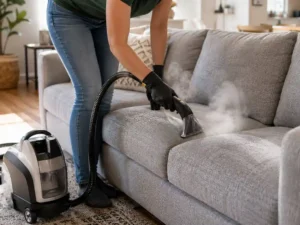
A couch can hold more dirt and odor than most people notice day to day. Learning how to clean a couch with a steam cleaner is one of the easiest ways to freshen fabric, lift body oils, and cut mild smells without harsh scrubbing. I first tried it on a busy family couch after football season, when snacks and pet messes piled up, and the fabric looked brighter within hours.
If you want a safer and simpler way to deep clean upholstery at home, this guide will walk you through each step clearly.
How to Clean a Couch With a Steam Cleaner
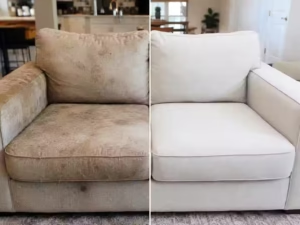
Steam cleaning can make an old couch feel fresh again. It can lift dirt, cut mild odors, and help remove body oils from fabric. I once cleaned a used couch from a local shop, and the change was huge after one careful steam session. Still, steam is not magic. Some couches handle heat well, while others can shrink, fade, or trap moisture.
This guide explains how to clean a couch with a steam cleaner in a safe and simple way. You will learn which fabrics work best, what mistakes to avoid, and when a pro cleaner is the safer choice.
Can You Steam Clean Any Couch? How to Clean a Couch With a Steam Cleaner
Not every couch is safe for steam cleaning. Always check the fabric code before using heat or moisture.
Steam cleaning works well on many fabric couches. It helps loosen dirt deep in the fibers. It can also freshen up a couch that smells musty after months of daily use. Still, not every couch can handle heat and moisture.
Some fabrics react badly to steam. I once saw a velvet chair lose its soft texture after one strong steam pass. The fabric looked flat and worn right away. That is why fabric labels matter so much before you start.
Fabric Codes That Are Safe for Steam Cleaning
Most couches have a cleaning code tag. These tags tell you how the fabric should be cleaned.
| Cleaning Code | Meaning | Steam Safe? |
|---|---|---|
| W | Water-based cleaning allowed | Usually safe |
| WS | Water or solvent cleaning allowed | Usually safe |
| X | Vacuum only | Not safe |
| S | Solvent-only cleaning | Not safe |
Couches with W or WS labels often tolerate steam well. Polyester and many synthetic blends usually handle moisture and heat better than delicate fabrics. Cotton can also work if you avoid over-wetting.
Couches marked S or X should never be steamed. Steam can weaken glue, leave stains, or warp the fabric. Some older couches also hide cardboard or water-sensitive materials inside the frame.
When Steam Cleaning Works Best
Steam cleaning shines during deep cleaning jobs. It works well when couches hold body oils, food spills, or pet smells.
Pet odor buildup often sits deep inside the fibers. Steam helps loosen trapped dirt and reduces some odor-causing bacteria. After cleaning my dog’s favorite couch spot, the room smelled much fresher within hours.
Steam also works well for seasonal cleaning. Many people deep-clean couches before holidays or guests arrive. Smoke smells and stale indoor odors can also improve after careful steaming.
Situations Where Steam Cleaning Can Damage a Couch
Some couches should never meet a steam cleaner. Delicate fabrics like silk, velvet, and linen can change texture fast under heat.
Water-sensitive cushion filling is another problem. Foam can trap moisture deep inside. If it stays damp too long, mold can grow inside the cushions.
Older couches may also have weak glue holding layers together. Steam can loosen adhesives and cause sagging. Fabric shrinkage is another risk if too much heat stays in one spot.
What You Need Before Starting How to Clean a Couch With a Steam Cleaner
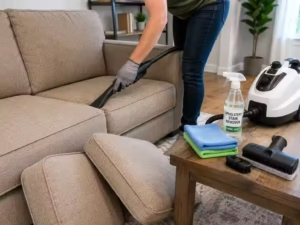
Proper prep helps prevent fabric damage, uneven cleaning, and slow drying after steam cleaning.
Good prep makes steam cleaning safer and easier. Steam alone does not remove heavy dust or crumbs well. Dry dirt should come out first before moisture touches the fabric.
| Item | Essential or Optional | Purpose |
|---|---|---|
| Steam cleaner with upholstery attachment | Essential | Deep fabric cleaning |
| Vacuum cleaner | Essential | Removes loose debris |
| Microfiber cloths | Essential | Blotting moisture |
| Distilled water | Recommended | Reduces mineral buildup |
| Fabric-safe stain remover | Optional | Pre-treating stains |
| Fan or open ventilation | Recommended | Faster drying |
I learned this lesson the hard way once. I skipped vacuuming before steaming the couch. Tiny crumbs turned muddy and pushed deeper into the seams.
Choosing the Right Steam Cleaner Type
Handheld steam cleaners are light and easy to move. They work well for small couches or quick touch-ups.
Canister steam cleaners usually clean faster. They hold more water and often produce steadier steam. Large sectionals are easier to handle with these models.
An upholstery attachment matters a lot. It spreads steam more evenly and lowers the risk of soaking fabric. Steam pressure control also helps because delicate fabrics need less heat.
Water tank size affects how often you refill the cleaner. Small tanks can slow down large cleaning jobs.
Surface and Room Preparation
Take off removable cushions and covers first. This makes seams and corners easier to reach.
Vacuum every crease slowly. Hair and dust hide deep near armrests and under cushions.
Protect nearby wood or metal surfaces with towels. Steam moisture can damage untreated wood finishes.
Open windows before cleaning starts. Fans also help improve airflow and speed up drying.

Fabric Inspection: How to Clean a Couch With a Steam Cleaner
Steam cleaning works best when the fabric is checked first. A few minutes of inspection can prevent permanent damage.
How to Find the Couch Cleaning Label
Most couch cleaning labels sit under cushions or near the base of the frame.
Cleaning labels often hides under seat cushions. Some sit near the bottom frame or inside zipper covers.
Manufacturers use letters like W, WS, S, or X to show safe cleaning methods. These symbols matter more than online cleaning tips.
If the label is missing, check the maker’s website or product manual. If you still cannot confirm the fabric type, avoid steam cleaning.
Spot Testing Before Full Cleaning
Always test a hidden area first. A small patch behind the couch works well.
Apply light steam for a few seconds. Then wait until the area dries fully before cleaning the rest.
Look for fading, texture changes, or weak fibers. If the fabric feels rough or looks dull, stop right away.
Moisture Sensitivity Check
Some cushions absorb water very fast. Heavy foam that stays damp for hours can develop mold inside.
Older couches may also contain weak glue layers. Steam can soften these adhesives.
Press the cushion lightly after testing. If it feels cold or damp for a long time, the couch may hold too much moisture for safe steaming.
Step-by-Step Process: How to Clean a Couch With a Steam Cleaner
Vacuum first, steam in small sections, blot moisture fast, and let the couch dry fully.
Step 1 — Vacuum the Couch Thoroughly
Vacuuming removes hair, crumbs, and dust before steam touches the fabric.
Steam can push dirt deeper into fibers if loose debris stays on the surface. I noticed this on a beige couch once. Tiny dirt spots turned darker after steaming because I rushed the prep.
Use crevice tools for seams and corners. Do not forget under cushions and along armrests.
Step 2 — Pre-Treat Visible Stains
Fresh stains usually lift faster than old stains. Old spills often soak deep into fabric layers.
Use a fabric-safe stain remover before steaming. Always test cleaners on a hidden area first.
Too much detergent leaves sticky residue behind. That residue attracts dirt later and can make the couch feel stiff.
Step 3 — Prepare the Steam Cleaner Correctly
Fill the steam cleaner with clean water. Distilled water helps reduce mineral buildup inside the machine.
Allow enough heat-up time before use. Weak steam often leaves more moisture behind.
Attach the upholstery tool securely. This spreads steam more evenly across the fabric.
Step 4 — Start Steam Cleaning in Sections
Clean from top to bottom. This keeps dirty moisture from dripping onto clean areas.
Move slowly with light passes. Overlap sections slightly so you do not miss spots.
Avoid soaking the fabric. One slow pass is safer than several heavy passes.
Step 5 — Blot Excess Moisture Immediately
Blotting moisture right after steaming helps prevent mildew and speeds up drying.
Use microfiber cloths to absorb extra moisture fast.
Blot gently instead of rubbing. Rubbing can spread stains or flatten fabric texture.
Moisture extraction is important because trapped water encourages mildew growth inside cushions.
Step 6 — Allow the Couch to Dry Fully
Good airflow matters after cleaning. Open windows and place fans near the couch.
Thin polyester couches may dry in two to four hours. Thick cushions and cotton fabrics may need much longer.
Do not sit on the couch while it is damp. Pressure can push moisture deeper into the filling.
Common Couch Stains and How Steam Cleaning Handles Them
Steam cleaning works best on dirt and oils, but many stains still need spot treatment.
Steam loosens oils and embedded dirt well. Still, some stains contain strong pigments that heat alone cannot remove.
| Stain Type | Steam Cleaning Effectiveness | Extra Treatment Needed |
|---|---|---|
| Food spills | High | Sometimes |
| Pet odors | Moderate to High | Usually deodorizer |
| Ink stains | Low | Specialized remover |
| Grease stains | Moderate | Degreasing pre-treatment |
| Sweat/body oil | High | Minimal |
| Wine stains | Moderate | Spot treatment |
Pet Hair and Odor Challenges
Steam helps loosen dirt around pet hair, but it does not remove all embedded fur.
Odor-causing bacteria often improve after steaming. Still, deep urine smells may stay inside foam cushions.
Some smells return if moisture remains trapped. That is why drying matters so much.
Oil and Grease Stain Limitations
Grease reacts badly to heat sometimes. Steam can spread oily spots wider if no pre-treatment is used.
A gentle degreaser usually works better before steaming begins. Always confirm the cleaner matches the couch fabric.
Heavy grease stains may need repeat treatment. Steam alone rarely fixes them fully.
Old vs Fresh Stains
Fresh stains stay near the surface. These usually clean faster.
Old stains sink deep into fibers and foam. Some leave permanent discoloration behind.
Steam cleaning improves many stains, but it cannot reverse every fabric change caused by age or sunlight.
Mistakes That Ruin Upholstery During How to Clean a Couch With a Steam Cleaner
Using Too Much Steam
Too much steam can soak cushions, slow drying, and lead to mold growth.
Waterlogged foam takes a very long time to dry. Damp cushions can smell worse after cleaning if moisture stays trapped.
I once over-steamed a thick sectional corner. It stayed damp for almost two days during humid weather.
Slow drying increases mold and mildew risk inside the couch.
Holding Steam Too Close to Fabric
Direct heat can distort delicate fibers.
Microfiber is especially sensitive. Strong heat can flatten its texture and leave shiny patches.
Keep the steam head moving slowly instead of holding it still.
Skipping the Drying Phase
Many people stop after cleaning and forget airflow.
Damp fabric allows bacteria and odors to return fast. Hidden moisture inside cushions can also weaken the couch over time.
Fans and open windows help prevent these issues.
Using the Wrong Cleaning Products
Some soaps leave thick residue behind. Steam can react with harsh chemicals and damage fabric.
Strong cleaners may also bleach colors or weaken stitching.
Always choose products labeled safe for upholstery fabrics.
Drying and Aftercare: How to Clean a Couch With a Steam Cleaner
How Long a Couch Takes to Dry
Most couches dry within 2 to 8 hours, depending on fabric thickness and airflow.
Drying time depends on fabric type and room humidity.
Thin synthetic couches often dry within a few hours. Thick cotton cushions may need to be used for most of the day.
Humid weather slows drying a lot. Heavy sectionals also trap moisture longer.
Speeding Up the Drying Process
Fans improve airflow across the surface. Cross ventilation works even better.
A dehumidifier can help during rainy weather.
Separate cushions while drying. More exposed surface area helps moisture escape faster.
Preventing Future Dirt and Odor Buildup
Vacuum the couch weekly if possible.
Rotate cushions often to spread wear evenly. Quick spot cleaning also stops stains from setting deep.
Fabric protection sprays may help reduce future spills, but always test them first.
Steam Cleaning Different Couch Materials
Microfiber Couch Cleaning Considerations
Microfiber reacts strongly to excess heat.
Use low steam pressure and keep the nozzle moving. After drying, brush the fibers lightly to restore texture.
Water marks can appear if sections dry unevenly.
Cotton and Polyester Upholstery
Polyester usually handles steam better than cotton.
Cotton absorbs more moisture and may shrink slightly if overheated.
Both fabrics need full drying to avoid stale smells.
Leather and Faux Leather Warning Signs
Direct steam can crack leather and damage protective finishes over time.
Steam is risky for leather couches. Heat can dry out natural oils and cause cracking.
Faux leather can peel if exposed to strong heat too often.
A damp cloth and leather-safe cleaner are usually safer options.
Velvet and Delicate Fabric Restrictions
Velvet can lose its soft, raised texture under steam.
Some delicate fabrics flatten permanently after heat exposure.
Always follow the manufacturer’s care instructions before cleaning delicate upholstery.
When Professional Upholstery Cleaning Is Better Than DIY Steam Cleaning
Some couches exceed safe DIY limits. Older furniture, delicate fabrics, and severe odor issues often need professional equipment.
| Situation | DIY Steam Cleaning | Professional Service |
|---|---|---|
| Light maintenance cleaning | Suitable | Optional |
| Antique upholstery | Risky | Recommended |
| Severe odor contamination | Limited | Better option |
| Mold exposure | Unsafe | Necessary |
| Water-sensitive fabrics | Unsafe | Recommended |
Professional systems extract more moisture than many home machines. This lowers mold risk and speeds up drying.
Signs DIY Cleaning Is No Longer Enough
Persistent odors often mean contamination sits deep inside the cushions.
Recurring stains may point to hidden moisture or old spills below the surface.
If cushions stay damp for many hours, professional extraction may be safer.
Cost vs Long-Term Fabric Preservation
A pro cleaning service costs more upfront. Still, replacing damaged upholstery costs much more.
Repeated DIY cleaning can slowly wear delicate fabrics down.
Professional extraction systems usually clean deeper while leaving less moisture behind.
Real-World Cleaning Expectations: How to Clean a Couch With a Steam Cleaner
What Steam Cleaning Improves Quickly
Steam cleaning quickly freshens fabric, reduces mild odors, and removes daily dirt buildup.
Steam cleaning improves surface freshness fast.
Body oils, light dirt, and mild odors often improve after one session. The couch may also feel softer and cleaner.
Many people notice the biggest change in smell rather than appearance.
What Steam Cleaning Usually Cannot Fix
Steam cannot remove permanent dye stains.
Sun fading also stays because the fabric color has already changed.
Deep foam contamination and broken cushions usually need repair or replacement.
Single Cleaning vs Repeated Maintenance
Most couches do not need heavy steam cleaning often.
Too much steaming wears fabric faster over time. Once or twice a year is enough for many homes.
Light weekly care reduces the need for deep cleaning later.
Time, Effort, and Skill Level for How to Clean a Couch With a Steam Cleaner
| Task Stage | Estimated Time | Difficulty Level |
|---|---|---|
| Vacuuming & prep | 20–30 minutes | Easy |
| Spot treatment | 10–20 minutes | Easy |
| Steam cleaning | 30–60 minutes | Moderate |
| Drying time | 2–8 hours | Passive |
Most homeowners can handle basic steam cleaning safely. Drying control is usually the hardest part.
Beginner-Friendly Tips
Start with low steam output first.
Clean small sections before moving across the whole couch. This makes mistakes easier to manage.
Avoid repeated passes in one area.
Situations That Require More Experience
Delicate fabrics need careful heat control.
Large sectionals also take longer to dry evenly.
Heavy stain restoration often needs stronger tools and deeper fabric knowledge.
Maintenance Schedule: How to Clean a Couch With a Steam Cleaner
How Often Most Couches Need Steam Cleaning
Most couches need steam cleaning every 6 to 12 months, depending on pets and daily use.
Homes with pets usually need deeper cleaning more often.
High-traffic family couches collect body oils and dust faster.
Allergy-sensitive homes may benefit from more frequent fabric cleaning.
Weekly and Monthly Maintenance Habits
Vacuum weekly to reduce dirt buildup.
Rotate cushions every month to spread wear evenly.
Clean fresh spills right away before stains set.
Long-Term Upholstery Preservation Tips
Keep couches away from direct sunlight when possible.
Control indoor humidity to lower mold risk.
Fabric protectors may help, but too much product buildup can affect texture.
Practical Home Scenarios for How to Clean a Couch With a Steam Cleaner
Cleaning a Couch After Pet Accidents
Pet accidents often soak deeper than expected.
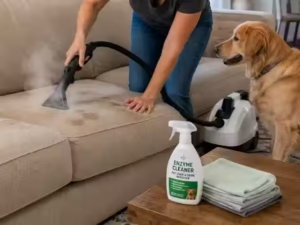
Enzyme cleaners help break down odor-causing material before steaming. Steam alone may not remove strong urine smells.
Repeated steaming can over-wet cushions and make odors worse.
Refreshing a Used or Thrifted Couch
Steam cleaning can freshen used couches, but hidden odors and mold may still remain inside.
Steam cleaning helps sanitize surface fabric and reduce stale smells.
Still, hidden contamination inside old foam may remain.
Very strong odors or mold signs usually need professional treatment.
Seasonal Deep Cleaning Before Guests or Holidays
Steam cleaning before the holidays can refresh a room fast.
Plan enough drying time before guests arrive. Rushed cleaning often causes over-wetting.
Use light steam passes instead of heavy soaking.
Consultation: How to Clean a Couch With a Steam Cleaner
Surface Compatibility
Steam-safe fabrics include many polyester blends and water-safe upholstery.
Moisture-sensitive fabrics like velvet or silk react poorly to heat.
Cushion filling also affects how safely moisture dries.
Steam Cleaner Performance
Steam pressure control helps protect delicate fabric.
Good upholstery attachments spread heat more evenly.
Larger tanks improve cleaning speed on big sectionals.
Cleaning Efficiency
Steam loosens dirt and body oils well.
It also helps reduce mild odors from daily use.
Drying speed depends more on airflow than steam strength.
Maintenance Requirements
Post-cleaning drying is part of the cleaning process.
Steam cleaners also need regular maintenance to prevent mineral buildup.
Most couches only need deep steam cleaning once or twice each year.
Ownership Challenges
Humid climates make drying harder.
Large sectionals take more time and effort to clean evenly.
Repeated steaming can slowly wear down upholstery fibers.
Practical Decision Factors
DIY steam cleaning works best for normal dirt and light odor issues.
Professional cleaning is safer for delicate fabrics, mold concerns, or antique furniture.
For many homeowners, the best choice depends on time, budget, and couch value.
Final Thoughts
Learning how to clean a couch with a steam cleaner can save money and refresh your living space. The key is patience. Gentle steam, careful drying, and proper fabric checks matter more than strong heat.
A steam cleaner works like warm rain after a dusty season. It can lift daily grime and bring life back to tired fabric. Still, knowing the limits of steam is just as important as knowing its strengths.
When used the right way, steam cleaning can keep a couch fresh, cleaner, and more comfortable for years.
FAQs for How to Clean a Couch With a Steam Cleaner
Can you steam clean any couch safely?
No. Check the couch tag first. W and WS fabrics are often safe for steam cleaning. S and X fabrics can shrink, stain, or get damaged by heat and moisture.
How often should you steam clean a couch?
Most couches need steam cleaning every 6 to 12 months. Homes with pets, kids, or allergies may need more frequent deep cleaning to reduce dirt and odors.
Do you need to vacuum before steam cleaning a couch?
Yes. Vacuuming removes dust, crumbs, and pet hair first. Steam alone can push dirt deeper into the fabric if loose debris stays on the couch surface.
How long does a couch take to dry after steam cleaning?
Most couches dry in 2 to 8 hours. Thick cushions, cotton fabric, and humid rooms can make drying take much longer without fans or airflow.
Can steam cleaning remove couch odors and stains?
Steam cleaning helps reduce mild odors, body oils, and surface stains. Deep pet urine, ink, and grease stains often need extra stain treatment, too.
Read more articles:
How to Clean Dyson Vacuum Filter
How to Clean Dyson Cordless Vacuum