
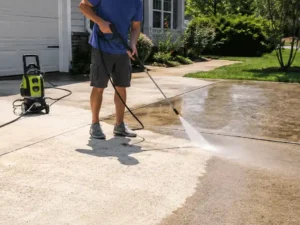
Pressure washers can make dirty driveways, decks, and siding look new again, but using one the wrong way can damage wood, paint, and even windows. Learning how to operate a pressure washer starts with choosing the right nozzle, using safe pressure, and keeping the spray at the correct distance. The first time I cleaned my driveway, I used too much pressure and left streaks on the concrete. That small mistake taught me that good technique matters more than raw power.
In this guide, I’ll share simple steps, real-world tips, and safe cleaning methods that work well for common U.S. home surfaces like vinyl siding, wood decks, patios, and cars.
How to Operate a Pressure Washer Safely and Effectively
Pressure washers look simple at first. You point the wand, pull the trigger, and blast dirt away. But after using one on my own driveway and wooden deck, I learned something fast. Too much pressure can damage paint, crack wood, and even force water behind siding.
The good news is that learning how to operate a pressure washer is not hard. You just need the right setup, the right nozzle, and a little patience. Once you understand how pressure, distance, and spray angle work together, cleaning gets much easier.
This guide explains everything in simple words. You will learn how pressure washers work, how to stay safe, what PSI to use, and how to avoid the mistakes that ruin surfaces.
Quick Answer: How to Operate a Pressure Washer
Connect water, choose the right nozzle, test pressure safely, and clean with steady sweeping motions.
Operating a pressure washer involves connecting the water supply, selecting the correct nozzle, testing pressure on a safe area, and cleaning surfaces using controlled spray patterns. Proper setup, surface-specific PSI selection, and safety precautions are essential to avoid damage or injury.
A pressure washer works best when you move slowly and keep a safe distance from the surface. I learned this after leaving visible lines on an old deck by spraying too close. A little patience gives much better results.
Understanding How a Pressure Washer Works Before Use
A pressure washer pushes water through a small nozzle at high speed. That strong stream removes dirt, mold, grease, and stains much faster than a garden hose.
The machine combines two things: pressure and water flow. Both matter. High pressure cuts through grime, while steady water flow washes debris away.
Water Pressure vs Water Flow Explained
PSI measures force while GPM measures water flow. Both affect cleaning speed and safety.
PSI means pounds per square inch. It tells you how strong the water pressure is. GPM means gallons per minute. It tells you how much water flows through the machine.
Many beginners focus only on PSI. But flow matters too. A machine with balanced PSI and GPM cleans faster and feels smoother during use.
Difference Between Electric and Gas Pressure Washers
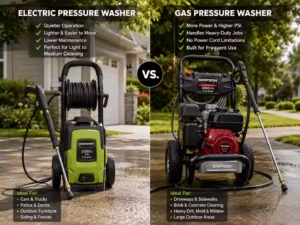
Electric pressure washers are quieter and easier to start. They work well for cars, patios, and siding. I like electric models for small home jobs because they need less maintenance.
Gas pressure washers are stronger and more mobile. They clean driveways, brick, and heavy stains faster. But they are louder and heavier and need fuel and oil changes.
Cold Water vs Hot Water Pressure Washers
Cold water pressure washers handle most home cleaning tasks well. They remove dirt, pollen, and light mold with ease.
Hot water models work better for grease and oil. Many commercial cleaners use them for garages and industrial areas. Heat helps break down sticky grime faster.
Residential vs Commercial Pressure Washer Performance
Residential models are smaller and easier to store. They are perfect for occasional cleaning around the house.
Commercial units run longer and deliver stronger pressure. They are built for daily work. But they cost more and require more maintenance.
When a Pressure Washer Should Not Be Used
Some surfaces are too delicate for pressure washing. Old wood, damaged paint, roof shingles, and cracked siding can suffer serious damage.
You should also avoid using a pressure washer near exposed wiring or weak window seals. Water can enter places you never expected.
Essential Equipment Needed to Operate a Pressure Washer
Using the right equipment makes cleaning safer and easier. I once used a cheap, narrow hose with a strong washer and noticed weak pressure right away.
Small setup mistakes can reduce cleaning power and stress the motor.
Core Components of a Pressure Washer System
A pressure washer system includes the pump, motor or engine, water inlet, high-pressure hose, spray gun, and nozzles.
Each part matters. A worn hose or clogged nozzle can reduce pressure and make cleaning uneven.
Required Safety Gear Before Starting
Wear eye protection, gloves, and closed shoes, and avoid loose clothing while pressure washing.
Always wear safety glasses and closed-toe shoes. Water under pressure can throw rocks, paint chips, and dirt at high speed.
Gloves help reduce hand fatigue during long cleaning sessions. Hearing protection is smart when using loud gas models.
Optional Attachments That Improve Cleaning Results
Surface cleaners make driveways look more even. Foam cannons spread soap better across cars and siding.
Extension wands help reach high walls without climbing ladders. These tools save time and reduce streaks.
Garden Hose Requirements and Water Supply Conditions
Your pressure washer needs a steady water supply. Weak water flow can damage the pump over time.
Use a quality garden hose with the proper diameter. Kinked or narrow hoses reduce performance.
Extension Cords and Power Limitations for Electric Models
Electric pressure washers need proper extension cords. Thin cords can overheat and reduce motor power.
Use outdoor-rated heavy-duty cords only. Keep cords dry and away from standing water.
Before using a pressure washer, choosing compatible accessories helps prevent performance loss and surface damage. Many beginners overlook hose diameter, nozzle sizing, and water supply consistency.
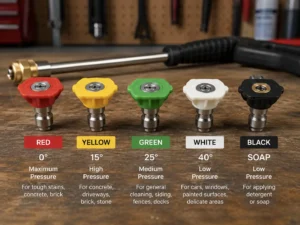
Pressure Washer Nozzle Colors and Spray Patterns: How to Operate a Pressure Washer
Nozzles control spray angle and pressure impact. Using the wrong nozzle can damage surfaces in seconds.
I learned this after testing a red nozzle too close to old wood. It left deep marks instantly.
Red Nozzle (0°) and Maximum Pressure Risks
Red nozzles create a narrow, high-force stream that can cut wood and strip paint.
The red nozzle produces the strongest stream. It focuses water into a tiny area.
This nozzle is risky for beginners. It can etch concrete and damage siding if used carelessly.
Yellow Nozzle (15°) for Concrete and Heavy Dirt
Yellow nozzles work well for hard surfaces like concrete and brick.
They remove thick dirt quickly. But they can still damage softer surfaces if held too close.
Green Nozzle (25°) for General Cleaning
The green nozzle is the most versatile option. I use it most often for decks, fences, and siding.
It balances cleaning power with safety.
White Nozzle (40°) for Delicate Surfaces
White nozzles spread water over a wider area. This reduces impact force.
They work best for cars, windows, patio furniture, and painted surfaces.
Black Soap Nozzle and Low-Pressure Chemical Application
The black nozzle lowers the pressure so the detergent can flow properly.
Soap sticks better when pressure stays low during application.
Common Nozzle Mistakes That Damage Surfaces
Many beginners choose too much pressure too fast. Strong nozzles can strip paint, splinter wood, and force water behind siding.
Always test on a hidden area first.
Different nozzles dramatically change cleaning force and surface safety. Using the wrong spray angle is one of the most common reasons for paint stripping and wood etching.
| Nozzle Color | Spray Angle | Best Use Case |
|---|---|---|
| Red | 0° | Tough stains only |
| Yellow | 15° | Concrete and brick |
| Green | 25° | Decks and siding |
| White | 40° | Cars and windows |
| Black | Soap mode | Detergent application |
Spray angle affects both cleaning efficiency and impact force concentration, especially on softer materials like wood or vinyl.
Preparing the Area Before Operating a Pressure Washer
Preparation saves time and prevents accidents. A few minutes of setup can stop major problems later.
Removing Loose Debris and Obstacles
Sweep away leaves, stones, and loose dirt before cleaning.
Small rocks can become dangerous projectiles under high pressure.
Protecting Electrical Fixtures and Delicate Areas
Cover outdoor outlets and exposed fixtures before washing.
Water and electricity are a dangerous mix.
Checking Surface Condition Before Washing
Look for cracks, peeling paint, loose boards, or weak mortar.
Pressure washing damaged surfaces often makes the damage worse.
Preventing Water Intrusion Around Doors and Windows
Avoid spraying directly into gaps around windows and doors.
Water can enter walls and cause hidden mold problems.
Environmental Concerns and Water Runoff Control
Soap and chemicals can flow into plants and drains.
Use eco-friendly detergents whenever possible.
| Equipment | Purpose | Essential or Optional |
|---|---|---|
| High-pressure hose | Transfers pressurized water | Essential |
| Spray gun & wand | Controls water output | Essential |
| Nozzles | Adjust spray angle and force | Essential |
| Surface cleaner | Cleans flat surfaces evenly | Optional |
| Foam cannon | Applies detergent efficiently | Optional |
Proper accessory matching improves cleaning efficiency while reducing motor strain and uneven pressure output.
Step-by-Step Guide: How to Operate a Pressure Washer Safely
Connect water first, test spray safely, use steady motions, and release pressure before shutdown.
Pressure washing becomes much easier when you follow the same routine every time.
Step 1 – Connect the Water Supply Properly
Attach the garden hose securely to the washer inlet.
Make sure water flows freely before starting the machine.
Step 2 – Attach the Pressure Hose and Spray Wand
Connect the high-pressure hose tightly.
Loose fittings can leak or burst under pressure.
Step 3 – Select the Correct Nozzle for the Surface
Choose a gentle nozzle first.
You can always increase pressure later if needed.
Step 4 – Turn on the Water Before Starting the Machine
Never run a pressure washer dry.
The pump needs water immediately to prevent overheating.
Step 5 – Start the Pressure Washer Correctly
Starting an Electric Pressure Washer
Plug the unit into a grounded outlet.
Turn on the switch and squeeze the trigger briefly.
Starting a Gas Pressure Washer
Check fuel and oil first.
Open the fuel valve, set the choke, and pull the starter cord smoothly.
Step 6 – Test Spray on a Small Hidden Area
Always test pressure before cleaning the full surface.
This simple step prevents expensive mistakes.
Step 7 – Maintain Proper Distance While Cleaning
Start about two feet away from the surface.
Move closer slowly if more power is needed.
Step 8 – Use Controlled Sweeping Motions
Keep the wand moving steadily.
Stopping in one spot too long can leave marks.
Step 9 – Rinse the Surface Evenly
Rinse from top to bottom when possible.
This prevents dirty streaks from forming.
Step 10 – Shut Down and Release Pressure Safely
Turn off the machine and water supply.
Squeeze the trigger to release trapped pressure before disconnecting hoses.
How to Use Detergent in a Pressure Washer
Soap helps loosen dirt before rinsing. I noticed a huge difference in moldy siding after using detergent first.
Choosing Pressure Washer-Safe Cleaning Solutions
Use cleaners designed for pressure washers only.
Harsh chemicals can damage pumps and surfaces.
How Soap Injection Systems Work
Most machines inject soap at low pressure.
That is why the black nozzle is usually required.
Applying Detergent Without Damaging Surfaces
Apply soap evenly from bottom to top.
This reduces streaking on vertical surfaces.
Dwell Time and Why Soap Should Not Dry
Let the soap sit briefly, but never allow it to dry completely on the surface.
Soap needs a few minutes to break down dirt.
But dried detergent can leave stains and residue.
Rinsing Techniques After Chemical Use
Rinse thoroughly from top to bottom.
Incomplete rinsing leaves slippery or sticky residue.
Chemical Residue Risks on Wood, Paint, and Plants
Strong cleaners can fade paint and damage grass.
Always rinse nearby plants with fresh water.
Surface-Specific Cleaning Techniques: How to Operate a Pressure Washer
Different materials react differently to pressure.
The same setting that cleans concrete safely can ruin softwood.
Cleaning Concrete Driveways and Sidewalks
Use a yellow or green nozzle for concrete.
Work in straight overlapping passes for even cleaning.
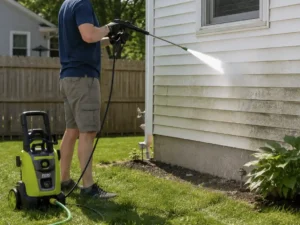
Washing Vinyl Siding Without Water Intrusion
Spray downward at an angle.
Never spray upward under siding panels.
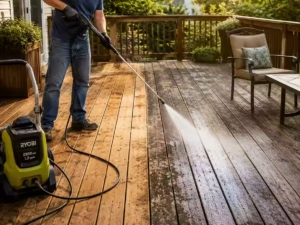
Pressure Washing Wooden Decks Without Splintering
Keep pressure moderate and maintain distance.
Too much force can raise wood fibers and create splinters.
Safe Car Washing with a Pressure Washer
Use a white nozzle and lower PSI.
Stay back from paint, trim, and seals.
Cleaning Brick and Stone Surfaces
Brick handles pressure well, but old mortar may weaken.
Test carefully before full cleaning.
Patio Furniture and Outdoor Equipment Cleaning
Use gentle pressure on plastic and painted surfaces.
Wide spray patterns reduce damage risk.
Recommended PSI Levels for Different Surfaces
Lower PSI protects soft materials, while higher PSI works better on concrete and brick.
Using excessive PSI is one of the fastest ways to damage paint, wood fibers, siding, and seals. Matching pressure output to surface type improves cleaning while minimizing repair risks.
| Surface Type | Recommended PSI | Risk Level |
|---|---|---|
| Vehicles | 1200–1900 PSI | Moderate |
| Wood Decks | 1500–2500 PSI | High |
| Vinyl Siding | 1300–2000 PSI | Moderate |
| Concrete Driveways | 2500–3500 PSI | Low |
| Patio Furniture | 1200–1800 PSI | Moderate |
Surface hardness, coating condition, and age all influence how much pressure can be safely applied.
Common Pressure Washer Mistakes Beginners Make
Most pressure washer problems come from rushing.
I made several beginner mistakes during my first driveway cleaning session.
Starting the Machine Without Water Flow
Running dry can damage the pump quickly.
Always turn the water on first.
Spraying Too Close to the Surface
High pressure at close range cuts into soft materials.
Distance matters more than most beginners realize.
Using High Pressure on Soft Materials
Wood, paint, and vinyl need lower pressure.
Aggressive settings create expensive repairs.
Ignoring Surface Damage Warning Signs
Stop immediately if the paint peels or wood splinters.
Small warning signs often cause bigger damage.
Allowing Soap to Dry Before Rinsing
Dry soap leaves stains and streaks.
Work in smaller sections during hot weather.
Incorrect Storage After Use
Leaving water inside the pump can cause freezing damage.
A proper shutdown protects the machine.
Safety Risks and Injury Prevention When Operating a Pressure Washer
Pressure washers can cause serious injuries if used carelessly or too close to the skin.
Pressure washers look harmless from far away. But the water stream can cut skin and inject bacteria deep into tissue.
High-Pressure Injection Injuries Explained
Direct contact with high-pressure water can cause severe injuries.
Even small wounds may require emergency treatment.
Slip Hazards During Outdoor Cleaning
Wet concrete becomes slippery fast.
Wear shoes with a strong grip.
Electrical Risks with Electric Pressure Washers
Keep plugs and cords dry.
Never spray directly near electrical outlets.
Ladder Use and Stability Dangers
Pressure washer recoil can throw you off balance.
Avoid ladder use whenever possible.
Protecting Nearby Plants, Paint, and Seals
Strong spray and chemicals can damage landscaping.
Cover delicate plants if needed.
Child and Pet Safety Around Pressure Washers
Keep children and pets far from the cleaning area.
Flying debris can travel surprisingly far.
Troubleshooting Problems While Operating a Pressure Washer
Small issues are common during pressure washing.
Most problems come from water flow restrictions or clogged parts.
Pressure Washer Won’t Start
Check power supply, fuel, oil, and spark plug condition.
Many startup problems have simple fixes.
Low Water Pressure During Cleaning
Inspect hoses and nozzles for blockages.
Weak water supply often causes pressure loss.
Pulsing or Surging Water Flow
Air trapped in the system can cause pulsing.
Run water through the unit before starting.
Soap Dispenser Not Working
Soap systems usually require a low-pressure mode.
Try the black nozzle first.
Water Leaks Around Hose Connections
Worn washers and loose fittings cause leaks.
Replace damaged seals quickly.
Engine Stalling Under Load
Dirty fuel or clogged air filters can cause stalling.
Regular maintenance helps prevent this.
Excessive Noise or Vibration
Loose components may create unusual vibration.
Stop the machine if the noise becomes severe.
How to Shut Down and Store a Pressure Washer Properly
Proper storage extends machine life.
Skipping shutdown steps can damage pumps and hoses.
Releasing Internal Pressure Safely
Turn off the machine and squeeze the trigger.
This releases trapped pressure safely.
Draining Remaining Water from the System
Drain hoses and pump after use.
Standing water can freeze and crack components.
Preventing Pump Damage During Storage
Pump protectant helps prevent internal corrosion.
This matters most during long storage periods.
Winterizing a Pressure Washer in Cold Climates
Freezing temperatures can destroy pumps.
Store the machine indoors during winter.
Hose and Nozzle Maintenance Tips
Clean nozzles regularly and inspect hoses for cracks.
Small maintenance habits prevent bigger repairs.
Real-World Usage Scenarios: How to Operate a Pressure Washer
Real cleaning jobs rarely look perfect like online videos.
Some stains disappear quickly. Others need patience.
Cleaning a Moldy Driveway After Rainy Weather
Mold often lifts easily with detergent and steady pressure.
Surface cleaners help create a more even finish.
Preparing a Deck Before Staining
Pressure washing removes dirt and the old finish.
But aggressive pressure can ruin soft wood grain.
Washing Vehicles Without Damaging Paint
Gentle pressure works best for cars.
Strong spray near edges and seals can cause damage.
Seasonal Exterior House Cleaning
Spring cleaning removes pollen, mold, and dirt buildup.
Wide spray angles reduce siding risk.
Handling Heavy Dirt vs Light Maintenance Cleaning
Heavy grime needs more time and detergent.
Light cleaning usually requires lower pressure.
Expectation vs Reality When Using a Pressure Washer
Pressure washers are powerful tools, but they are not magic.
Understanding realistic results prevents disappointment.
What Pressure Washers Clean Extremely Well
They remove mud, algae, loose paint, and surface dirt very effectively.
Concrete often looks dramatically brighter afterward.
Situations Where Scrubbing Is Still Necessary
Deep oil stains and old rust marks may need scrubbing.
Pressure alone cannot remove everything.
Surfaces That May Never Fully Restore
Sun-faded wood and permanently stained concrete may not fully recover.
Cleaning improves appearance but cannot reverse aging.
Time Savings vs Setup and Cleanup Effort
Actual cleaning feels fast.
But setup, hose management, and cleanup still take time.
Noise, Water Usage, and Ownership Friction
Gas models are loud and heavy.
Even electric units need storage space and maintenance.
Long-Term Maintenance and Reliability Considerations
Pressure washers last longer when maintained properly.
Neglect shortens pump and hose life quickly.
Pump Maintenance Requirements
Pumps need clean water and proper storage.
Running dirty water through the system increases wear.
Oil Changes for Gas Pressure Washers
Gas engines require regular oil changes.
Fresh oil keeps the engine running smoothly.
Hose Wear and Connection Inspection
Inspect hoses before each use.
Cracks and bulges can become dangerous.
Preventing Mineral Buildup from Hard Water
Hard water leaves mineral deposits inside pumps.
Flushing the system helps reduce buildup.
Storage Habits That Extend Machine Life
Store hoses loosely coiled and keep the machine dry.
Good storage prevents premature wear.
Who Should Use a Pressure Washer — And Who Should Avoid It
Pressure washers help many homeowners save time.
But they are not the best choice for every person or surface.
Best Situations for DIY Pressure Washing
DIY cleaning works well for driveways, patios, cars, and outdoor furniture.
Simple jobs are beginner-friendly.
When Professional Cleaning Services Make More Sense
Tall homes and delicate historic surfaces may need professionals.
Experience matters in risky situations.
Skill Level Expectations for Beginners
Beginners can learn quickly with practice.
Starting with low pressure builds confidence safely.
Surfaces Too Delicate for Pressure Washing
Old shingles, soft cedar, and damaged paint may not tolerate pressure.
Alternative cleaning methods may work better.
Key Decision Factors Before Operating a Pressure Washer
Buying or using a pressure washer involves more than PSI numbers.
Real-world usability matters too.
Surface Material Sensitivity
Soft surfaces require careful pressure control.
Hard surfaces tolerate stronger spray.
Water Supply Availability
Pressure washers need a steady water flow.
Weak supply reduces performance.
PSI and GPM Balance
Balanced PSI and GPM create smoother cleaning.
More pressure alone is not always better.
Noise and Power Source Considerations
Electric units are quieter.
Gas units provide more mobility and power.
Frequency of Use and Ownership Costs
Frequent users may benefit from stronger machines.
Occasional users may prefer lighter electric models.
Maintenance Commitment and Storage Space
Pressure washers need dry storage and regular inspection.
Limited storage space can become frustrating.
Performance: How to Operate a Pressure Washer
Real performance depends on setup, technique, and surface condition.
Even strong machines have limits.
Cleaning Speed Under Heavy Dirt Conditions
Heavy grime slows cleaning progress.
Detergent often speeds up results.
Pressure Consistency During Extended Use
Some small electric models lose pressure during long sessions.
Commercial units usually stay more consistent.
Water Consumption vs Cleaning Efficiency
Pressure washers use less water than many people expect.
They clean faster than a normal hose.
User Fatigue During Long Cleaning Sessions
Long sessions can strain hands and shoulders.
Lighter spray guns feel more comfortable.
Realistic Performance Expectations on Old Stains
Old stains may fade instead of disappearing completely.
Patience matters during deep cleaning.
Durability & Maintenance: How to Operate a Pressure Washer
Durability depends heavily on maintenance habits.
Machines treated carefully often last for years.
Pump Longevity Under Frequent Use
Pumps wear faster during heavy use.
Clean water and proper shutdown reduce stress.
Hose and Nozzle Wear Patterns
Nozzles slowly widen over time.
Worn nozzles reduce cleaning precision.
Electric vs Gas Reliability Over Time
Electric models have fewer engine parts to maintain.
Gas models handle tougher work but require more care.
Common Maintenance Costs Owners Overlook
Owners often forget about oil, seals, hoses, and replacement nozzles.
Small costs add up over time.
Storage Habits That Affect Lifespan
Dry indoor storage helps prevent corrosion and freezing damage.
Simple habits protect expensive components.
Safety & Surface Protection: How to Operate a Pressure Washer
Pressure washing safely requires patience.
Aggressive cleaning usually causes the most damage.
Preventing Surface Etching and Paint Damage
Always start with lower pressure.
Increase power only when necessary.
Safe Cleaning Distances for Different Materials
Softer surfaces need more distance.
Concrete can handle closer spray patterns.
Water Intrusion Risks Around Windows and Seals
Avoid direct spray into seams and gaps.
Hidden water damage can become expensive later.
Protecting Skin and Eyes from High Pressure
Never spray skin directly.
Protective eyewear is essential.
Environmental Safety and Chemical Runoff Control
Use detergents carefully near gardens and drains.
Responsible cleaning protects nearby plants and water systems.
Usability & Ownership Experience: How to Operate a Pressure Washer
Owning a pressure washer feels rewarding when used correctly.
But there are small frustrations too.
Set Up Difficulty for First-Time Users
The first setup may feel confusing.
After a few uses, the process becomes routine.
Hose Management and Movement Limitations
Hoses often tangle during large cleaning jobs.
Good hose placement saves effort.
Noise Levels in Residential Areas
Gas models can disturb neighbors.
Electric units are much quieter.
Storage Size and Transport Challenges
Pressure washers take up more space than most people expect.
Large gas units can feel heavy and awkward.
Realistic Cleaning Time Expectations
Small jobs finish quickly.
Large driveways and decks may still take several hours.
Final Thoughts on How to Operate a Pressure Washer
Learning how to operate a pressure washer safely takes a little practice, but the basics are simple. Start with lower pressure, use the right nozzle, and move slowly.
The biggest lesson I learned is that patience matters more than raw power. Careful cleaning protects surfaces and creates better results.
A pressure washer can save hours of hard scrubbing when used correctly. Just remember that every surface reacts differently. Test first, stay safe, and let the machine do the work.
FAQs for How to Operate a Pressure Washer
What is the safest way to operate a pressure washer?
Start with low pressure and test a small hidden area first. Keep the nozzle moving and stay a safe distance from the surface to avoid damage.
What PSI should I use when learning how to operate a pressure washer?
Use 1200–1900 PSI for cars and light jobs. Hard surfaces like concrete can handle higher PSI, but soft wood needs lower pressure.
Can you use soap in a pressure washer safely?
Yes. Use pressure washer-safe detergent and the black soap nozzle. Never let soap dry on the surface before rinsing it off.
How close should you spray when operating a pressure washer?
Start about two feet away from the surface. Move closer slowly only if needed. Spraying too close can strip paint or damage wood.
Is an electric or gas pressure washer better for beginners?
Electric pressure washers are easier for beginners. They are lighter, quieter, and simpler to maintain for basic home cleaning jobs.