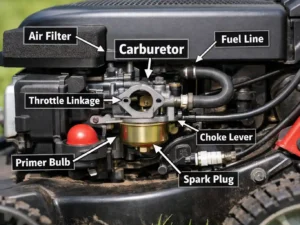
If your lawn mower is sputtering or won’t start, the carburetor might be clogged. Cleaning it is easier than it seems and can restore smooth performance fast. From my experience, taking a little time to remove gunk and debris saves hours of frustration later. I’ve worked on small engines for years, so I can guide you step by step.
Let’s dive into how to clean a lawnmower carburetor so your mower runs like new.
How to Clean Lawn Mower Carburetor
Keeping your lawn mower running well comes down to one small part: the carburetor. A dirty carburetor can cause hard starting, stalling, and rough running. This guide shows you how to clean it safely and easily.
What a Lawn Mower Carburetor Is and Why It Matters
The carburetor mixes fuel and air; buildup can make your mower stall.
The carburetor mixes air and fuel so the engine can run. Dirt, old fuel, and debris can gum it up. This causes starting problems, rough idling, or stalling. It’s like trying to breathe through a blocked straw—your mower cannot run properly without a clean carburetor.
Quick Overview of Common Issues:
| Problem | Cause | Rating |
|---|---|---|
| Hard to start | Gummed jets or float issues | 9/10 |
| Stalling mid-cut | Fuel residue blockage | 8/10 |
| Rough running | Air-fuel mix imbalance | 9/10 |
Cleaning the carburetor keeps your mower running smoothly.
Signs Your Lawn Mower Carburetor Needs Cleaning
Rough idle or trouble starting often means the carburetor is dirty.
A clogged carburetor may not stop the mower completely at first. Look for signs like rough idling, black smoke, or vibrations. Early detection saves you time and frustration.
Signs at a Glance:
| Symptom | Meaning | Rating |
|---|---|---|
| The engine won’t start | Fuel not reaching the engine | 9/10 |
| Rough idle | Partial blockage | 8/10 |
| Black smoke | Rich fuel mixture | 8/10 |
| Loss of power | Low fuel flow | 9/10 |
| Sputtering | Irregular air-fuel mix | 8/10 |
Safety and Preparatory Steps Before Cleaning
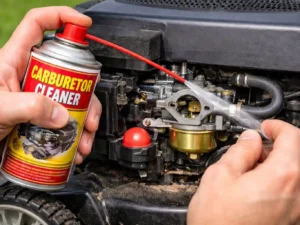
Disconnect the spark plug and wear gloves before cleaning.
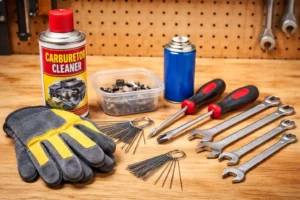
Safety comes first. Make sure the mower is on level ground and cool. Remove the spark plug to prevent accidental starts. Have tools, carb cleaner, and a container ready. Taking a photo before disassembly helps with reassembly.
Prep Checklist:
| Step | Tip | Rating |
|---|---|---|
| Park the mower safely | Level ground, cooled engine | 10/10 |
| Disconnect the spark plug | Prevent accidental start | 10/10 |
| Gather tools | Screwdrivers, wrenches, and a cleaner | 9/10 |
| Reference photos | Makes reassembly easier | 8/10 |
Two Main Cleaning Approaches
A. Cleaning Without Removing the Carburetor
Works for minor buildup or routine cleaning.
If the buildup is light, you may not need to remove the carburetor. Remove the air filter, spray carb cleaner on the exterior, run the engine briefly, and wipe off debris. This method won’t clear deep clogs, but it works for maintenance.
Pros & Cons Table:
| Approach | Pros | Cons | Rating |
|---|---|---|---|
| In-place spray | Quick and easy | Does not remove deep blockages | 7/10 |
B. Cleaning With Carburetor Removal
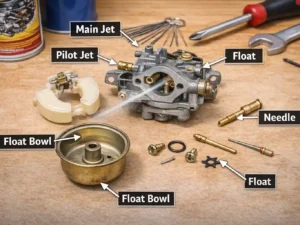
For heavy buildup, removal is best. Disconnect fuel lines and linkages, unbolt the carburetor, and take it apart. Clean the float bowl, jets, and needle. Use carb cleaner and compressed air for all parts. Check for damage before reassembly.
Pros & Cons Table:
| Approach | Pros | Cons | Rating |
|---|---|---|---|
| Full removal | Complete cleaning and inspection | Takes more time | 10/10 |
Step‑By‑Step Deep Cleaning Process
Handle jets and needles carefully to avoid damage.
Start with external cleaning. Open the fuel bowl and clean the jets and needles thoroughly. Handle small parts carefully to prevent loss or bending. After drying, reassemble the fuel line, linkages, air filter, and spark plug.
Deep Cleaning Steps Table:
| Step | Action | Rating |
|---|---|---|
| External wipe | Remove dirt from the surface. | 9/10 |
| Jets & needles | Clear blockages | 10/10 |
| Dry & reassemble | Prevent moisture & misalignment | 9/10 |
Common Mistakes to Avoid
Avoid spraying carb cleaner in the wrong holes or using metal tools.
Errors can cause damage. Avoid scraping passages with metal, skipping reference photos, or using old fuel afterward.
Mistakes Table:
| Mistake | Risk | Rating |
|---|---|---|
| Wrong openings | Engine damage | 8/10 |
| Metal scraping | Scratch parts | 9/10 |
| No reference photos | Hard reassembly | 7/10 |
| Old fuel | Gums carburetor again | 8/10 |
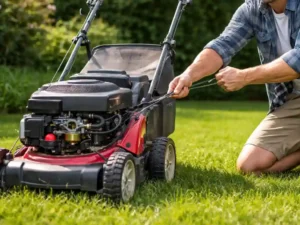
Post‑Cleaning Checks and Adjustments
Start the engine and check the idle; adjust screws as needed.
After cleaning, start the mower and check the idle. Adjust mixture and idle screws if needed. Test it under normal mowing load and check for leaks or fuel smells.
Post-Cleaning Table:
| Check | Purpose | Rating |
|---|---|---|
| Idle smoothness | Correct fuel-air mix | 9/10 |
| Performance | Verify power | 9/10 |
| Leaks | Ensure safety | 10/10 |
| Fuel odor | Confirm proper sealing | 8/10 |
Preventive Maintenance to Reduce Future Cleaning
Regular maintenance keeps the carburetor cleaner longer.
Use fresh fuel, replace or clean the air filter, and use a stabilizer for storage. Periodic fuel-system cleaner prevents buildup.
Maintenance Table:
| Tip | Frequency | Rating |
|---|---|---|
| Fresh fuel | Every month | 10/10 |
| Air filter | Monthly or seasonally | 9/10 |
| Fuel stabilizer | End-of-season | 8/10 |
| Quick carb cleaner | Periodically | 8/10 |
When Cleaning Isn’t Enough
Rebuild or replace the carburetor if parts are worn or corroded.
If jets are worn, passages are corroded, or gaskets fail, cleaning won’t fix the problem. Persistent issues mean rebuild or replacement.
Replacement Table:
| Issue | Solution | Rating |
|---|---|---|
| Worn jets | Replace | 9/10 |
| Corroded passages | Rebuild or replace | 10/10 |
| Leaky gaskets | Replace | 9/10 |
Troubleshooting Quick Reference
Match problem, cause, and next step for fast fixes.
Quick fixes save time. Identify the symptom, find the cause, and follow the right action.
Troubleshooting Table:
| Problem | Likely Cause | Next Step | Rating |
|---|---|---|---|
| No start | Clogged bowl or fuel line | Deep clean & fresh fuel | 9/10 |
| Rough run | Partial jet blockage | Remove & clean | 8/10 |
| Stalling mid-cut | Idle circuit blockage | Targeted cleaning | 8/10 |
A clean carburetor makes your mower run smoothly and last longer. Follow these steps carefully, avoid mistakes, and you’ll enjoy a mower that starts easily and cuts well all season.
FAQs for How to Clean Lawn Mower Carburetor
What tools do I need to clean a lawnmower carburetor?
You need screwdrivers, wrenches, carburetor cleaner, compressed air, gloves, and a container for small parts.
How often should I clean my mower’s carburetor?
Clean it at least once a season or if you notice rough idling, stalling, or starting problems.
Can I clean the carburetor without removing it?
Yes, minor buildup can be cleared with an external spray, but deep clogs need full removal.
How do I prevent my carburetor from gumming up again?
Use fresh fuel, clean or replace the air filter, and consider a fuel stabilizer for storage.
When should I replace my lawn mower carburetor?
Replace it if jets are worn, passages are corroded, or cleaning doesn’t fix performance issues.
Read more articles:
Is Mulching Grass Better than Bagging

The Afforio Team is made up of real experts with hands-on experience in Home & Kitchen, Smart Devices, Wellness & Care, and Gardening. We test every product ourselves and share honest, easy-to-understand reviews. Learn more on our About Us page or see how we test in The Lab.