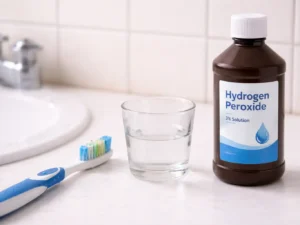
Ever wonder if your toothbrush is truly clean after a quick rinse? How to Clean Toothbrush With Hydrogen Peroxide is simple: soak the bristles in 3% hydrogen peroxide for 3–5 minutes, then rinse well and air dry. I started doing this after getting sick once, and it gave me real peace of mind, especially in shared bathrooms.
Dentists often support simple disinfection habits like this, so it’s a smart step for better hygiene—try it once and see how fresh your brush feels.
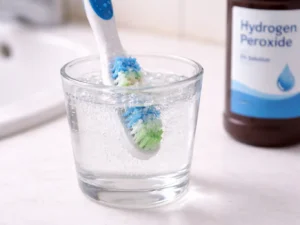
How to Clean Toothbrush With Hydrogen Peroxide
Cleaning your toothbrush may feel small, but it matters a lot. I used to just rinse mine and forget it. Then I learned how to clean a toothbrush with hydrogen peroxide, and it changed my routine. It is simple, low-cost, and very effective.
In short, you soak the bristles in 3% hydrogen peroxide for 3–5 minutes, then rinse well. This helps kill germs, keeps your brush fresh, and makes it last longer.
Understanding Toothbrush Hygiene & Bacterial Build-Up
Toothbrushes collect germs from your mouth and bathroom air. Simple rinsing is not enough to remove all bacteria.
Your toothbrush is not as clean as it looks. It picks up bacteria, food bits, and even mold over time. A quick rinse does help, but it does not remove deep-seated germs.
Bathrooms also spread germs. Air, splashes, and poor storage can add more bacteria to your brush. That is why deeper cleaning matters.
| Issue | Cause | Risk Level |
|---|---|---|
| Bacteria build-up | Mouth germs | High |
| Mold growth | Moist storage | Medium |
| Debris | Food and paste | Low |
Summary:
A toothbrush can hold germs even after rinsing. Deep cleaning helps keep it safe.
Rating: 8/10
Why Hydrogen Peroxide Works for Toothbrush Cleaning
Hydrogen peroxide kills germs by breaking them down through oxidation.
Hydrogen peroxide works like a tiny cleaner army. It breaks down germs through oxidation. This means it attacks and destroys bacteria fast.
It works better than soap alone. It is also safer than boiling for most brushes. Mouthwash helps too, but peroxide is stronger.
| Method | Effectiveness | Ease |
|---|---|---|
| Hydrogen peroxide | High | Easy |
| Soap + water | Low | Very easy |
| Boiling water | Medium | Risky |
| Mouthwash | Medium | Easy |
Summary:
Hydrogen peroxide is strong, simple, and safe for regular use.
Rating: 9/10
What Type of Hydrogen Peroxide Is Safe to Use
Always use 3% hydrogen peroxide for safe toothbrush cleaning.
Not all peroxide is safe. You should only use a 3% solution. This is the common type found in stores.
Medical-grade is safe for home use. Industrial types are too strong and dangerous. Always handle with care and keep away from the eyes.
| Type | Safety | Use |
|---|---|---|
| 3% solution | Safe | Best choice |
| Medical-grade | Safe | Good |
| Industrial | Unsafe | Avoid |
Summary:
Stick with 3% hydrogen peroxide for safe cleaning.
Rating: 10/10
Step-by-Step Process: How to Clean Toothbrush with Hydrogen Peroxide
Soak toothbrush bristles in 3% hydrogen peroxide for 3–5 minutes, then rinse and air dry.
Cleaning is easy when you follow a few steps. First, rinse your brush well. This removes visible dirt.
Next, place it in a clean cup with peroxide. Let it soak for 3–5 minutes only. Do not over-soak, as it may weaken bristles.
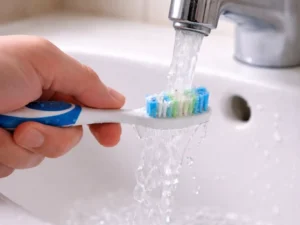
After that, rinse again with clean water. Let it air dry in an open space. Avoid closed holders.
| Step | Action | Time |
|---|---|---|
| Rinse | Remove debris | 10 sec |
| Soak | Use peroxide | 3–5 min |
| Rinse again | Clean off the liquid | 10 sec |
| Dry | Air dry | Ongoing |
Summary:
Short soaks, good rinses, and air drying keep your brush clean and safe.
Rating: 10/10
Frequency Guidelines for Disinfecting Your Toothbrush
You do not need to clean it daily. Once or twice a week is enough for most people. But some cases need more care.
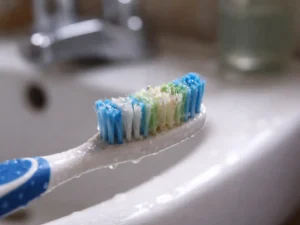
If you are sick, clean it more often. Shared bathrooms also increase risk. Bad smell or color change means clean it now.
| Situation | Cleaning Need |
|---|---|
| Normal use | Weekly |
| After illness | Daily |
| Shared space | 2–3 times/week |
Summary:
Clean weekly, but increase frequency when needed.
Rating: 9/10
Material Compatibility & Brush Type Considerations
Not all brushes react the same way. Manual brushes handle peroxide well. Electric heads also work, but check the brand guide.
Soft bristles are more delicate. Long soaking can damage them. Hard bristles last longer but may still weaken over time.
| Brush Type | Compatibility | Risk |
|---|---|---|
| Manual | High | Low |
| Electric head | Medium | Medium |
| Soft bristles | Medium | Higher |
Summary:
Most brushes are safe, but avoid long soaking.
Rating: 8/10
Safety Risks & Mistakes to Avoid
Safety matters a lot here. Over-soaking can ruin bristles. Mixing peroxide with other liquids can be harmful.
Always rinse well before use. Never leave residue on the brush. Store it properly to keep it clean.
| Mistake | Risk |
|---|---|
| Over-soaking | Damage |
| Mixing chemicals | Unsafe |
| Poor rinse | Ingestion risk |
Summary:
Follow simple steps to stay safe and avoid damage.
Rating: 9/10
Real-World Usage Scenarios & Practical Insights
I started using this method after a cold. It felt safer and cleaner. It works well after illness or travel.
Shared bathrooms also make this useful. It gives peace of mind when hygiene feels uncertain.
| Scenario | Benefit |
|---|---|
| After illness | High safety |
| Travel | Easy hygiene |
| Shared bathroom | Extra protection |
Summary:
Great for real-life hygiene challenges.
Rating: 9/10
Performance Limitations & Trade-Offs
Peroxide is strong but not perfect. It reduces germs but may not remove all. Some deep bacteria can stay.
UV tools may work better but cost more. Boiling can damage brushes. Peroxide is a good balance.
| Method | Limit |
|---|---|
| Peroxide | Not full sterilization |
| UV | Costly |
| Boiling | Damage risk |
Summary:
Good balance of safety, cost, and performance.
Rating: 8/10
Maintenance Beyond Cleaning
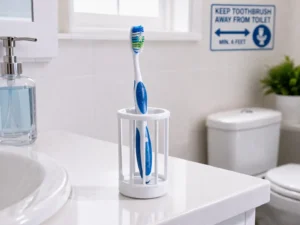
Cleaning alone is not enough. Storage matters too. Keep your brush in the open air.
Also, replace it every 3–4 months. If the bristles bend, it is time to change.
| Factor | Best Practice |
|---|---|
| Storage | Open air |
| Distance | Away from the toilet |
| Replacement | Every 3–4 months |
Summary:
Clean, store well, and replace on time.
Rating: 10/10
Alternative Cleaning Methods (Contextual Comparison)
There are other ways to clean your brush. Vinegar works, but smells strong. Boiling can damage it.
Mouthwash is easy but less strong. UV tools are great but costly.
| Method | Pros | Cons |
|---|---|---|
| Vinegar | Natural | Strong smell |
| Boiling | Kills germs | Damage risk |
| Mouthwash | Easy | Less effective |
| UV | Strong | Expensive |
Summary:
Peroxide offers the best mix of cost and power.
Rating: 9/10
Long-Term Hygiene Strategy
Good hygiene is about habit. Clean your brush often. Store it well and replace it on time.
This simple routine lowers your risk over time. It keeps your mouth healthier, too.
| Step | Action |
|---|---|
| Clean | Weekly |
| Store | Open air |
| Replace | Every 3–4 months |
Summary:
Consistency gives the best results.
Rating: 10/10
Who Should Use Hydrogen Peroxide for Toothbrush Cleaning
This method is great for many people. It suits those who want better hygiene. It also helps in shared homes.
It is low-cost and easy to use. That makes it ideal for daily life.
| User Type | Benefit |
|---|---|
| Hygiene-focused | High |
| Shared homes | High |
| Budget users | High |
Summary:
Best for simple, low-cost hygiene.
Rating: 10/10
When to Consider Alternatives Instead
Some people may want other options. Sensitive users may avoid chemicals. Some electric brushes may have limits.
In such cases, try safer methods like mild soap or UV tools.
| Case | Alternative |
|---|---|
| Sensitive users | Mild cleaning |
| Electric limits | Check the guide. |
| Deep sterilization | UV device |
Summary:
Choose what fits your needs best.
Rating: 7/10
Performance: How to Clean Toothbrush With Hydrogen Peroxide
This method works fast and well. It removes most germs in minutes. It is not perfect, but very reliable.
| Metric | Score |
|---|---|
| Germ removal | High |
| Speed | Fast |
| Safety | High |
Summary:
Strong and fast cleaning option.
Rating: 9/10
Ease of Use: How to Clean Toothbrush With Hydrogen Peroxide
This is one of the easiest methods. No tools needed. Just soak, rinse, and dry.
| Factor | Level |
|---|---|
| Steps | Simple |
| Time | Short |
| Effort | Low |
Summary:
Very easy for anyone to use.
Rating: 10/10
Value for Money: How to Clean Toothbrush With Hydrogen Peroxide
Hydrogen peroxide is cheap and easy to find. One bottle lasts a long time. It gives great value.
| Factor | Value |
|---|---|
| Cost | Low |
| Usage | Long |
| Benefit | High |
Summary:
Low cost with high return.
Rating: 10/10
Overall: How to Clean Toothbrush With Hydrogen Peroxide
If you want a simple and smart way to clean your brush, this works well. It is cheap, fast, and effective. I use it often, and it gives me peace of mind.
Final Verdict:
A safe, easy, and budget-friendly way to improve toothbrush hygiene.
Overall Rating: 9.5/10
FAQs for How to Clean Toothbrush With Hydrogen Peroxide
How to clean a toothbrush with hydrogen peroxide safely?
Use 3% hydrogen peroxide. Soak bristles for 3–5 minutes. Rinse well with clean water. Let it air dry. This keeps your brush clean and safe.
How often should I clean my toothbrush with hydrogen peroxide?
Clean it once or twice each week. Clean more after illness or if stored in a shared space. This helps lower germs and keeps your brush fresh.
Can hydrogen peroxide damage toothbrush bristles?
Yes, if you soak too long. Short soaks are safe. Long soaks can weaken soft bristles. Keep it under 5 minutes to avoid damage.
Is hydrogen peroxide better than mouthwash for cleaning toothbrushes?
Yes, it kills more germs than most mouthwashes. It works fast and deep. Mouthwash helps, but peroxide is stronger for full cleaning.
Do I need to rinse my toothbrush after using hydrogen peroxide?
Yes, always rinse well. This removes any leftover liquid. It keeps your brush safe for use and avoids a bad taste.
Read More Article:

The Afforio Team is made up of real experts with hands-on experience in Home & Kitchen, Smart Devices, Wellness & Care, and Gardening. We test every product ourselves and share honest, easy-to-understand reviews. Learn more on our About Us page or see how we test in The Lab.