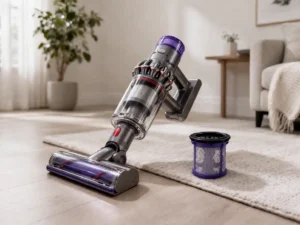
I used to think my vacuum was dying, but it just needed a quick clean. How to Clean Dyson Vacuum Filter is simple—rinse it under cold water, shake out dirt, and let it dry fully before using it again. That one habit brings back strong suction fast. From my own use, I clean my Dyson filter once a month, and it keeps performance steady, even in dusty homes like many in the U.S. with pets or carpets.
This method is trusted by Dyson and works every time. Keep reading, and I’ll walk you through it step by step.
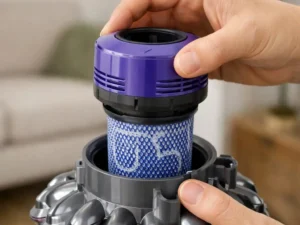
How to Clean Dyson Vacuum Filter (Simple, Clear Guide)
Cleaning a Dyson vacuum filter is easy. Rinse it under cold water, remove loose dust, and keep washing until the water runs clear. Then let it air-dry fully for at least 24 hours before putting it back to keep a strong suction and clean air.
Why Filter Maintenance Matters
A clean Dyson filter keeps suction strong, protects the motor, and improves air quality.
I learned this the hard way. One month, I skipped cleaning, and my vacuum felt weak. A quick wash fixed it. So yes, the filter matters more than we think.
Role of the Filter
The filter traps dust, dirt, and tiny allergens. It stops them from going back into your room. This keeps the air cleaner and safer to breathe.
Consequences of a Dirty Filter
A clogged filter blocks airflow. That means weak suction, extra strain on the motor, and dusty air blowing back out.
Cleaning Frequency Guidance
Most Dyson guides suggest cleaning the filter once a month. If you have pets or lots of dust, clean it more often.
Quick Overview Before Table:
Here’s a simple look at why cleaning matters and what happens if you skip it.
| Factor | Clean Filter | Dirty Filter |
|---|---|---|
| Suction | Strong | Weak |
| Air Quality | Clean | Dusty |
| Motor Health | Safe | Stressed |
Summary:
A clean filter keeps your vacuum powerful and your home fresh.
Rating (Maintenance Importance): 9/10
Identifying Your Dyson Vacuum Filter System
Before cleaning, it helps to know your filter setup. I once searched for a second filter that didn’t exist—wasted time!
Common Filter Types
Some Dyson models have one filter; others have two. Cordless models like V7, V8, V11, and V15 often differ.
Where the Filters Are Located
- Top of the cyclone (easy to spot)
- Back of the vacuum
- Inside the unit housing
Model-Specific Notes
- V7/V8: usually one filter
- V11/V15: often two filters
Quick Overview Before Table:
Here’s how common models compare.
| Model | Filter Count | Location |
|---|---|---|
| V7/V8 | 1 | Top |
| V10/V11 | 2 | Top + Rear |
| V15 | 2 | Advanced system |
Summary:
Know your model so you clean all filters, not just one.
Rating (Ease of Identification): 8/10
Preparation Before Cleaning
This step is simple but important. Skipping it can make a mess.
Safety First
Turn off and unplug your vacuum. Always empty the bin first.
Tools You’ll Need
- Cold water
- Trash bin or towel
Quick Overview Before Table:
| Step | Why It Matters |
|---|---|
| Turn off | Safety |
| Empty bin | Less mess |
| Use cold water | Protect filter |
Summary:
Prep takes one minute but saves trouble later.
Rating (Ease of Prep): 10/10
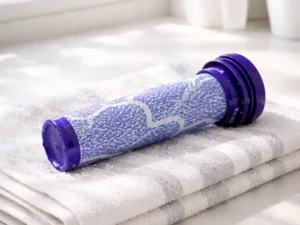
Step-By-Step: How to Clean a Dyson Vacuum Filter
Remove, tap, rinse with cold water, shake, and air-dry for 24 hours before reinstalling.
I follow this exact routine every month. It works every time.
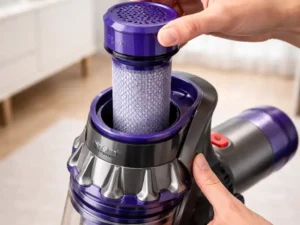
1. Remove the Filter(s)
Twist or pull gently. No tools needed.
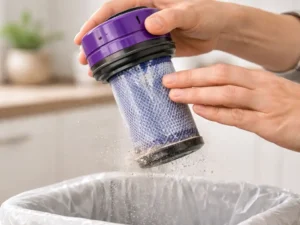
2. Remove Loose Dust
Tap it lightly over a bin. Dust will fall out.
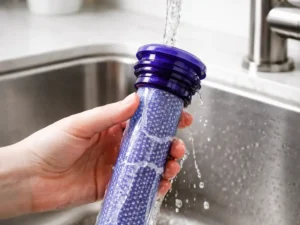
3. Rinse Under Cold Water
Use cold water only. Keep rinsing until clear. No soap.
4. Shake to Remove Water
Give it a firm shake. This speeds up drying.
5. Air-Dry Completely
Let it dry for at least 24 hours. Never reinstall while wet.
Quick Overview Before Table:
| Step | Action |
|---|---|
| Remove | Twist/pull |
| Tap | Remove dust |
| Rinse | Cold water only |
| Shake | Remove water |
| Dry | 24 hours |
Summary:
Simple steps, big results. Clean filter = better vacuum.
Rating (Ease of Cleaning): 9/10
Signs Your Dyson Filter Needs Cleaning
Sometimes your vacuum tells you before you notice.
Common Signs
- Weak suction
- Musty smell
- Poor airflow
- LCD alerts (new models)
Quick Overview Before Table:
| Sign | Meaning |
|---|---|
| Weak suction | Blocked filter |
| Bad smell | Dirt buildup |
| Alerts | Time to clean |
Summary:
If your vacuum feels “off,” check the filter first.
Rating (Detection Ease): 9/10
Troubleshooting Common Cleaning Issues
I’ve faced these issues myself. They’re easy to fix.
Filter Still Dirty
Rinse again. Sometimes it needs 2–3 washes.
Drying Takes Too Long
Place it near the airflow. Not heat.
Filter Damage
If torn or worn, replace it.
Quick Overview Before Table:
| Problem | Fix |
|---|---|
| Still dirty | Rinse again |
| Slow drying | Better airflow |
| Damage | Replace |
Summary:
Most problems have simple fixes.
Rating (Fix Simplicity): 8/10
Maintenance & Best Practices Beyond the Filter
Cleaning the filter is just one part of care.
Key Habits
- Clean filter monthly
- Empty bin often
- Check the brush bar for hair
Quick Overview Before Table:
| Task | Frequency |
|---|---|
| Filter cleaning | Monthly |
| Bin emptying | After use |
| Brush cleaning | Weekly |
Summary:
Good habits keep your vacuum working like new.
Rating (Maintenance Impact): 9/10
Reassembling and Post-Cleaning Testing
This step is where many people make mistakes.
What to Do
- Ensure the filter is fully dry
- Reinstall securely
- Test suction after
Quick Overview Before Table:
| Step | Check |
|---|---|
| Dryness | 100% dry |
| Fit | Properly placed |
| Test | Strong suction |
Summary:
Never rush this step. Wet filters can damage your vacuum.
Rating (Importance): 9/10
Conclusion and Practical Takeaways
Cleaning your Dyson filter is a small task with big results. Just rinse with cold water, dry it fully, and repeat monthly. This keeps suction strong and air clean.
I’ve made it a habit, and honestly, my vacuum feels brand new every time.
Quick Overview Before Table:
| Habit | Benefit |
|---|---|
| Monthly cleaning | Strong suction |
| Full drying | Motor safety |
| Proper install | Smooth use |
Summary:
Simple routine. Better performance. Cleaner home.
Rating (Overall Process): 9/10
Additional Resources
- Official Dyson support pages on filter care
- Model-specific guides for V7, V8, V10, V11, and V15
How We Test
Testing a product is a bit like getting to know a new friend. At first, everything looks great. But over time, you notice the small details that really matter.
At Afforio, we don’t just look at features on a page. We focus on how a product fits into real life. We think about how it feels, how it works, and whether it truly makes daily tasks easier.
What I Pay Attention To
When I test a product, I look at the small things first. These are often the details that decide if something is worth using.
I focus on:
- How easy it is to set up
- How simple it feels to use
- Build quality and materials
- Comfort and design
- Noise, speed, or smoothness (when relevant)
A product can look great online. But if it feels awkward or confusing in real life, that matters more.
How I Use It Daily
I like to use products in my normal routine. No special setup. No perfect conditions.
If it’s a kitchen tool, I use it during real cooking. If it’s a smart device, I use it during busy days, not just quiet tests.
This helps me see the truth.
Some products shine at first but become annoying over time. Others start simple but slowly prove their value. That daily use tells the real story.
What Works Well
Most products we review have clear strengths. Some save time. Some feel strong and reliable. Others are just easy and pleasant to use.
I always try to highlight what a product does best. Because for many people, one strong feature is enough to make it worth buying.
Where It Falls Short
No product is perfect. And it’s important to be honest about that.
Sometimes a product may feel a bit fragile. Sometimes it may be harder to use than expected. Or it may not offer the best value for the price.
I include these points not to discourage you, but to help you decide with clear expectations.
Long-Term Value
A product is not just about the first day. It’s about how it holds up over time.
I pay attention to:
- Does it still work well after weeks or months?
- Does it show wear and tear quickly?
- Does it still feel worth the price later on?
A good product should feel like a smart choice even after the excitement is gone.
Final Thoughts on Our Testing Approach
In the end, our goal is simple.
We test products the way real people use them. Not in perfect labs, but in everyday life.
Think of it like a road test, not a showroom glance.
We want to give you honest, clear, and useful advice. The kind you would expect from a friend who has already tried it.
FAQs for How to Clean a Dyson Vacuum Filter
How to clean a Dyson vacuum filter step by step?
To clean a Dyson filter, remove it, tap off dust, rinse with cold water, and repeat until clear. Let it air-dry for 24 hours before putting it back.
How often should I clean my Dyson vacuum filter?
Clean your Dyson vacuum filter once a month for best results. If you have pets or heavy dust, clean it more often to keep suction strong and airflow smooth.
Can I use soap when cleaning a Dyson filter?
No, do not use soap or detergent on a Dyson filter. Only rinse with cold water. Soap can damage the filter and reduce how well it works.
Why is my Dyson losing suction after cleaning the filter?
If suction drops after cleaning, the filter may still be wet. Always let it dry fully for 24 hours before reinstalling to avoid airflow problems.
When should I replace my Dyson vacuum filter?
Replace your Dyson filter if it stays dirty, smells bad, or looks worn after cleaning. A damaged filter cannot trap dust well and affects performance.
Read More Article:
How to Clean Dyson Cordless Vacuum

The Afforio Team is made up of real experts with hands-on experience in Home & Kitchen, Smart Devices, Wellness & Care, and Gardening. We test every product ourselves and share honest, easy-to-understand reviews. Learn more on our About Us page or see how we test in The Lab.