
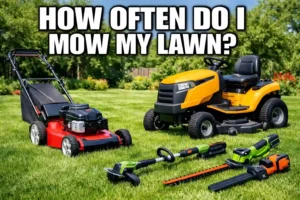
A lawn can grow fast after rain and sun. Many people ask how often do I mow my lawn, or how often is it usually necessary to mow a lawn. In most yards, you mow once a week in the growing season, though how often to mow lawn or how often to cut grass can change with grass type, weather, and soil. From years of lawn care work, I have learned that how often should you mow your lawn, how often should you cut your grass, or how often to mow grass depends more on growth than the calendar—so watch the height and adjust your routine as your lawn grows.
Most lawns should be mowed once every 5–7 days during the active growing season. However, mowing frequency depends on grass type, growth rate, weather, soil health, and seasonal conditions. The goal is to remove no more than one-third of the grass height at a time to maintain lawn health and prevent stress.

How Often Do I Mow My Lawn
A neat lawn feels like a calm lake. Smooth. Even. Easy on the eyes.
Yet many people ask the same thing: how often do I mow my lawn?
The short answer is simple. It depends on growth. Grass grows at different speeds. Climate, soil, rain, and grass type all matter. A fixed schedule rarely works for every yard.
Below is a clear guide based on turf science and real lawn care habits in the United States.
How Lawn Growth Rate Determines Mowing Frequency
Grass growth rate drives mowing needs. Some lawns grow fast in spring. Many slow down in the summer heat.
Weekly mowing works for many yards. But not every lawn grows at the same pace. Climate, grass type, and soil health all shape the schedule.
In short, lawn mowing frequency follows grass growth speed.
| Growth Factor | Typical Effect of Mowing |
|---|---|
| Spring growth surge | Mow every 5–7 days |
| Moderate summer growth | Mow every 7–10 days |
| Slow fall growth | Mow every 10–14 days |
| Winter dormancy | Rare or no mowing |
Overall usefulness rating: 9/10

The 1/3 Rule: The Core Principle Behind Proper Mowing
Healthy mowing follows one simple rule. Never cut more than one-third of the blade height.
This rule protects the roots. It also helps grass recover fast after a trim.
Cutting too short weakens turf. Weak grass invites weeds and disease.
In simple terms, the one-third rule keeps grass strong and stable.
| Mowing Practice | Lawn Impact |
|---|---|
| Follow the 1/3 rule | Strong roots, thick lawn |
| Cutting too short | Stress and weed growth |
| Frequent heavy cuts | Weak turf |
| Moderate cutting | Stable growth cycle |
Overall usefulness rating: 10/10
Mowing Frequency by Grass Type in the United States
Different grasses grow at different speeds. Most U.S. lawns fall into two groups. These are cool-season grasses and warm-season grasses.
Cool-season grasses grow best in spring and fall. Warm-season grasses grow fastest in summer.
The type of grass in your yard often decides how often you mow.
| Grass Type | Typical Mowing Frequency |
|---|---|
| Kentucky bluegrass | Every 5–7 days in spring |
| Tall fescue | Every 7–10 days |
| Bermuda grass | Every 5–7 days during summer |
| Zoysia grass | Every 7–10 days |
| St. Augustine | Every 7–10 days |
Overall usefulness rating: 9/10
Growth Season vs Dormancy: When to Adjust Your Schedule
Grass follows a natural yearly cycle. Growth speeds up in spring. It slows in heat or cold.
Knowing these cycles helps prevent over-mowing.
In short, mowing frequency should change with the season.
| Season | Lawn Growth Pattern |
|---|---|
| Spring | Fast growth |
| Summer heat | Slower growth |
| Fall | Recovery growth |
| Winter | Dormancy |
Overall usefulness rating: 8/10

How Weather and Climate Shift Your Mowing Timeline
The weather can change growth fast. Rain and fertilizer can trigger sudden growth.
Dry weather slows grass. Heat stress can also reduce mowing needs.
The key idea is simple: the weather often changes your mowing schedule.
| Weather Condition | Mowing Impact |
|---|---|
| Heavy rainfall | Faster growth |
| Drought | Slower growth |
| Extreme heat | Less mowing needed |
| Mild temperatures | Steady growth |
Overall usefulness rating: 8/10

Lawn Height Strategy Instead of Fixed Schedules
Many turf experts suggest watching grass height instead of a strict calendar.
Taller grass shades the soil. This helps reduce heat stress and water loss.
The main idea is simple: mow based on height, not just time.
| Grass Category | Ideal Height |
|---|---|
| Bermuda | 1–2 inches |
| Zoysia | 1–2.5 inches |
| Kentucky bluegrass | 2–3 inches |
| Tall fescue | 3–4 inches |
Overall usefulness rating: 9/10
Signs Your Lawn Needs Mowing (Beyond the Calendar)
Sometimes the lawn itself gives clear signals.
Uneven growth and dense patches often appear before the yard looks messy.
Watching these signs helps you mow at the right time.
| Lawn Sign | Meaning |
|---|---|
| Grass bending over | Too tall |
| Uneven surface | Growth differences |
| Thick patches | Rapid growth |
| Visible seed heads | Grass is mature |
Overall usefulness rating: 8/10
How Soil Health and Fertilization Affect Mowing Frequency
Healthy soil supports faster grass growth. Fertilizer adds nutrients that boost blade growth.
Nitrogen is the main driver of fast turf growth.
In simple terms, richer soil often means more mowing.
| Soil Factor | Effect |
|---|---|
| High nitrogen | Faster growth |
| Healthy soil microbes | Strong turf |
| Compacted soil | Slow growth |
| Deep roots | Better drought tolerance |
Overall usefulness rating: 8/10
Equipment and Blade Condition: Hidden Factors in Mowing Timing
Sharp mower blades matter more than many people think.
A sharp blade cuts clean. A dull blade tears grass and slows recovery.
Good equipment helps grass heal and stay healthy.
| Equipment Condition | Result |
|---|---|
| Sharp blades | Clean cuts |
| Dull blades | Ragged edges |
| Mulching mower | Nutrients return to the soil |
| Bagging mower | Cleaner look |
Overall usefulness rating: 7/10
Real-World Usage Scenarios
Every lawn owner has different goals. Some want perfect stripes. Others want simple upkeep.
Lifestyle often shapes mowing routines.
The mowing schedule often reflects how the lawn is used.
| Lawn Style | Typical Routine |
|---|---|
| Busy homeowners | Every 10–14 days |
| Lawn enthusiasts | Weekly mowing |
| HOA neighborhoods | Weekly or bi-weekly |
| Sports lawns | Multiple cuts per week |
Overall usefulness rating: 8/10
Common Mowing Mistakes That Change Frequency Needs
Small mistakes can stress the grass. Stress often leads to uneven growth.
This can create more mowing work later.
Avoiding basic mowing mistakes helps keep growth steady.
| Mistake | Lawn Impact |
|---|---|
| Scalping | Weak grass |
| Irregular mowing | Uneven growth |
| Overwatering | Rapid growth |
| Cutting wet grass | Clumping and disease |
Overall usefulness rating: 8/10
Cost and Time Trade-offs in Different Mowing Approaches
Weekly mowing looks clean and sharp. But it takes time and effort.
Adaptive mowing saves time. Yet it may not look as polished.
Most homeowners aim for a balance between time and lawn health.
| Approach | Pros | Cons |
|---|---|---|
| Weekly mowing | Best appearance | Time commitment |
| Adaptive mowing | Flexible | Less uniform |
| Professional service | Convenience | Higher cost |
Overall usefulness rating: 7/10
Environmental and Sustainability Considerations
Frequent mowing uses fuel and creates noise.
Many homeowners now mow less often. Some leave areas for pollinators.
Lower mowing frequency can support a more eco-friendly yard.
| Sustainability Factor | Impact |
|---|---|
| Reduced mowing | Lower emissions |
| Electric mowers | Less noise |
| Pollinator zones | Better biodiversity |
| Mulching | Nutrient recycling |
Overall usefulness rating: 8/10
Expectation vs Reality: Why Lawn Advice Often Fails
Many lawn guides promise simple rules. Real lawns are more complex.
Climate, soil type, and grass species all affect mowing schedules.
The key truth is simple: lawn care advice must adapt to real conditions.
| Lawn Advice Myth | Reality |
|---|---|
| “Mow once a week, always.” | Growth varies |
| “Short grass is healthier.” | Often harmful |
| “One schedule fits all.” | Lawns differ widely |
A helpful rule is simple. Watch the grass, not the calendar.
If growth is fast, mow sooner. If growth slows, wait.
Overall usefulness rating: 9/10
FAQs for how often do I mow my lawn
How often do I mow my lawn during peak growing season?
Most lawns need mowing once each week in peak growth. Spring rain and warm sun boost growth fast. If grass grows fast, mow every 5–7 days to keep the height healthy.
How often do I mow my lawn in summer heat?
Grass often slows in strong summer heat. Many lawns only need mowing every 7–10 days. Watch grass height instead of the calendar.
How often do I mow my lawn if the grass grows slowly?
Slow growth means less mowing. In cool or dry weeks, mowing every 10–14 days may work well. Always follow the one-third rule to avoid stress.
How often do I mow my lawn based on the grass type?
Grass type matters a lot. Fast growers like Bermuda may need weekly cuts. Slower grasses like tall fescue may need mowing every 7–10 days.
How do I know when it is time to mow my lawn?
Look at the grass height. If the lawn grows one-third taller than its ideal height, it is time to mow. Uneven blades and bent grass are also clear signs.