
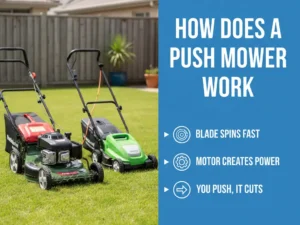
Staring at a tall, messy lawn on a hot Saturday can feel like a big chore. You might ask, “How does a push mower work to get the job done so fast? It works by spinning a sharp blade at high speeds to slice grass while you walk behind it. I have fixed many mowers in my time and know that a clean deck is the key to a great cut.
Learning the way these tools run helps you keep your yard looking its best all summer long. Let us dive into the mechanics and see how a push mower starts and stays running for you.

How Does a Push Mower Work? A Beginner-Friendly Guide to Understanding Lawn Mowers
It is Saturday morning. The sun is out. You smell fresh grass. You feel a good burn in your arms. It is mowing time. We all know that feeling. But have you ever stopped to ask: how does a push mower work?
It seems simple. You push, it cuts. But there is more to it. Knowing how it works helps you. You can buy the right one. You can fix it fast. You can stay safe. It does not matter if your lawn is big or small. It does not matter if you want to save cash. A push mower is a great tool. It is simple. It works hard. Let’s look at how it gets the job done.
Push Mower Overview
A classic tool for lawn care. It uses a spinning blade to cut grass as you walk behind it. Simple and effective.
| Feature | Details |
| Best For | Small to medium yards |
| Power Source | Gas, Electric, or Manual |
| Cost | Low to Medium |
| Maintenance | Low |
Overall Rating: 9/10
What Is a Push Mower?
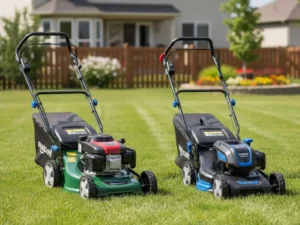
A push mower is simple. It is smart too. Let’s see what it is. Let’s see what happens under the deck when you walk.
Simple Definition (Beginner-Friendly)
A push mower is a lawn mower that moves only when you push it. It does not drive itself. It is best for small or medium lawns.
It is a mower you must push. It will not move on its own. You provide the force. This is unlike a self-propelled mower. It is great for smaller lawns. It is often called a walk-behind mower. It has a cutting deck. It has a blade that spins.

How Does a Push Mower Work? (Core Explanation Section)
When you push, the wheels turn. In gas or electric models, a motor spins a shaft. This spins the blade at high speed to cut grass.
You push the mower. The wheels turn. This moves it forward.
- Gas or Electric: The motor spins a vertical shaft.
- Speed: The shaft spins the blade fast. It goes around 3,000 times a minute.
- The Lift: The blade acts like a fan. It creates suction. This pulls the grass up straight.
- The Cut: The sharp blade hits the grass. It cuts it clean.
- The Exit: The grass shoots out the side. Or it goes in a bag.
Think about the sound. A gas engine hums loudly. An electric motor has a quiet whirr. A reel mower makes a crisp “snip” sound.
Key Components of a Push Mower
Here are the main parts.
- Blade: The metal bar that cuts the grass.
- Engine or Motor: It gives power to the blade.
- Wheels: They let the mower roll.
- Handle: You hold this to push and steer.
- Deck: The shell that covers the blade.
- Bag: It catches the cut grass.
I check my deck often. Wet grass sticks there. It blocks the flow. A clean deck works best.
Core Mechanism
The system that powers the cut. It relies on rotational force to slice grass blades cleanly.
| Component | Function |
| Blade | Cuts and lifts grass |
| Motor/Engine | Spins the blade |
| Deck | Protects and directs airflow |
Functionality Rating: 9.5/10
Types of Push Mowers
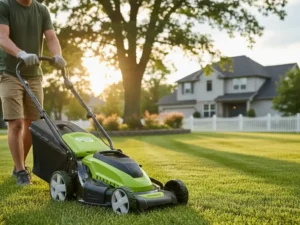
Not all mowers are the same. How a push mower works depends on its power. The power source changes the noise. It changes the care it needs. It even changes the smell.
Reel Push Mowers (Manual)
These have no engine. They have no motor. The blades spin when the wheels turn. It cuts like scissors.
Pros:
- Good for the earth.
- Very quiet.
- Light to carry.
- Easy to fix.
Cons:
- Hard work in tall grass.
- You must push harder.
Best for: Small, flat yards.
Electric Push Mowers
These use a cord or a battery.
How they work: An electric motor spins the blade. A battery or plug gives power.
Pros:
- Quieter than gas.
- No gas to buy.
- Starts with a button.
Cons:
- Batteries run out.
- Cords can get in the way.
Best for: Suburban homes.
Gas Push Mowers
These use a gas engine. You pull a cord to start it.
Pros:
- Very strong.
- Cuts thick or wet grass well.
- Good for bigger lawns.
Cons:
- Loud noise.
- Needs oil changes.
- Heavy to push.
I love the smell of a gas mower. It reminds me of summer days. But the noise can be a lot.

Mower Categories
Different tools for different needs. From manual reels to powerful gas engines.
| Type | Power Source | Best Use |
| Reel | Human Push | Tiny, flat lawns |
| Electric | Battery/Cord | Standard home yards |
| Gas | Petrol | Thick grass, big yards |
Variety Rating: 10/10
Benefits of Using a Push Mower
Why use a push mower? New mowers are fancy. But push mowers are still great.
Key Advantages:
- Cost: They cost less than riding mowers.
- Storage: They are small. They fit in sheds easily.
- Care: They are simple to fix.
- Fitness: You get a light workout.
- Size: Perfect for normal yards.
It is like a gym pass. But this one cuts your grass.
Value Proposition
The reasons to choose a push model. It balances cost, effort, and results.
| Benefit | Impact |
| Price | Saves money |
| Health | Burns calories |
| Space | Saves room |
Value Rating: 9/10
Push Mower vs Self-Propelled Mower
Have you felt tired halfway through the yard? This choice matters.
Key Differences
Effort:
- Push: You make it move.
- Self-propelled: The engine moves the wheels.
Cost:
- Push mowers are cheaper.
Parts:
- Push mowers have fewer parts to break.
Lawn Size:
- Push: Good for under ½ acre.
- Self-propelled: Better for big yards.
Ground:
- Push: Best for flat ground.
- Self-propelled: Good for hills.
Comparison Overview
A look at manual push versus assisted drive. Helps you decide based on effort.
| Feature | Push Mower | Self-Propelled |
| Effort | High | Low |
| Price | Low | High |
| Complexity | Low | High |
User Choice Rating: 8.5/10
How to Choose the Right Push Mower
Pick the right one for your home. Do not pick one just because your neighbor has it.
Consider These Factors:
- Lawn Size: Small yard? Get a reel or an electric one. Medium yard? Gas or battery is good.
- Grass Type: Thick grass needs gas power. Fine grass works with electricity.
- Terrain: Is it flat? Any push mower works. Is it hilly? Get a light electric one.
- Width: A wide deck cuts faster. A narrow deck fits in tight spots.
- Budget: Reel mowers are cheap. Gas is in the middle. Battery costs a bit more at first.
Think about where you live. A city yard is different from a farm.
Selection Guide
Factors to help you buy. Matches the machine to your land.
| Factor | Tip |
| Size | Match power to acres |
| Grass | Match the engine to the thickness |
| Hills | Watch the weight |
Buying Advice Rating: 9/10
Maintenance Tips to Keep Your Push Mower Working
You know how a push mower works. Now keep it running. It is not scary.
Essential Maintenance Checklist:
- Blade: Sharpen it. Do this every 25 hours of use.
- Deck: Clean out the grass. Do this after every mow.
- Oil: Change it once a year for gas models.
- Air Filter: Check it often on gas mowers.
- Battery: Keep it inside. Do not let it freeze.
- Storage: Keep the mower dry.
I tip my mower up to clean it. I am always careful. I keep the spark plug up. It stops oil leaks.
Care Routine
Simple steps to extend life. Keeps the cut clean and engine safe.
| Task | Frequency |
| Sharpen Blade | Yearly |
| Clean Deck | Every use |
| Check Oil | Seasonally |
Ease of Care Rating: 8/10
Safety Tips When Using a Push Mower
The blade spins fast. It spins at 3,000 RPM. You must respect it.
Important Safety Practices:
- Shoes: Wear tough shoes. No sandals.
- Clean Up: Pick up rocks and sticks first.
- Hands: Keep your hands away from the blade.
- Power Off: Stop the engine to fix things.
- Kids: Keep them away. Store the mower safely.
We call it the “blade guard” for a reason. It keeps you safe. Wear eye protection too.
Safety Protocol
Rules to prevent hurt. Vital for every user.
| Rule | Reason |
| Shoes | Protect toes |
| Clear Yard | Stop flying rocks |
| Stop Engine | Safe touching |
Safety Priority Rating: 10/10
Conclusion: Is a Push Mower Right for You?
Now you know how a push mower works. The choice is clear.
It is best for small yards. It is good for your wallet. It is simple. It is reliable. It is good if you like a little work.
If you want a cheap tool that works well, get a push mower. It is a smart choice.
Final Verdict
The summary of the push mower choice. Good for budget and small spaces.
| Feature | Verdict |
| Value | Excellent |
| Usability | Simple |
| Fit | Small/Med Lawns |
Recommendation Rating: 9.5/10
FAQs for How Does a Push Mower Work
How does a push mower work to cut grass?
The motor spins a metal blade at high speeds. This blade creates a breeze that lifts the grass. Then it slices the tops off for a clean yard.
How does a push mower start up?
Most gas mowers use a pull cord. This pull sparks the engine to life. Electric ones start with just a simple push of a button.
Why do I need to push it myself?
A push mower does not have a drive system. It only moves when you walk. This gives you full control over where you cut.
Can a push mower handle thick grass?
Yes, but you must move slowly. The blade needs time to slice through the thick stems. A gas engine often has the most power for this.
Is it hard to keep a push mower working?
No, it is quite simple. You just need to keep the blade sharp. Clean out old grass from the deck to keep the air moving well.