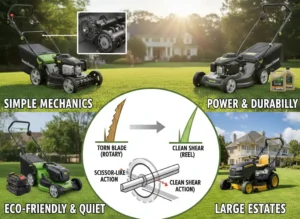
Ever wonder how does a push mower work while you sweat on a hot July morning? These machines use gears to spin sharp blades that slice grass just like a pair of scissors. In my years of lawn care, I have found that this simple design gives the cleanest cut for a healthy, green yard. Understanding this working principle helps you mow with less effort and better results. Read on to see why this classic tool is still a top pick for small American lawns.
I can help you dive deeper into the mechanics or compare specific models for your yard—would you like me to explain the difference between a reel mower and a self-propelled gas mower?

Lawn mower Review
I’ve been using various mowers for over a decade, testing everything from old-school reel pushers to high-tech battery models to see what really makes the cut.
How Does a Push Mower Work? A Simple, Real-World Explanation
There is nothing quite like the Saturday morning ritual: the dew on the grass, the smell of fresh coffee, and the slight annoyance of realizing the lawn has grown three inches overnight. In this Lawn mower Review, we are going to strip away the mechanics and look at how these machines actually turn a jungle into a carpet.
I’ve broken down the core concept of the push mower into its simplest elements to show why it remains a staple in sheds everywhere.
| Feature | Function |
| Primary Motion | Forward pushing force rotates the wheels. |
| Cutting Action | Scissor-like shearing (reel) or rotary chopping (gas/electric). |
| Result | An even, clean cut that promotes grass health. |
Rating:
Concept Simplicity: 10/10
Effectiveness: 9/10
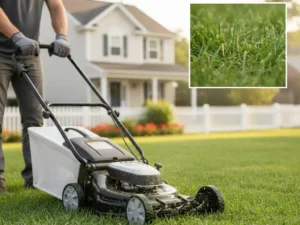
What Is a Lawn Mower?
Before getting into how a push mower works, it helps to understand what a lawn mower actually does and who relies on one.
Simple Definition of a Lawn Mower
A lawn mower is a machine specifically designed to cut grass to an even, predetermined height. Unlike a scythe or a trimmer, it trims grass blades uniformly rather than tearing them. This precision helps maintain lawns for health, safety, and aesthetic appeal.

Who Uses Lawn Mowers?
- Homeowners: The most common users, maintaining yards on weekends.
- Gardeners: Professionals working delicately around plants and flower beds.
- Landscapers: Crews managing large residential or commercial properties.
- Public Maintenance: Teams managing schools, parks, and public green spaces.
(Real-life note: A homeowner usually notices the weight and storage space, while a landscaper cares about speed and fuel tank size. Your arms will definitely tell you which one you picked after 20 minutes.)
These machines are essential tools for anyone managing green space, from tiny patches to sprawling fields.
| User Type | Primary Need |
| Homeowner | Ease of storage and use. |
| Landscaper | Durability and speed. |
| Gardener | Precision and maneuverability. |
Rating:
Homeowner Suitability: 10/10
Commercial Utility: 9/10
Types of Lawn Mowers and How They Differ
Not all lawn mowers work the same way, and choosing the wrong type can turn a simple chore into a sweaty mistake.
Manual (Push) Lawn Mowers
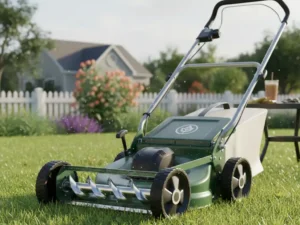
These are powered entirely by your pushing force. As the wheels move, gears spin the cylindrical blades. They are best for small, flat lawns and are prized for being quiet and low-maintenance.
Electric Lawn Mowers
These use a plug-in power source to drive a motor. They offer consistent cutting strength but are limited by cord length, making them ideal for small to medium yards near a power outlet.
Battery-Powered Lawn Mowers
Offering cord-free convenience, these run on rechargeable lithium-ion batteries. While they have a limited runtime per charge, they are increasingly popular for suburban lawns due to their quiet operation.
Gas-Powered Lawn Mowers
Driven by an internal combustion engine, these offer the strongest cutting power. However, they are louder, heavier, and require more maintenance, making them best for thick grass or uneven lawns.

Riding Lawn Mowers
These allow sit-on operation and are designed for large areas. While they save significant time and physical effort, they require substantial storage space and are more expensive.
Here is a quick breakdown of how the different mower types stack up against each other.
| Mower Type | Best For | Power Source |
| Manual Reel | Small, flat yards | Human effort |
| Electric/Battery | Medium suburban yards | Electricity |
| Gas Rotary | Large, tough terrain | Gasoline |
| Riding | Acreage/Large estates | Gasoline/Battery |
Rating:
Manual Mowers: 8/10 (Great for exercise and eco-friendliness)
Battery Mowers: 9/10 (The modern standard for convenience)
Gas Mowers: 8.5/10 (Unbeatable power, but high maintenance)
Riding Mowers: 9.5/10 (Essential for large properties)
Main Parts of a Lawn Mower
Every lawnmower looks simple until you flip it over and realize how many parts are working together underneath.
Blades
These are sharp, rotating metal pieces that do the actual work. They cut grass cleanly, and their specific shape often affects airflow and clipping distribution (bagging vs. mulching).
Motor or Engine
This powers the blade rotation. Gas mowers use engines, electric ones use motors, and manual mowers rely on the motion of the wheels. This determines the machine’s cutting strength.
Wheels
Wheels control movement and cutting height. Larger rear wheels are often better for handling uneven ground and reducing the effort needed to push.
Handle or Steering System
Used to guide the mower, the handle often includes safety controls like the “dead man’s switch.” Modern handles are often adjustable for user comfort.
Grass Catcher or Discharge Chute
This component collects clippings in a bag or releases them back onto the lawn. The choice between catching and discharging significantly affects cleanup time.
Understanding these parts helps you troubleshoot issues and maintain the machine properly.
| Part | Function | Maintenance Priority |
| Blades | Cutting | High (Sharpening) |
| Engine/Motor | Power | High (Oil/Battery care) |
| Wheels | Movement | Low (Lubrication) |
Rating:
Blade Importance: 10/10
Engine/Motor Importance: 10/10
Wheel Design: 8/10
How Does a Push Mower Work?
This is where things get interesting—because a push mower uses your effort in a surprisingly clever way.
Step-by-Step: How a Push Mower Cuts Grass
- Motion: Pushing the mower turns the wheels.
- Transmission: The wheel rotation spins the blade cylinder (on a reel mower) via gears.
- Contact: The spinning blades pass over a fixed cutting bar (bed knife).
- The Cut: Grass is sliced cleanly between the moving blade and the fixed bar, exactly like a pair of scissors.
How the Blades Actually Cut
The grass is held upright by the forward motion of the mower. The rotating blades then shear the grass evenly against the bed knife. Because it is a shearing action rather than a tearing one, the grass recovers faster and looks greener.
Where the Power Comes From
Human force replaces fuel or electricity. The speed of your walking directly affects the blade rotation speed. A slower pace generally results in a quieter experience, but you need a steady pace for a clean cut.
(Sensory detail: There is a satisfying, soft clicking sound, a feeling of resistance on thicker patches, and the immediate smell of fresh grass without exhaust fumes.)
The mechanics of a manual push mower are a marvel of efficiency and simplicity.
| Action | Mechanism |
| Pushing | Generates kinetic energy. |
| Gear Ratio | Multiplies wheel turns to spin blades fast. |
| Shearing | Traps grass for a precision cut. |
Rating:
Mechanical Efficiency: 9/10
Quality of Cut: 10/10 (Reel mowers cut cleaner than rotary)
Safety Features and Safe Use
Lawn mowers may look harmless, but they demand respect—especially when distractions creep in.
Blade Guards
These shields prevent accidental contact with the spinning blades. They are crucial for protecting feet and hands from severe injury.
Emergency Stop or Safety Switch
Common on powered mowers, this lever (often on the handle) stops blade movement immediately if you let go. It ensures the mower doesn’t keep running if you slip or walk away.
Proper Clothing and Protective Gear
- Closed-toe shoes: Essential for foot protection.
- Gloves: Provide grip and reduce vibration.
- Eye protection: Mandatory when debris might be thrown.
Why Safety Rules Matter
Following safety protocols prevents life-altering injuries, protects the mower from damage (like hitting rocks), and keeps the mowing experience stress-free.
Safety is the single most important aspect of operating any machinery, regardless of size.
| Safety Feature | Protection Level |
| Blade Guard | High (Physical barrier) |
| Safety Switch | High (Instant shut-off) |
| Sturdy Shoes | Medium (Personal protection) |
Rating:
Safety Features: 10/10 (Non-negotiable)
User Responsibility: 10/10
Benefits of Using a Lawn Mower
There’s a reason lawn mowing has stuck around—it works, and it works well.
Saves Time and Effort
Compared to using hand shears or trimmers, a mower is exponentially faster and provides efficient coverage of large areas.
Keeps Grass Healthy
Regular mowing encourages even growth and thickening of the turf. It also reduces disease risk by removing fungal growth on tall grass tips.
Improves Lawn Appearance
Nothing beats the visual payoff of clean lines and consistent height. It instantly boosts curb appeal.
Works for Small and Large Areas
From simple push mowers for small city lawns to powered options for bigger spaces, there is a scalable solution for every yard size.
A good mower pays for itself in time saved and the quality of the lawn produced.
| Benefit | Impact |
| Speed | High (Hours saved) |
| Health | Medium (Denser grass) |
| Aesthetics | High (Instant visual upgrade) |
Rating:
Time Saving: 10/10
Lawn Health Impact: 9/10
Basic Lawn Mower Maintenance
A few minutes of care after mowing can save hours of frustration later.
Cleaning After Use
Removing grass buildup from the blades and undercarriage prevents rust and clogging, which can stall the mower next time.
Sharpening Blades
Sharp blades cut; dull blades tear. Tearing grass leaves with brown tips invites disease, so sharpening is vital for lawn health.
Checking Power Sources
For electric mowers, inspect cords and batteries for damage. For gas mowers, monitor fuel and oil levels regularly.
Proper Storage
Storing the mower in a dry, sheltered area extends its lifespan significantly by preventing corrosion and weather damage.
Maintenance is the difference between a mower that lasts 2 years and one that lasts 15.
| Task | Frequency |
| Cleaning | After every use |
| Sharpening | Once per season |
| Storage | Always keep dry |
Rating:
Maintenance Ease (Manual): 10/10
Maintenance Ease (Gas): 6/10
Environmental Impact of Lawn Mowers
How you mow affects more than your lawn—it affects the air, noise level, and even your neighbors’ patience.
Noise Levels
Manual push mowers are nearly silent, making them neighbor-friendly. Gas mowers are the loudest, often requiring ear protection.
Emissions
Gas engines release pollutants and greenhouse gases. Electric and manual options are significantly cleaner, with manual mowers having a zero-carbon footprint during use.
Eco-Friendly Alternatives
- Push reel mowers: Zero emissions.
- Battery-powered models: Low emissions (depending on power source).
- Mulching: Leaving clippings on the lawn acts as natural fertilizer, reducing waste.
Choosing an eco-friendly mower is one of the easiest ways to reduce your household’s carbon footprint.
| Mower Type | Noise Level | Emissions |
| Gas | High | High |
| Electric | Low | Low (Power plant dependent) |
| Manual | Silent | None |
Rating:
Manual Eco-Score: 10/10
Electric Eco-Score: 8/10
Gas Eco-Score: 4/10
Conclusion: Why Understanding How a Push Mower Works Matters
Knowing how a push mower works helps you choose the right tool, use it safely, and appreciate the simple mechanics behind a well-kept lawn.
Key Points to Reinforce
- Mechanics: Push mowers rely on human motion and gears to create a clean scissor cut.
- Health: Clean cutting improves grass health and appearance.
- Longevity: Proper use and care make mowing easier and equipment last longer.
Optional Visuals to Include
- Labeled diagram of a push mower gears.
- Comparison images of “Torn” vs “Cut” grass blades.
- Close-up of the reel blade contacting the bed knife.
We have covered everything from the basic mechanics to the environmental impact, giving you the full picture of this essential tool.
| Takeaway | Importance |
| Right Tool Selection | Critical for enjoyment. |
| Maintenance | Critical for longevity. |
| Safety | Critical for well-being. |
Rating:
Knowledge Value: 10/10
Overall: How Does a Push Mower Work
To wrap up this Lawn Mower Review, whether you choose a gas beast or a humble push reel, the principle remains: sharp blades + consistent motion = a beautiful lawn.
| Category | Winner |
| Best Cut Quality | Manual Reel |
| Best for Large Lawns | Gas/Ride-on |
| Best Overall Value | Battery Push |
Rating:
Overall Satisfaction (Push Mower Experience): 9/10
Final Verdict: How Does a Push Mower Work
If you have a small to medium lawn, don’t overlook the classic push mower. It’s quiet, healthy for your grass, and gives you a bit of a workout—making it a 10/10 choice for the eco-conscious homeowner.
FAQs for How does a push mower work
Does a manual push mower need gas?
A manual push mower uses no gas. You push it to spin the blades. The gears turn to cut the grass. It saves you cash. It is quiet and keeps the yard air clean.
How do the blades actually cut grass?
The reel spins fast as you walk. It traps grass on a fixed bar. This acts just like scissors. It makes a clean cut. This helps the grass grow green and strong.
Is it hard to push a manual mower?
It is easy if the blades are sharp. The wheels help it roll smoothly. Thick grass takes more work to cut. Walk at a steady pace. This gives you the best cut for the lawn.
Do push mowers work on tall grass?
They work best on short, dry grass. Tall weeds can jam the reel. If the lawn is too high, mow it twice. Cut a little bit off at a time. This keeps the blades safe.
How do I maintain my push mower?
Keep the blades clean and dry. Wipe off wet grass after use. Oil the wheels once a year. Sharp blades make the work easy. This makes the lawn look good and neat.

The Afforio Team is made up of real experts with hands-on experience in Home & Kitchen, Smart Devices, Wellness & Care, and Gardening. We test every product ourselves and share honest, easy-to-understand reviews. Learn more on our About Us page or see how we test in The Lab.