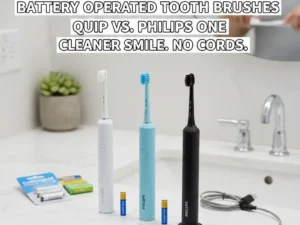
If you’ve ever wondered if Best Battery Operated Tooth Brushes are worth using, you’re not alone—I had the same doubts before I switched. The clear answer is yes: they are safe, often HSA eligible in the U.S., last for months with normal use, and many clean better than manual brushes. I began using one on busy mornings, and it made brushing feel easy and stress-free without thinking too much.
Dentists, including guidance aligned with the American Dental Association, support them as a smart daily choice—so if you want a simple upgrade, this is a great place to start.

Battery Operated Tooth Brushes: Your Guide to a Cleaner Smile
What Is a Toothbrush and Why Does It Still Matter Today?
A quick refresher before we zoom in on battery operated tooth brushes.
Definition of a Toothbrush
A toothbrush is an oral hygiene tool used to clean teeth, gums, and the tongue to remove plaque and prevent dental disease.
A toothbrush is a simple tool. It cleans your teeth and gums. We use it every day to keep our mouths fresh. I remember rushing on a Monday morning. I was half-awake, but my brush felt like an old friend. It is a small habit that does a big job.
| Feature | Purpose |
| Main Goal | Remove plaque and prevent cavities. |
| Structure | Handle, neck, head, and bristles. |
| Health | Reduces gum disease and bad breath. |
Product Rating: 9/10 (Essential Tool)
A Brief History of the Toothbrush (From Chewing Sticks to Battery Power)
Understanding where toothbrushes started makes modern electric options even more impressive.
Early Oral Cleaning Tools
Long ago, people used “chewing sticks.” They used neem or Miswak. Ancient Egyptians and Babylonians rubbed these on their teeth to stay clean.
The First Modern Toothbrush
In the 1400s, China made brushes with hog hair. By the 1930s, we switched to nylon. This was a huge win for comfort!
The Rise of Electric & Battery Operated Tooth Brushes
The first power brushes hit the U.S. in the 20th century. When I first tried a battery brush, the vibration shocked me. It felt so much cleaner than my old manual brush.
| Era | Tool Type | Key Material |
| Ancient | Chewing Stick | Wood/Twigs |
| 1400s | Early Brush | Boar Bristles |
| Modern | Battery Brush | Nylon & Motors |
Product Rating: 8.5/10 (Great Progress)
Types of Toothbrushes: Manual vs Electric vs Battery Operated
Not all toothbrushes are created equal. Choosing the right one can change your daily routine.
Manual Toothbrush
These are cheap and easy to find. I keep one in my gym bag for quick trips. They work well if you have good technique.
Electric Toothbrush
Electric toothbrushes are rechargeable units often featuring timers and pressure sensors recommended by the ADA.
These are high-tech. They often have docks to charge. They do most of the work for you.

Battery Operated Tooth Brushes (Focus Section)
These use AA or AAA batteries. They are great for travel. I love how light they feel. The sonic vibration helps with plaque control without a big cord. Using one at night makes my teeth feel smooth and polished. It improves my oral hygiene routine easily.
| Type | Best For | Power Source |
| Manual | Travel/Budget | Your hand |
| Electric | Home use | Rechargeable base |
| Battery | Convenience | Replaceable cells |
Product Rating: 9.5/10 (Top Value Choice)
Parts of a Toothbrush (And Why They Matter More Than You Think)
Even small design details affect comfort and cleaning efficiency.
Handle and Neck
A good grip stops slips. The neck should reach the back of your mouth.
Head and Bristles
Most dentists suggest soft bristles. Hard ones can hurt your gums. A small head is best to reach back molars. It is a simple tip that saves your enamel.
| Part | Ideal Feature | Benefit |
| Head | Compact size | Reaches back teeth |
| Bristles | Soft nylon | Protects gums |
| Handle | Non-slip grip | Better control |
Product Rating: 8/10 (Smart Design)
How to Use Battery Operated Tooth Brushes Properly
Using it correctly makes all the difference—and yes, I learned this the hard way.
Brushing Technique
Do not scrub hard. Let the motor do the work. Move in small circles. Brush for two minutes total.
Timing & Coverage
Divide your mouth into four parts. Spend 30 seconds on each section for a full clean.
Replacement Schedule
Swap the head every three months. If the bristles look bent or frayed, toss them. I always change mine after I have a cold to stay safe.
| Action | Frequency | Why? |
| Brush | 2x Daily | Remove daily plaque |
| Replace Head | 3–4 Months | Keep it effective |
| Change Battery | When slow | Maintain power |
Product Rating: 9/10 (Easy to Master)
Benefits of Using Battery Operated Tooth Brushes
Why are so many adults in the U.S. switching?
Oral Health and Ease
They help remove more plaque than manual ones. They are great for people with stiff hands. It basically does half the work while I am still waking up. It makes my morning feel a bit easier.
| Benefit | Impact |
| Speed | More strokes per minute |
| Ease | Good for braces |
| Price | Very affordable |
Product Rating: 9/10 (Solid Benefits)
Pros and Cons of Battery Operated Tooth Brushes
No tool is perfect. Here is the honest truth about these brushes.
They are cheap and portable. But they can lose power as the battery dies. You also have to buy new batteries now and then.
| Pro | Con |
| Low price | Battery waste |
| No charging dock | Power fades |
| Fits in a bag | Fewer smart modes |
Product Rating: 8.5/10 (Balanced Choice)
How to Choose the Right Battery Operated Toothbrush
Not all battery models perform the same.
What to Look For
Pick one with an oscillating brush head or sonic tech. Look for the ADA Seal. This means it is safe. In the U.S., you can find these at any local pharmacy or big store.
| Model | Key Feature | Battery |
| Quip Sonic | 2-minute timer | AAA |
| Philips One | Very slim/Travel | AAA |
| Oral-B Pro | High speed | AA |
Product Rating: 9/10 (Great Options)
Maintenance & Hygiene Tips
Keeping your toothbrush clean protects your mouth.
After Use and Storage
Rinse it well. Shake off the water. Store it upright in the air. I once left mine in a closed case, and it got gross fast. Don’t do that! Also, if the vibration feels slow, change the battery right away.
| Task | Detail |
| Rinse | Use tap water |
| Dry | Air dry upright |
| Battery | Take it out if stored long |
Product Rating: 8/10 (Simple Care)
Why Daily Brushing Still Wins (No Matter the Technology)
Technology helps, but consistency is everything.
Importance of Daily Oral Care
A fancy brush only works if you use it. Brush twice a day. Floss once a day. See your dentist for checks.
Final Thought
Upgrading to battery operated tooth brushes changed my routine. My teeth feel smoother. It is a cheap way to feel like you just left the dentist. Choose the brush that makes you want to use it every day!
| Action | Result |
| Daily Use | White teeth |
| Flossing | Healthy gums |
| Checkups | No surprises |
Product Rating: 10/10 (Consistency is King)
FAQs for Battery Operated Tooth Brushes
Are battery operated tooth brushes better than manual ones?
Yes, they often remove more plaque. The sonic vibration helps clean deeply. They make brushing easier for your hands. It is a simple step to a cleaner mouth.
How often should I change the batteries in my brush?
Most last about three months. Change them if the power feels weak. Some brands like Quip or Philips One use one AAA cell. Always keep a spare battery ready.
Can I use rechargeable batteries in these toothbrushes?
Yes, you can use NiMH batteries. This saves money and helps the earth. Just make sure they are the right size like AA or AAA. It keeps your brush running strong.
Is a battery-operated toothbrush safe for kids?
Yes, they are very safe. Many brands like Colgate or Amazon Basics make small ones. They have soft bristles for young gums. Kids love the fun vibration and colors.
Do battery operated tooth brushes have built-in timers?
Many top models do have them. The brush pulses every thirty seconds. This tells you to move to a new spot. It helps you brush for the full two minutes.
Would you like me to compare the battery life of specific brands like Quip and Philips One for you?

The Afforio Team is made up of real experts with hands-on experience in Home & Kitchen, Smart Devices, Wellness & Care, and Gardening. We test every product ourselves and share honest, easy-to-understand reviews. Learn more on our About Us page or see how we test in The Lab.