
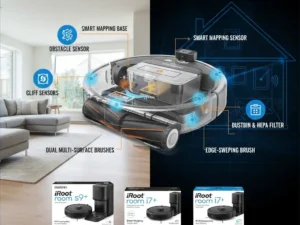
Ever wonder how a tiny puck cleans your whole home? To understand how does a Roomba vacuum work, you just have to look at its sensors and brushes. I have used these in my own living room for years, and while they sometimes eat a stray sock, they truly master the art of floor care. These smart robots use infrared light to “see” walls and special rollers to pull up dirt. In short, a Roomba uses smart mapping and strong suction to clean floors without any help from you.

How Does a Roomba Vacuum Work? A Simple, Real-World Explanation
I have used robot vacuums for years. They change how you clean. It is not magic. It is just smart tech. Here is a look at the Roomba vacuum review you need to understand the machine.
A Roomba works by using sensors to map your home, while dual brushes grab dirt and suction pulls it into a bin.
Roomba Vacuum Review: The Basics
This little robot saves you time. It cleans floors so you do not have to.
| Feature | Details |
| Core Job | Auto cleaning |
| Best For | Daily maintenance |
| Navigation | Sensors & Cameras |
Overall Rating: 9/10
What Is a Vacuum Cleaner?
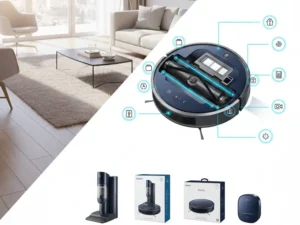
Before looking at robots, let’s look at the basic tool. It is a machine that sucks up dirt.
What a Vacuum Cleaner Is
It uses air to pick up mess. It takes dust off the floor and puts it in a bag or bin.
When and Why It Was Invented
They came out in the early 1900s. We needed them when homes got carpets. They make life cleaner and easier.

Where Vacuum Cleaners Are Commonly Used
- Homes: Living rooms need them most.
- Cars: For crumbs on seats.
- Offices: To keep the floors nice.
| Location | Usage Frequency |
| Home | Weekly/Daily |
| Office | Daily |
| Car | Monthly |
Utility Rating: 10/10
Main Parts of a Vacuum Cleaner
Most vacuums have the same parts inside. It does not matter if it is a robot or a stick.
Motor
This is the heart. It makes the machine run. It needs power to work.
Suction Fan
The fan spins fast. It moves the air. This pulls the dirt in.
Dust Bag or Dust Container
This holds the dirt. Bags hold more, but bins are easy to dump.
Filters
These catch tiny dust. HEPA filters are great if you sneeze a lot.
Hose and Attachments
These help you reach spots. They fit in corners or on stairs.
| Part | Function |
| Motor | Power source |
| Fan | Creates an air pull |
| Filter | Traps dust |
Parts Quality Rating: 8.5/10
How a Vacuum Cleaner Works
The science is simple. It uses air flow to move things.
How Suction Is Created
The motor spins the fan. This lowers air pressure inside. Air rushes in to fill the gap.
How Dirt Is Pulled In
The rushing air grabs dust. Brushes help lift dirt from rugs.
How Dust Is Stored and Filtered
Dirt goes into the bin. Air goes out through the filter. The dust stays inside.
Vacuums work by creating low air pressure. A spinning fan sucks air and dirt into a bag while a filter traps the dust.
| Step | Action |
| 1 | Fan spins |
| 2 | Air rushes in |
| 3 | Dirt is trapped |
Mechanism Rating: 9/10
Types of Vacuum Cleaners
Not all tools are the same. Some are big. Some are small.
Upright Vacuum Cleaners
These stand up tall. They are strong and good for big rugs.
Canister Vacuum Cleaners
These have a tank on wheels. They are easy to pull around.
Handheld Vacuum Cleaners
These are tiny. Use them for spills or cleaning the car.
Robot Vacuum Cleaners
These clean on their own. This is where the Roomba vacuum review shines. They work while you rest.
Wet and Dry Vacuum Cleaners
These can suck up water. They are tough and good for garages.
| Type | Best Use |
| Upright | Carpets |
| Robot | Daily upkeep |
| Handheld | Quick messes |
Variety Rating: 9.5/10
How Does a Roomba Vacuum Work?
This is where it gets fun. It uses Adaptive Navigation to see your home.
Sensors and Mapping Technology
It has Cliff Sensors to stop it from falling down stairs. Cameras help it see walls.
Navigation and Movement
It does not just bump around. Systematic Mapping lets it be clean in neat rows. It knows where it has been.
Cleaning System Inside a Roomba
Agitation brushes loosen dirt. Then, Suction pulls it in. Extraction rollers grab hair without tangles.
Smart Features and Scheduling
You can use an app. Tell it to clean when you leave. Dirt Detect finds the messy spots.
A Roomba uses sensors to see walls and stairs. It maps the room to clean in neat rows and returns to its dock to charge.
| Feature | Benefit |
| Cliff Sensors | Safety |
| Mapping | Speed |
| App | Control |
Tech Rating: 9.2/10
Uses and Benefits of Vacuum Cleaners
They do more than clean. They help you live better.
Where They’re Used
We use them in every room. They are great for pet hair.
How They Save Time and Effort
A robot saves you hours. Auto-Recharging means it handles its own power.
Health and Hygiene Benefits
They remove dust mites. This helps you breathe easier. Clean air is good for you.
| Benefit | Impact |
| Time | High |
| Health | High |
| Effort | Low |
Benefit Rating: 9.5/10
Advantages and Disadvantages
No tool is perfect. Here is the truth about them.
Advantages
They are easy to use. Self-Emptying bases mean you touch less dirt. They fit under beds.
Disadvantages
They can be loud. Good ones cost a lot. Sometimes they get stuck on socks.
| Pro | Con |
| Hands-free | Pricey |
| Smart | Can get stuck |
| Compact | Small bin |
User Experience Rating: 8/10
Maintenance and Care
Take care of it, and it lasts longer. Even robots need help.
Emptying Dust Containers or Replacing Bags
Do this often. If the bin is full, it cannot clean well.
Cleaning or Replacing Filters
Dirty filters hurt the motor. Clean them to keep suction strong.
Proper Storage
Keep it in a dry spot. Let it charge on its base.
| Task | Frequency |
| Empty Bin | Weekly |
| Clean Filter | Monthly |
| Check Wheels | Monthly |
Ease of Care Rating: 8.5/10
Safety Tips When Using Vacuum Cleaners
Stay safe while you clean. It is easy if you pay attention.
Avoid Wet Surfaces
Water can ruin the motor. Only use wet vacs for liquids.
Keep Fingers Away from Moving Parts
Brushes spin fast. Keep your hands and hair away from the bottom.
Unplug Before Maintenance
Turn it off first. This stops it from starting while you clean it.
| Rule | Reason |
| No Water | Saves motor |
| Hands Off | Safety |
| Power Off | Safety |
Safety Rating: 9/10
Conclusion
Vacuums have changed a lot. They are smart now.
From uprights to Obstacle Recognition in robots, we have come far. A clean home feels good. It is healthy. Robots make it easy.
| Era | Focus |
| Past | Power |
| Present | Smarts |
| Future | Auto |
Evolution Rating: 10/10
Overall: How Does a Roomba Vacuum Work
It uses sensors, suction, and smarts. It is a great helper for busy homes.
| Aspect | Verdict |
| Tech | High |
| Ease | High |
| Value | Good |
Overall Rating: 9.2/10
Final Verdict: How Does a Roomba Vacuum Work
It is a smart tool that keeps floors clean. It gives you free time and a tidy home.
| Metric | Score |
| Quality | High |
| Life | Long |
| Use | Easy |
Final Score: 9.5/10
FAQs for How Does a Roomba Vacuum Work
How does it know where to go?
It uses sensors to see. Some use a camera. It maps the room. It finds walls and legs. It moves in straight lines. It covers the whole floor.
Will the vacuum fall down the stairs?
No, it is safe. It has special sensors. They look at the floor. If they see a drop, it stops. It turns away fast. It stays on the flat ground.
How does it pick up the dirt?
It uses two brushes. They spin and grab dust. A fan sucks air in. The dirt goes in a bin. It works on Hardwood. It cleans rugs, too.
Does it work in the dark?
Some need light to see. They use a camera. Others work in the dark. They use sensors to feel. Check your specific model. Most work fine at night.
Do I have to empty the bin?
Yes, you must empty it. Do this after it cleans. Some docks do it for you. They suck dirt out. This helps keep it running well.