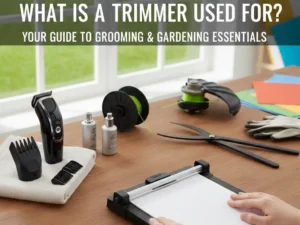
Tired of skin burns from sharp razors? A trimmer is used for shortening hair and cleaning up edges without a total shave. I use mine daily to keep my beard neat, and it is much faster than a trip to the local barber shop. As someone who has tested many tools, I find they are the best way to handle hair for a clean, US-style look.
Let’s look at how this tool can change your morning routine. In short, a trimmer is your go-to tool for fast and safe grooming.

What Is a Trimmer Used For? The Complete Guide
A trimmer is the ultimate tool for details. It is not a mower. It is not a shaver. It sits right in the middle. If a clipper is a machete, a trimmer is a scalpel. It handles the fine work. It defines lines. It keeps hair neat without removing it all.
What is a trimmer used for? It is mainly used for edging, outlining, and cutting hair short for a “stubble” look on the face, body, or head.
Types of Trimmers and Their Specific Uses
Not all trimmers do the same job, and that’s where people often get confused. You wouldn’t use a hedge trimmer on your face.
Beard Trimmers
These are for the face. They are made for men who want stubble or a shaped beard. They are smaller than hair clippers. They fit easily in your hand. I use mine to keep my neckline clean. It stops the “scruffy” look fast.
Hair Trimmers
These are built for head hair. They handle bulk trimming. They are great for home haircuts. If you need to fix your sideburns between barber visits, this is the tool. They are wider than beard trimmers.
Body Trimmers
These are for the chest, back, and underarms. They focus on skin safety. The blades are often rounded. This prevents nicks in sensitive spots. Regular trimmers can be too sharp here.
Multi-Grooming Trimmers
This is one tool for everything. It has many heads. You can swap them out. It is great for travel. It saves space in the bathroom. But, it might not be as strong as a dedicated tool.
Comparison of Trimmer Types
| Type | Best Use | Key Feature |
| Beard Trimmer | Facial hair, stubble | Precision blades |
| Hair Trimmer | Head hair, bulk cuts | Wider blade |
| Body Trimmer | Chest, sensitive areas | Skin guards |
| Multi-Groomer | All-over use | Swap-able heads |
Overall Rating:
Beard Trimmers: 9/10
Hair Trimmers: 8/10
Body Trimmers: 9/10
Multi-Groomers: 7/10
Key Parts of a Trimmer Explained
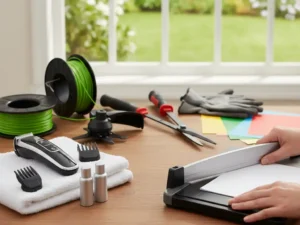
Once you know the parts, using a trimmer feels far less intimidating.
Blades
The blades do the work. They move back and forth fast. Sharp blades cut clean. Dull blades pull hair. That hurts. Good blades are made of steel.
Motor
The motor powers the blades. A strong motor cuts thick hair easily. A weak motor can stall or snag. You want high torque for thick beards.
Guard and Comb Attachments
These control the length. A “1” guard leaves hair short. A “5” guard leaves it long. Beginners often forget the guard. That leads to bald spots. Always start with a long guard.
Power Button and Body Design
The switch should be easy to reach. The body should have grip. You do not want it to slip. A rubber grip helps when your hands are wet.
Battery or Power Cord
This keeps it running. Cords provide endless power. Batteries offer freedom.
Trimmer Components Breakdown
| Part | Function | Importance |
| Blades | Cuts the hair | Critical |
| Motor | Moves the blades | High |
| Guards | Sets hair length | Very High |
| Grip | Prevents slipping | Medium |
Component Importance Rating:
Blades: 10/10
Motor: 9/10
Guards: 10/10
Body Design: 8/10
How a Trimmer Works (In Simple Terms)
You don’t need to be technical to understand how trimming actually happens.
The motor spins or oscillates. This moves the top blade side to side. The bottom blade stays still. Hair gets caught between the teeth. The top blade slices it off.
It does not touch the skin like a razor. It hovers just above. This prevents razor burn. You will hear a buzz. You will feel a light vibration. It tickles a bit, but it should not hurt.
Mechanism Overview
| Action | What Happens | Sensation |
| Motor On | Blades oscillate | Buzzing sound |
| Cutting | Hair is sliced | Light vibration |
| Skin Contact | Guard touches skin | Smooth glide |
Ease of Understanding Rating:
Motor Action: 9/10
Cutting Action: 10/10
Safety Feel: 9/10
Power Types and What They Mean for Daily Use
Choosing the wrong power type can get annoying fast—especially mid-trim.
Corded Trimmers
These plug into the wall. They never die. The power is steady. But the cord gets in the way. You are stuck near an outlet.
Cordless Trimmers
These run on batteries. You can walk around. You can trim outside. They are very handy. But if the battery dies, you are stuck with half a beard.
Rechargeable vs Replaceable Batteries
Rechargeable is better for the planet. You just plug it in. Replaceable batteries cost money over time. They are good for emergencies, though.
Cordless trimmers offer freedom but need charging. Corded trimmers have endless power but limit movement. Choose based on your bathroom layout.
Power Source Comparison
| Type | Pro | Con |
| Corded | Consistent power | Limited range |
| Cordless | High portability | Battery life limits |
| Rechargeable | Eco-friendly | Charging time |
Convenience Rating:
Corded: 6/10
Cordless: 10/10
Rechargeable: 9/10
Blade Types and Materials
Blade quality is where comfort and safety really show up.
Stainless Steel Blades
These are the most common. They are strong. They do not rust easily. They stay sharp for a long time. You can wash them.
Self-Sharpening Blades
These rub against a metal foil. This keeps them sharp as they run. You do not need to oil them as often. They cut well for years.
Skin-Friendly Blade Design
Some blades have rounded tips. They glide over bumps. They do not poke the skin. This is vital for body grooming.
Blade Material Guide
| Material | Durability | Maintenance |
| Stainless Steel | High | Low |
| Self-Sharpening | Very High | Very Low |
| Skin-Friendly | Medium | Low |
Performance Rating:
Stainless Steel: 9/10
Self-Sharpening: 10/10
Skin-Friendly Tips: 10/10
Common Uses of a Trimmer in Everyday Life
This is where the question “what is a trimmer used for?” gets real.
It is for beard shaping. It keeps the length even. It is for quick hair cleanups. It fixes the neck area. It maintains body hair without itching. It creates clean edges around the ears.
Real-life moment: You are late for dinner. You look messy. A trimmer fixes this in two minutes. It is a lifesaver.
Usage Scenarios
| Use Case | Frequency | Difficulty |
| Beard Shaping | Daily/Weekly | Easy |
| Neck Cleanup | Weekly | Medium |
| Body Grooming | Monthly | Easy |
Utility Rating:
Beard Control: 10/10
Quick Cleanups: 9/10
Body Maintenance: 8/10
Safety Tips When Using a Trimmer
Most trimmer accidents happen because people rush—or skip attachments.
Always use a guard first. Start long. You can always go shorter. Do not use a broken guard. It scratches skin. Clean the blade after use. Old hair jams the motor. Be careful near water. Do not plug it in with wet hands.
Safety Checklist
| Tip | Why? | Priority |
| Use Guards | Prevents mistakes | High |
| Check Skin | Avoids cuts | High |
| Dry Hands | Electrical safety | Critical |
Safety Importance Rating:
Using Guards: 10/10
Dry Usage: 10/10
Regular Checks: 9/10
Cleaning and Maintenance for Long-Term Use
A clean trimmer simply works better—and smells better too.
Cleaning the Blades
Some heads wash in water. Others need a brush. Brush the hair out. Hair holds moisture. Moisture brings rust.
Oiling the Trimmer
Oil reduces friction. Put a drop on the blade. Turn it on. Let it spread. Do this once a month. It keeps the motor quiet.
Proper Storage
Keep it in a case. Keep it dry. Do not leave it on a wet sink. Moisture kills batteries.
Maintenance Steps
| Step | Action | Benefit |
| Brush | Remove hair | Prevents jams |
| Oil | Lubricate blade | Extends life |
| Store | Keep dry | Protects motor |
Maintenance Ease Rating:
Brushing: 10/10
Oiling: 8/10
Storage: 9/10
How to Choose the Right Trimmer for Your Needs
The best trimmer depends on how you actually groom, not what looks fancy.
Do you have a beard? Get a beard trimmer. Do you cut your own hair? Get a clipper. Do you travel? Get a cordless one. Look for long battery life. Check for many guards. Make sure it feels good in your hand.
Buying Criteria
| Factor | What to look for | Ideally |
| Purpose | Face or Head? | Specific tool |
| Battery | Run time | 60+ mins |
| Grip | Comfort | Rubberized |
Decision Helper Rating:
Purpose Fit: 10/10
Battery Specs: 9/10
Ergonomics: 8/10
Advantages and Limitations of Using a Trimmer
No grooming tool is perfect—and that’s okay.
Advantages
It is fast. It is safe. It saves money on barbers. It gives you control. You can do it at home.
Limitations
It does not shave as smoothly as a razor. You will feel stubble. It needs charging. You must clean it. It takes practice to get lines straight.
Pros vs Cons
| Feature | Good Side | Bad Side |
| Speed | Very fast | Can miss spots |
| Finish | Consistent | Not smooth |
| Cost | Saves money | Upfront cost |
Feature Rating:
Speed: 9/10
Safety: 10/10
Smoothness: 5/10 (Compared to a razor)
Conclusion – Why Trimmers Are Everyday Grooming Essentials
A trimmer isn’t about perfection—it’s about control, comfort, and confidence.
We have covered what a trimmer is used for. It shapes, cuts, and tidies up. It fits modern life well. It is quick and easy. Pick one that fits your routine. Do not stress about the fancy features. Just find one that feels right. Happy trimming!
FAQs for What Is a Trimmer Used For
What is a trimmer used for exactly?
It cuts hair short. It does not shave it all. You use it to shape a beard. It keeps edges clean. It is great for a neat look. It helps you look sharp fast.
Is a trimmer different from a shaver?
Yes, they are different. A shaver cuts to the skin. A trimmer leaves stubble. It does not make you smooth. Use it for style, not a clean shave.
Can I use a trimmer on my body?
Yes, you can do that. Use a guard for safety. It stops nicks and cuts. Go slow on soft skin. It works well for chest or back hair.
Does a trimmer work for haircuts?
It works for short hair. It is good for edges. It is small for a full cut. Clippers are faster for big jobs. Use a trimmer for details.
Do trimmers hurt to use?
They should not hurt. If it pulls, oil it. If it cuts, use a guard. It buzzes but is safe. Keep the blade flat. It feels like a light tickle.

The Afforio Team is made up of real experts with hands-on experience in Home & Kitchen, Smart Devices, Wellness & Care, and Gardening. We test every product ourselves and share honest, easy-to-understand reviews. Learn more on our About Us page or see how we test in The Lab.