Warm, fresh bread at home feels special, right? If you’re wondering how to make sourdough bread with starter, the answer is simple: mix, rest, fold, and bake with time and care. I still remember my first loaf in a small U.S. kitchen—it looked rough but tasted amazing, and that’s when I knew the method works.
With a bit of practice and patience, you can bake like a pro too—so let’s get started.
How to Make Sourdough Bread with Starter
Sourdough bread feels like magic at first. I still remember my first loaf. It looked rough, but the smell was amazing. If you want to learn how to make sourdough bread with a starter, this guide will walk you through it in a calm, simple way.
Quick Recipe Summary
A simple sourdough loaf takes about 8–24 hours with 20 min prep and 45 min bake time.
- Prep Time: 20 min
- Cook Time: 45 min
- Total Time: 8–24 hours
- Servings: 1 loaf
- Difficulty: Intermediate
This means most of the time is just waiting, not hard work.
Ingredients You Need
You need a starter, flour, water, and salt to make sourdough bread at home.
- Active sourdough starter – 1 cup (240g)
- Warm water – 1½ cups (360ml)
- Bread flour – 4 cups (500g)
- Salt – 2 tsp
I once used all-purpose flour. It worked, but the bread felt softer and less chewy.
Before You Start
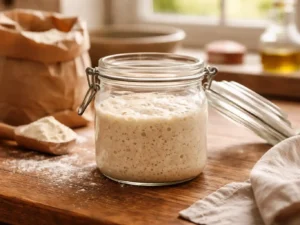
Your starter must be alive and happy. Feed it 4–8 hours before use. It should rise, bubble, and smell a bit sour. That tells you it is ready.
Set up a large bowl and a clean space. Light flour helps stop sticking. This small prep step makes the whole process smooth.
Mixing the Dough
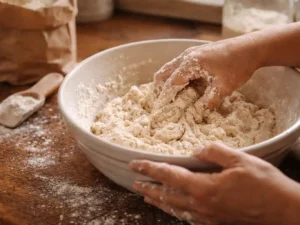
Mix starter, water, and flour, then rest for 30 minutes to help gluten form.
Mix the starter and water first. It should look cloudy. Add flour and stir until a rough dough forms.
Let it rest for 30 minutes. This rest helps the dough become strong without kneading.
Add Salt and Mix
Sprinkle salt on the dough. Use your fingers to pinch and fold it in. This spreads the salt evenly.
At this stage, the dough may feel sticky. That is normal. Do not panic like I did the first time.
Stretch and Fold Method
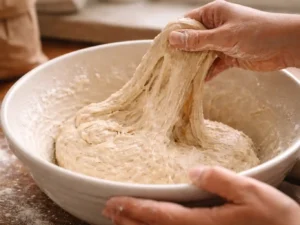
Stretch and fold builds strength without kneading, done every 30 minutes.
Every 30 minutes, stretch one side and fold it over. Turn the bowl and repeat. Do this 4 times.
You will see a change. The dough gets smooth and elastic. It feels alive in your hands.
Bulk Fermentation (First Rise)
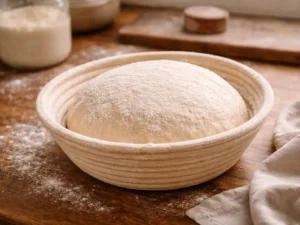
Let the dough rise 4–8 hours until airy, bubbly, and nearly doubled.
Cover the dough and let it rest. Keep it at room temperature. Time depends on your room’s heat.
Look for bubbles and a soft, jiggly feel. That tells you fermentation worked well.
Shaping the Dough
Turn the dough onto a floured surface. Shape it into a round or oval. Be gentle here.
Do not press out the air. That air gives you those nice holes inside the bread.
Proofing (Second Rise)
Proof for 1–2 hours or chill overnight for better flavor.
Place the dough in a bowl or basket. Let it rest again. You can leave it at room temp or in the fridge.
I prefer the fridge method. It gives a deeper, richer taste.
Baking the Bread
Bake at 450°F in a Dutch oven for 20 min covered, then 20–25 min uncovered.
Preheat your oven with a pot inside. This traps steam and helps crust form.
Score the dough before baking. Bake covered first, then uncovered. The crust should turn deep golden.
Tap the bottom. If it sounds hollow, it is done.
Flavor and Texture
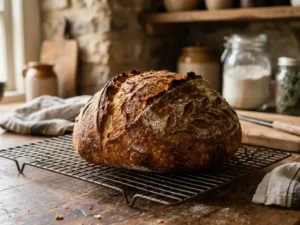
The crust will be crisp and crackly. The inside stays soft and airy. The taste can be mild or tangy.
Longer fermentation means a more sour flavor. A shorter time gives a softer taste.
Common Mistakes and Fixes
Most sourdough issues come from a weak starter or wrong fermentation time.
- Dense bread: Starter not active or dough underproofed
- Too sour: Left too long
- Sticky dough: Normal, use wet hands
I failed my first loaf because my starter was weak. That one lesson changed everything.
Ingredient Substitutions
Bread flour gives the best chew. All-purpose works but is softer.
A starter has no true substitute. It is the heart of sourdough. Salt can be swapped, but the taste may change slightly.
Storage and Serving
Keep bread in a paper bag for 2 days. Use an airtight box for up to 5 days. Freeze for longer storage.
To reheat, warm the slices in the oven or toast them. It brings back the fresh feel.
I love it with butter in the morning. It also makes great sandwiches.
Real Experience and What to Expect
Your dough will feel sticky. That is normal. Do not add too much flour.
Your first loaf may look messy. Mine did. But the taste will still make you proud.
Time and patience matter most. Each loaf gets better. That is the real joy of learning how to make sourdough bread with a starter.

The Afforio Team is made up of real experts with hands-on experience in Home & Kitchen, Smart Devices, Wellness & Care, and Gardening. We test every product ourselves and share honest, easy-to-understand reviews. Learn more on our About Us page or see how we test in The Lab.