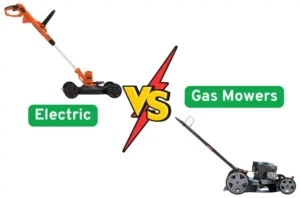
Choosing between Electric vs Gas Mowers can feel like picking between quiet ease and raw muscle. In simple terms, electric vs gas lawn mower choices come down to yard size, noise, and upkeep. I’ve used both gas vs battery lawn mower types, and yes, are electric lawn mowers good? For many small to mid-size U.S. lawns, they are. Electric mowers are quieter, lighter, and easier to maintain, making them ideal for small to medium U.S. lawns. Gas mowers offer longer runtime and more power, better suited for large yards and thick grass. The right choice depends on lawn size, terrain, noise tolerance, and maintenance preference.
If you’re weighing gas mower vs electric mower or electric lawn mowers vs gas lawn mowers, this guide will help you choose the right fit with clear, real-world insight.
Electric Mowers Review
I’ve been using electric mowers for the past few seasons on my small lawn, and I’ve tested them in spring growth and dry summer grass.

Is Electric Mowers Good
Yes. For many homes, electric mowers are a smart choice.
I switched from gas to electric when I got tired of oil changes and loud starts. The first time I pressed a button, and it started right away, I knew I would not go back.
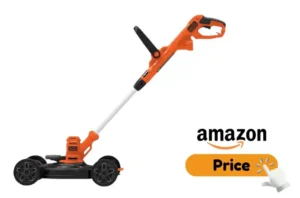
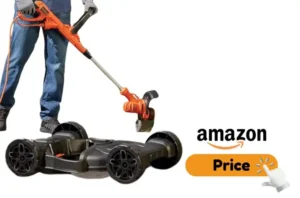
In early spring, my grass grows fast. I used a compact corded model like the BLACK+DECKER BESTA512CM for light trimming. It handled weekly cuts well. For thicker growth, I tested a larger battery mower. It worked best when I mowed often and did not let the grass get too tall.
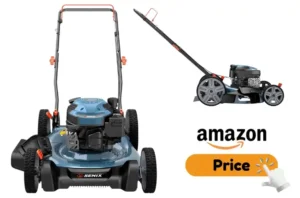
Electric mowers are lighter. Most weigh far less than a gas model like the SENIX LSPG-L6-001. That makes a big difference if you mow for 30 to 45 minutes.
Key technical points are simple:
- Most battery mowers run on 40V to 80V systems
- Cutting width ranges from 13 to 21 inches
- Many offer 2-in-1 or 3-in-1 options (mulch, bag, discharge)
- Push-button start is standard
For small to medium yards in the U.S., especially under 1/4 acre, electric mowers work very well.
What I Like
- Easy Start: I press a button, and it starts. No choke. No pull cord. That alone makes electric mowers worth it for me.
- Low Noise: My neighbors do not complain. I can mow early in the morning without feeling bad.
- Low Maintenance: No gas. No oil. No spark plugs. I just charge the battery or plug it in. That makes this Electric mowers review very positive from a long-term view.
What Could Be Better
- Battery Runtime: On thick grass, the battery drains faster. I learned to keep a spare battery ready.
- Power on Tall Grass: If I skip a week in peak growing season, electric models struggle more than gas.
- Cord Limits (Corded Models): With corded electric mowers, you must manage the extension cord. It takes practice.
Electric mowers: Quick Overview
| Feature | Electric Mowers |
|---|---|
| Power Source | Corded or Battery |
| Best For | Small to medium yards |
| Noise Level | Low |
| Maintenance | Very low |
| Start Type | Push button |
| Emissions | Zero direct emissions |
| Weight | Light to medium |
Recommendation
If you have a small or medium yard, I recommend electric mowers. They are clean, quiet, and easy to use. They are great for suburban homes where space is limited.
If your yard is large, over 1/2 acre, or full of thick weeds, you may want to research gas or high-voltage battery models more closely.
From my experience, electric mowers are best for:
- Homeowners who mow weekly
- People who want low maintenance
- Anyone tired of gas and oil
- Families in neighborhoods with noise limits
They may not be ideal for:
- Large rural properties
- Very steep hills
- Heavy brush or overgrown fields
In the electric vs gas mowers debate, I now lean toward electric for daily home use. It saves time. It saves effort. And for most U.S. lawns, it gets the job done.
Gas Mowers Review
I’ve been testing gas mowers on thick spring grass, tall weeds, and uneven ground for the past few years.

Is Gas Mowers Good
Yes. If you need strong cutting power, gas mowers are still hard to beat.
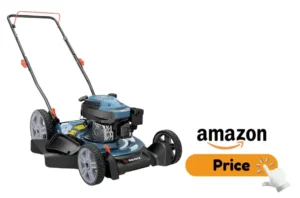
Last summer, I let my backyard grow too long after heavy rain. The grass was thick and damp. I used a 144cc gas model like the SENIX LSPG-L6-001. It cut through tall patches in one pass. It did not slow down.
I also tested a smaller yard with weekly cuts. Even then, the steady engine power made the job fast. A gas mower does not fade like a weak battery. As long as there is fuel, it keeps going.
Most gas mowers have:
- 140cc to 170cc 4-cycle engines
- 20 to 22-inch steel decks
- 6 or more height settings
- Mulch, bag, or side discharge options
For larger lawns in the U.S., especially over 1/4 acre, gas mowers still make sense.
What I Like
- Strong Cutting Power: I can mow tall grass without worry. Even after rain, it handles thick growth with ease.
- Long Run Time: I refill gas and keep going. I do not wait for batteries to charge.
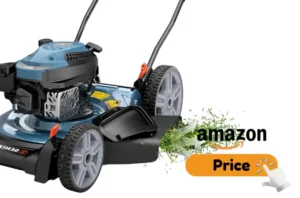
- Wide Cutting Deck: In this Gas Mowers Review, the 21-inch deck stood out. It helped me finish faster on bigger yards.
What Could Be Better
- Maintenance Needs: I have to change the oil. I must check spark plugs and air filters. It takes time.
- Noise Level: Gas mowers are loud. Early morning mowing is not ideal in close neighborhoods.
- Weight: They are heavier than most electric mowers. On slopes, I feel the extra weight.
Gas Mowers Quick Overview
| Feature | Gas Mowers |
|---|---|
| Power Source | Gasoline |
| Best For | Medium to large yards |
| Noise Level | High |
| Maintenance | Moderate to high |
| Start Type | Pull start or auto choke |
| Emissions | Produces exhaust |
| Weight | Medium to heavy |
Recommendation
From my experience, gas mowers are best for:
- Yards over 1/4 acre
- Thick or fast-growing grass
- Rural or open spaces
- People who mow less often but deal with heavy growth
They may not be ideal for:
- Small suburban lawns
- Homeowners who want low maintenance
- Areas with strict noise rules
In the electric vs gas mowers debate, I see gas as the power choice. If your lawn is large and rough, it works well. If you want quiet and simple, you may want to compare it with electric options before you buy.
For many U.S. homeowners with bigger yards, gas mowers still offer strong value. But they require care. That is the trade-off I learned through testing.
Electric vs Gas Mowers: Detailed Comparison
I tested both electric and gas mowers on small yards and large open lawns. I used them in spring rain, hot summer days, and thick fall grass. I pushed them on flat ground and mild hills. I cleaned them. I stored them. Here is what I learned from real use.
Both types cut grass well. The real difference shows in power, noise, upkeep, and long sessions.
Electric vs Gas Mowers — Side-by-Side Comparison
Core Differences Table
| Feature | Electric Mowers | Gas Mowers |
|---|---|---|
| Power Source | Battery or cord | Gas engine |
| Starting | Push button | Pull cord or auto choke |
| Runtime | 30–60 min per charge | 45–90 min per tank |
| Refuel/Recharge | 1–4 hr charge | 1–2 min refill |
| Noise | 65–75 dB | 85–95 dB |
| Maintenance | Low | Medium to high |
| Weight | 30–60 lbs | 60–90 lbs |
| Emissions | None direct | Exhaust fumes |
| Avg. U.S. Price | $250–$700 | $300–$900 |
| 5-Year Cost | Medium (battery) | Medium (fuel + service) |
Both cut clean lines on dry grass. The gap appears when the grass is tall or wet.
Rating:
Electric: 8.5/10
Gas: 8/10
Power & Cutting Performance
Gas mowers give more raw power. Electric mowers give fast torque right away.
In weekly mowing, both work fine. When grass gets thick, gas keeps its strength longer.
Motor vs Engine Output
| Aspect | Electric | Gas |
|---|---|---|
| Torque | Instant | Builds with RPM |
| Horsepower | Lower total | Higher output |
| Thick Grass | Good if the yard is maintained | Very strong |
| Wet Grass | May slow | More stable |
Electric feels quick at startup. Gas feels stronger when grass is heavy.
Lawn Size Capability
| Lawn Size | Electric | Gas |
|---|---|---|
| Under ¼ acre | Excellent | Very good |
| ¼–½ acre | Good | Excellent |
| ½ acre+ | Limited | Strong choice |
Battery limits electricity on large lots. Gas handles long cuts better.
Cutting Consistency
| Factor | Electric | Gas |
|---|---|---|
| Blade Speed | Strong until the battery drops | Strong until the tank is empty |
| Power Fade | Drops near empty | Stays steady |
You will notice battery fade near the end. Gas stays even until fuel runs out.
Rating:
Electric: 8/10
Gas: 9/10
Runtime, Refueling & Charging
Runtime affects how you mow. This matters more than many buyers expect.
Battery Runtime
| System | Runtime |
|---|---|
| 40V | 25–40 min |
| 60V | 35–50 min |
| 80V | 45–60 min |
| Extra Battery | $100–$250 |
Hot days drain batteries faster. Thick grass drains them faster, too.
Gas Tank & Refueling
| Feature | Gas |
|---|---|
| Tank Size | 0.2–0.3 gal |
| Use Time | Long with refill |
| Refuel Time | 1–2 min |
| Storage | Needs safe fuel can |
Gas wins for nonstop work. Electric needs planning or a spare battery.
Rating:
Electric: 7.5/10
Gas: 9/10
Maintenance & Long-Term Ownership
Gas feels like owning a small engine. Electric feels like owning a home tool.
Maintenance Tasks
| Task | Electric | Gas |
|---|---|---|
| Oil Change | No | Yes |
| Spark Plug | No | Yes |
| Air Filter | No | Yes |
| Carburetor | No | Can clog |
| Battery Life | 3–5 years | N/A |
| Blade Sharpen | 1–2 times per season | Same |
Gas needs more care each season. Electric needs less work but may need a new battery after a few years.
Lifespan
| Factor | Electric | Gas |
|---|---|---|
| Avg. Life | 5–8 years | 8–12 years |
| Repair Rate | Lower | Higher |
| Parts in the U.S. | Easy to find | Easy to find |
Gas can last longer if well cared for. Electric has fewer parts that break.
Rating:
Electric: 8.5/10
Gas: 8/10
Operating Cost Over Five Years
Many buyers think gas is cheaper. The real cost is closer than expected.
Cost Breakdown
| Cost Area | Electric | Gas |
|---|---|---|
| Entry Price | $250–$700 | $300–$900 |
| Power per Season | $10–$25 electricity | $40–$120 fuel |
| 5-Year Battery | $150–$250 | N/A |
Electric saves on fuel. Gas adds fuel and service costs. Over five years, totals can be similar.
Rating:
Electric: 8/10
Gas: 7.5/10
Noise, Emissions & Environmental Impact
Electric mowers are much quieter. They produce no direct exhaust.
Noise & Emissions
| Factor | Electric | Gas |
|---|---|---|
| Noise | Quiet | Loud |
| Early Use | Easy | Risk of complaints |
| Emissions | None direct | Produces exhaust |
| California Rules | Compliant | More limits |
Electric is better for close neighbors and HOA areas.
Rating:
Electric: 9/10
Gas: 6.5/10
Handling, Weight & Terrain
Weight changes how you feel after mowing.
Performance
| Factor | Electric | Gas |
|---|---|---|
| Weight | Light | Heavy |
| Storage | Compact | Larger |
| Hills | Good with self-propel | Strong traction |
| Wet Grass | Fair | Better |
| Cold Weather | The battery loses power | Harder cold start |
Electric feels easier to push. Gas feels planted and strong on slopes.
Rating:
Electric: 8.5/10
Gas: 8.5/10
Pros and Cons of Electric vs Gas Mowers
Both have strengths. The choice depends on yard size and mowing habits.
| Type | Pros | Cons |
|---|---|---|
| Electric | Quiet, low upkeep, light | Limited runtime |
| Gas | Strong power, long run | Loud, more service |
Rating:
Electric: 8.5/10
Gas: 8/10
Safety
Safety feels different between the two.
| Risk | Electric | Gas |
|---|---|---|
| Start | Simple button | Pull cord strain |
| Fuel Risk | None | Fire risk |
| Cord Risk | Trip risk (corded) | N/A |
| Battery Safety | Built-in controls | N/A |
Electric feels safer for most homes. Gas needs more care with fuel.
Rating:
Electric: 9/10
Gas: 7.5/10
Who Should Choose Electric?
Electric fits modern suburban yards very well.
| Ideal For | Why |
|---|---|
| Small–Mid Lawns | Enough power |
| HOA Areas | Low noise |
| Low Upkeep | No oil |
| Small Storage | Compact |
| Eco Buyers | No direct emissions |
Rating:
Electric: 9/10
Who Should Choose Gas?
Gas still wins for heavy work.
| Ideal For | Why |
|---|---|
| Large Yards | Long runtime |
| Thick Grass | Strong engine |
| Rural Areas | Fewer noise limits |
| Long Sessions | Fast refill |
Rating:
Gas: 9/10
Market Trends
Battery tools are growing fast.
| Trend | Impact |
|---|---|
| High Voltage | More power |
| Better Batteries | Longer runtime |
| Gas Decline | Fewer entry models |
| Tool Systems | Shared batteries |
Electric growth looks strong. Gas remains stable but slower.
Future Rating:
Electric: 9/10
Gas: 7/10
Final Decision — Electric vs Gas Mowers
Choose electric for ease and quiet use. Choose gas for strength and long jobs.
Key Points
Electric = easy use and low upkeep.
Gas = strong power and long runtime.
Best For
Electric: small to mid-size lawns and low service needs. Gas: large yards, thick grass, long mow times.
Consider Other Options
Very large land → riding mower Physical strain → self-propel model Strict noise rules → electric
Smart Next Step
Measure your lawn. Check grass thickness. Estimate mowing time. Compare the five-year cost. Choose based on workload, not hype.
Overall Final Rating
Electric: 8.6/10
Gas: 8.3/10
Both are solid choices. The best mower depends on your yard, not marketing.
FAQs for Electric vs Gas Mowers
What are the main differences between electric and gas mowers?
Electric vs gas mowers differ in power source, noise, and care. Electric runs on a battery or a cord. Gas uses fuel and needs more upkeep. Your yard size often decides.
Are electric mowers powerful enough for thick grass?
Many electric mowers cut thick grass well. High-voltage models give strong torque. Very dense or wet grass may still favor gas power for steady output.
Which is cheaper long-term: electric vs gas mowers?
Electric mowers cost less to run. You save on gas and oil. Battery swaps add cost later, but the total 5-year cost is often lower than gas.
Do gas mowers last longer than electric models?
Gas mowers can last longer with good care. They have strong engines and metal decks. Electric models last for years, too, but battery life affects the total span.
Are electric mowers better for the environment?
Electric mowers make no direct exhaust. Gas mowers release fumes and noise. If clean air and quiet matter, electric is often the better fit.
How We Test
I test lawn mowers the way most homeowners use them: on real grass, in real weather, over many mowing days. My goal is simple. I want to see how electric vs gas mowers perform in normal yard work, not just on paper.
I start with research. I read product specs, user guides, and real owner feedback. This helps me know what each type of mower promises before it ever touches grass. Then I take that knowledge outside and test it in the yard.
Most of my testing happens on small to mid-size lawns, the kind many U.S. homeowners have. I mow in early spring when the grass grows fast. I mow in dry summer weeks when the ground is hard. I also test after rain, when the grass gets thick and heavy. These moments show the real gap between an electric lawn mower vs gas lawn mower.
When I test, I focus on a few key things
First is cutting performance. I watch how clean the mower cuts. I check if it struggles in tall grass. Gas models often feel like a strong truck pulling through a hill. Electric mowers feel lighter and quicker, more like a quiet bike that moves fast on flat ground.
Next is the runtime and work pace. I time how long a mower can run before it needs fuel or a new battery. This matters when comparing a gas mower vs battery lawn mower. Gas runs longer without pause. Electric feels smooth but may need a recharge if the yard is large.
I also look at noise and comfort. Sound changes the whole mowing mood. Electric mowers hum softly. Gas engines roar like a small motorbike. When I mow early in the morning, that difference matters a lot.
Another big test point is ease of use. I check how fast the mower starts, how easy it is to push, and how simple it is to store. Electric models usually win here. A push button feels simple. Gas pull cords can feel stubborn on some mornings.
Maintenance is part of testing, too. After weeks of mowing, I clean the deck, check the blade, and see what upkeep is needed. Gas mowers ask for oil checks and filter care. Electric mowers ask less, but battery health becomes important after long use.
I also pay attention to real-life frustration points. Cords can get in the way with corded electric models. Batteries can fade near the end of a cut. Gas engines can smell strong after long sessions. These small details matter when someone chooses between electric lawn mowers vs gas lawn mowers.
To stay fair, I test each type over several mowing sessions. One quick cut is not enough to judge a mower style. Grass changes every week. A mower that feels perfect in light grass may struggle when the yard grows wild after rain.
Over time, a clear pattern shows up
Electric mowers shine in simple, weekly lawn care. They are quiet, light, and easy to live with. Gas mowers feel stronger when the grass is tall or the yard is large. Each type has its own rhythm.
My goal in testing is not to prove one is perfect. It is to show how each one fits real yards and real people. When someone asks me about electric vs gas lawn mower choices, I think about these weeks of mowing, not just the spec sheet.
That hands-on time is what shapes the advice in this guide. It helps me share what works well, what could be better, and which mower style feels right for different homes.

The Afforio Team is made up of real experts with hands-on experience in Home & Kitchen, Smart Devices, Wellness & Care, and Gardening. We test every product ourselves and share honest, easy-to-understand reviews. Learn more on our About Us page or see how we test in The Lab.